

The Gospel: Mark 12:1-12
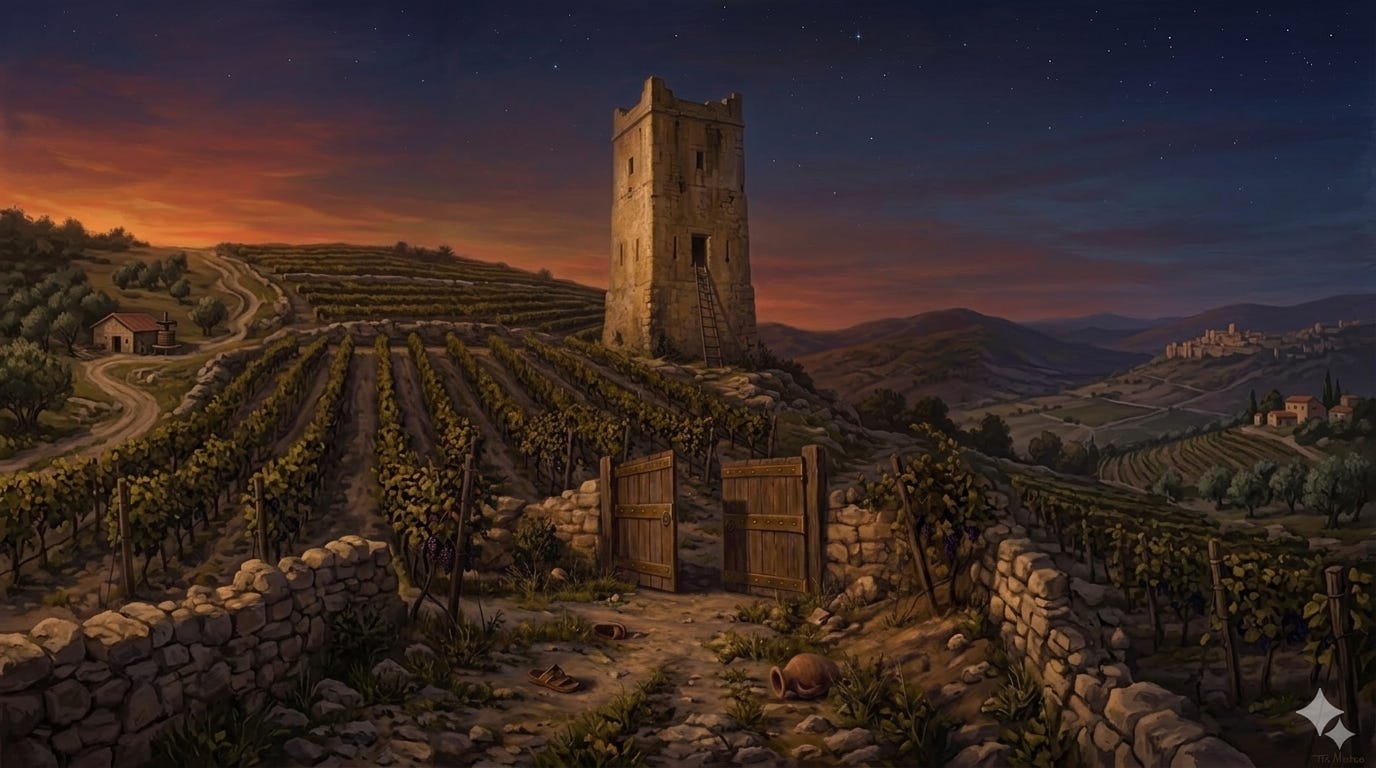
¹ He began to speak to them in parables. "A man planted a vineyard, put a hedge around it, dug a wine press, and built a tower. Then he leased it to tenant farmers and left on a journey. ² At the proper time he sent a servant to the tenants to obtain from them some of the produce of the vineyard. ³ But they seized him, beat him, and sent him away empty-handed. ⁴ Again he sent them another servant. And that one they beat over the head and treated shamefully. ⁵ He sent yet another whom they killed. So, too, many others; some they beat, others they killed. ⁶ He had one other to send, a beloved son. He sent him to them last of all, thinking, 'They will respect my son.' ⁷ But those tenants said to one another, 'This is the heir. Come, let us kill him, and the inheritance will be ours.' ⁸ So they seized him and killed him, and threw him out of the vineyard. ⁹ What then will the owner of the vineyard do? He will come, put the tenants to death, and give the vineyard to others. ¹⁰ Have you not read this scripture passage:
'The stone that the builders rejected
has become the cornerstone;
¹¹ by the Lord has this been done,
and it is wonderful in our eyes'?"
¹² They were seeking to arrest him, but they feared the crowd, for they realized that he had addressed the parable to them. So they left him and went away.
Today’s Focus
Jesus tells the Parable of the Tenants in the Temple drawing on Isaiah's vineyard imagery to indict Israel's religious establishment, describing the rejection and killing of the prophets and the Son, and quoting Psalm 118 to declare the rejected stone as the cornerstone of everything God is building.
In the Margins
Jesus is still in the Temple, still in the middle of the confrontation that began when the chief priests and elders challenged His authority. He does not answer with a defense. He answers with a story. But this is not a gentle parable about the kingdom. It is a precise legal and theological indictment, and every person in the courtyard knows it.
The vineyard is drawn directly from Isaiah 5, the Song of the Vineyard, one of the most recognized texts in Jewish scripture. Isaiah’s parable describes God planting a choice vine, building a watchtower, digging a wine press, and then waiting for fruit. The vine produces wild grapes. God asks what more could have been done for it, then announces judgment. Isaiah identifies the vineyard explicitly as the house of Israel. Jesus is not introducing a new metaphor. He is walking into one Israel had inhabited for centuries and developing it to its conclusion.
The owner leases the vineyard and goes away. At harvest time he sends servants to collect his share. They are beaten, treated shamefully, killed. More servants are sent and meet the same fate. Finally the owner sends his son, reasoning that the tenants will respect him. Their response reveals the nature of their refusal. This is the heir. If we kill him, the inheritance will be ours. They do not deny the son’s identity. They kill him because they know who he is and want what belongs to him.
This is the theological core of the passage. The opposition Jesus faces from the religious establishment is not confusion about who He is. It is a calculated decision by people who understand the claim and reject it because accepting it would cost them everything they have built. The chief priests and elders listening to this parable have already decided to arrest Him. They are the tenants hearing their own story.
Jesus then quotes Psalm 118:22-23. The stone the builders rejected has become the cornerstone. Psalm 118 was a Passover psalm, sung during the Hallel at the very feast Jerusalem was preparing to celebrate. The rejected stone that becomes the cornerstone is not a consolation prize. It is the reversal at the center of everything God is doing. What the establishment discards becomes the foundation of what God builds. The rejection does not derail the purpose. The rejection becomes the mechanism through which the purpose is accomplished.
The parable is not only about first century Jerusalem. It is about the universal human tendency to manage what God has entrusted to us as if it belongs to us, to leverage a stewardship into an ownership, to eliminate the messengers whose presence holds us accountable to what we owe. The owner’s question, what will he do?, presses every reader toward honesty about what we have done with the vineyard we have been given.
Reflection Question
What has God entrusted to you that you have begun managing as if it were yours rather than His, and what would rendering the fruit He is asking for actually cost you?