

02 May 26 | You Have Already Seen Him
Philip asks Jesus to show them the Father after spending years watching the Father work through the Son, and the answer Jesus gives is the most direct statement of their unity in the Gospel.
The Gospel: John 14:7-14
Jesus said to his disciples:
“If you know me, then you will also know my Father.
From now on you do know him and have seen him.”
Philip said to Jesus,
“Master, show us the Father, and that will be enough for us.”
Jesus said to him, “Have I been with you for so long a time
and you still do not know me, Philip?
Whoever has seen me has seen the Father.
How can you say, ‘Show us the Father’?
Do you not believe that I am in the Father and the Father is in me?
The words that I speak to you I do not speak on my own.
The Father who dwells in me is doing his works.
Believe me that I am in the Father and the Father is in me,
or else, believe because of the works themselves.
Amen, amen, I say to you,
whoever believes in me will do the works that I do,
and will do greater ones than these,
because I am going to the Father.
And whatever you ask in my name, I will do,
so that the Father may be glorified in the Son.
If you ask anything of me in my name, I will do it.”
Today’s Focus
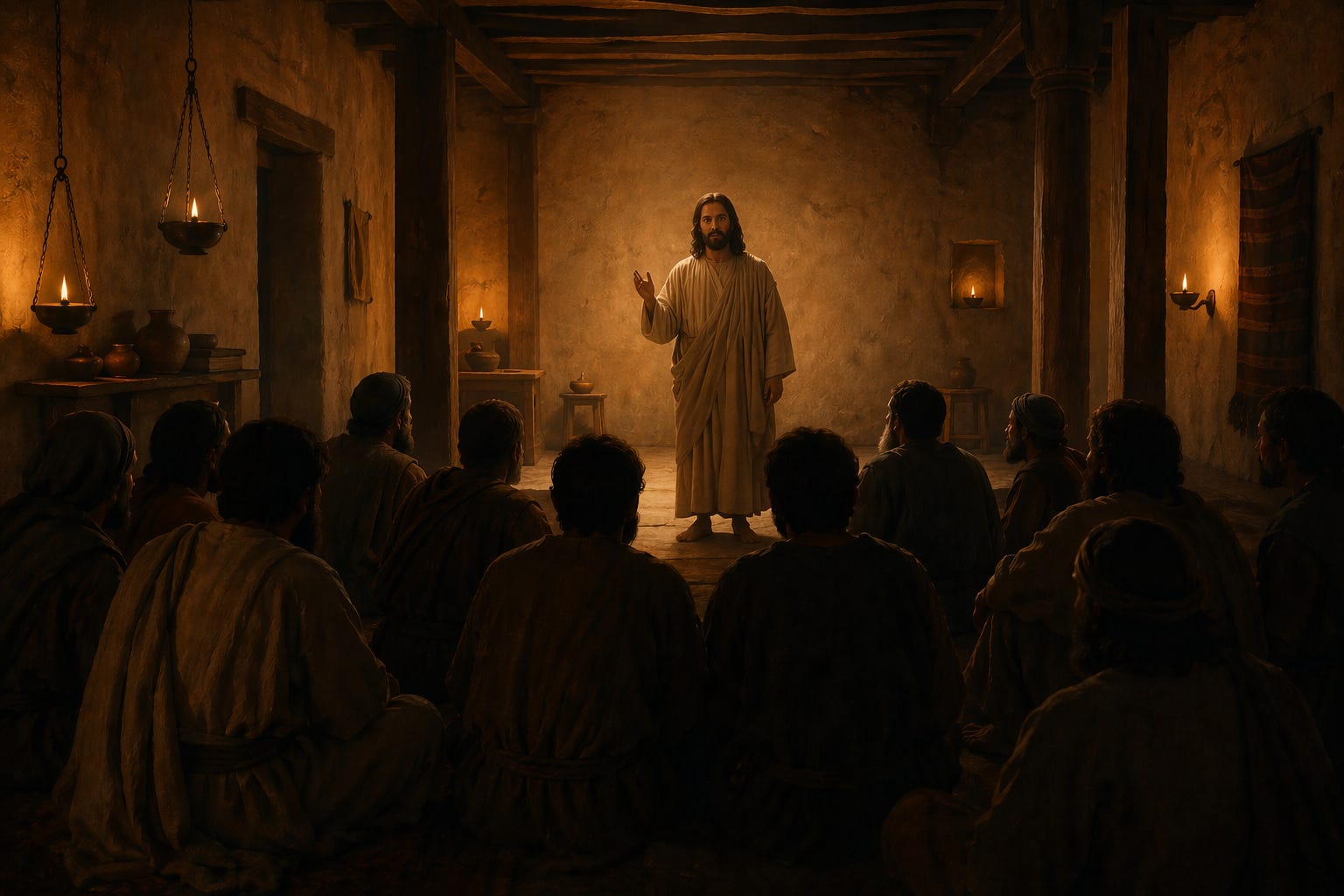
Philip had seen every sign and heard every word and still asked Jesus to show them the Father, as if the Father were somewhere else waiting to be revealed. Jesus did not dismiss the request. He answered it by pointing to everything Philip had already seen. Whoever has seen me has seen the Father. Every healing, every sign, every conversation across twelve chapters was the Father acting through the Son. The invisible God had given himself a visible face and Philip had been looking at it the whole time. The mutual indwelling — I in the Father, the Father in me — is not a statement of close relationship. It is the interpenetration of persons in the one divine being, the same reality the Nicene Creed unpacks in its language of one in being with the Father. The words are the Father’s words. The works are the Father’s works. And the going to the Father is not a departure that diminishes the mission. It is the repositioning that makes it boundless.
In the Margins
Philip has been with Jesus long enough to have seen every sign, heard every discourse, and witnessed the foot washing the night before. And he asks Jesus to show them the Father, as if the Father were somewhere else, accessible through some additional revelation not yet given. The request is sincere and it reveals how far the disciples still are from understanding what they have been looking at, from what they have been living with.
Jesus responds not with frustration but with the most direct statement of their unity in the Gospel. Whoever has seen me has seen the Father. The perfect tense of the Greek verb horaō indicates a completed action with continuing effects. What has been seen remains seen. Every healing, every sign, every conversation across twelve chapters of public ministry has been the Father acting through the Son. The invisible God has given Himself a visible face and Philip has been looking at it. The two are one.
The mutual indwelling Jesus describes is the foundation beneath this claim. I am in the Father and the Father is in me. This is not a statement of close relationship or shared purpose. It is the interpenetration of persons in the one divine being, the same reality that John 10:30 expressed in two words, the Father and I are one, now unpacked for the disciples who are about to lose His physical presence. The Council of Nicaea drew directly on this Johannine testimony when it formulated the doctrine that the Son is homoousios, of the same substance, with the Father. The Nicene Creed’s language of one in being with the Father is the theological unpacking of what Jesus is telling Philip in plain speech.
The words Jesus speaks are not His own. The Father who dwells in Him speaks through Him. The works He does are not His own. The Father who dwells in Him does them through Him. This is consistent with everything Jesus has said about His relationship to the Father across the Gospel. In John 5 He said the Son does only what He sees the Father doing. In John 12 He said the Father commanded what to say. The entire public ministry is the Father’s ministry enacted through the Son. What Philip has been watching is the Father at work.
The promise of greater works that follows has often been misread as a promise of more spectacular miracles. The context defines what greater means. Jesus is going to the Father. The Spirit will come. The proclamation will go to every creature across every nation. The greater works are the works of the universal mission, more people reached and more of the world gathered than the earthly ministry confined to Galilee and Judea could accomplish. The going to the Father is not a departure that diminishes the mission. It is the repositioning that makes the mission boundless.
The promise of answered prayer belongs in the same context. Asking in the name of Jesus is not a formula. It means asking as His representative, in alignment with His character and mission, for what serves the Father’s glory through the Son. The criterion that defines the promise is stated plainly. The Father will be glorified in the Son. The prayer that seeks this is the prayer Jesus commits to answer.
Reflection Question
Is there a way that God has already been showing Himself to you that you have not yet recognized for what it is?
A Small Invitation
If this reflection helped you, consider sharing it with someone who may benefit from hearing this message.