

03 Aug 26 | Jesus Walks on Water
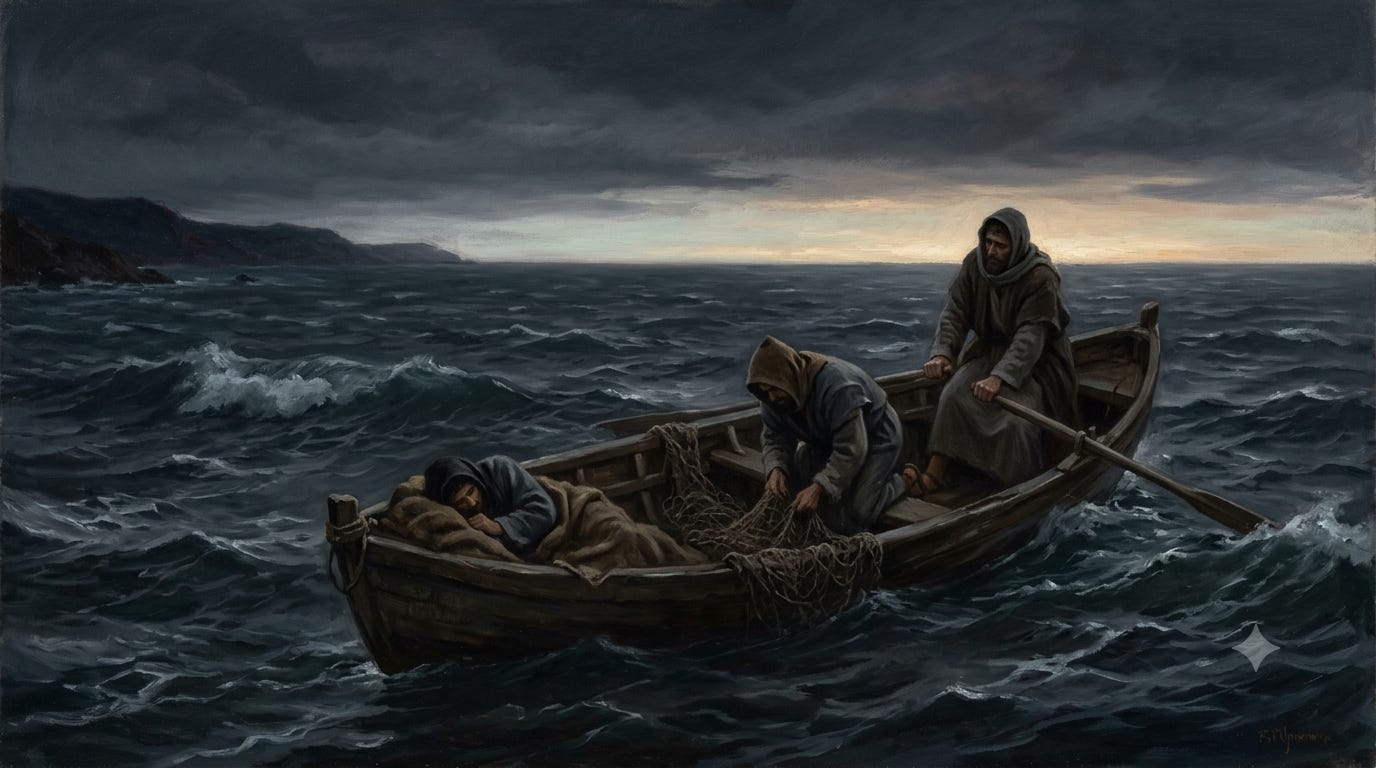
Jesus put them in that boat on purpose, and then He waited until the fourth watch to come.
The Gospel: Matthew 14:22-36
²² Then he made the disciples get into the boat and precede him to the other side, while he dismissed the crowds. ²³ After doing so, he went up on the mountain by himself to pray. When it was evening he was there alone. ²⁴ Meanwhile the boat, already a few miles offshore, was being tossed about by the waves, for the wind was against it. ²⁵ During the fourth watch of the night, he came toward them, walking on the sea. ²⁶ When the disciples saw him walking on the sea they were terrified. "It is a ghost," they said, and they cried out in fear. ²⁷ At once Jesus spoke to them, "Take courage, it is I; do not be afraid." ²⁸ Peter said to him in reply, "Lord, if it is you, command me to come to you on the water." ²⁹ He said, "Come." Peter got out of the boat and began to walk on the water toward Jesus. ³⁰ But when he saw how strong the wind was he became frightened; and, beginning to sink, he cried out, "Lord, save me!" ³¹ Immediately Jesus stretched out his hand and caught him, and said to him, "O you of little faith, why did you doubt?" ³² After they got into the boat, the wind died down. ³³ Those who were in the boat did him homage, saying, "Truly, you are the Son of God."
³⁴ After making the crossing, they came to land at Gennesaret. ³⁵ When the men of that place recognized him, they sent word to all the surrounding country. People brought to him all those who were sick ³⁶ and begged him that they might touch only the tassel on his cloak, and as many as touched it were healed.
Today’s Focus
The disciples spent most of a night fighting a headwind because Jesus had sent them into it. When He finally came, walking on the water in the darkest hours before dawn, He used the divine name to identify Himself. The storm was not a sign of His absence. It was the setting He chose for revealing who He is.
In the Margins
The verb Matthew uses in the opening line is stronger than most translations suggest. Jesus did not invite the disciples into the boat. He compelled them, the word carrying a sense of pressure or constraint. He put them out on that water knowing what was ahead, and then He went up the mountain alone to pray, finally getting the solitude the crowd had interrupted.
By the fourth watch of the night, the boat was miles from shore and fighting a wind that would not let it through. The Romans divided the night into four watches, and the fourth ran roughly from three in the morning until sunrise. These men had been straining against the same wind for something like nine hours. Whatever they had prayed at hour two, they had stopped praying by hour eight.
Then Jesus came toward them, walking on the sea.
For a first century Jewish listener, this is not primarily a display of power over physics. The sea in Hebrew thought was the domain of chaos, the one place no human being masters. Job says of God that He alone trampled the waves of the sea. Psalm 77 says that God's way was through the sea and His path through the great waters, and that His footprints were unseen. What Jesus is doing here belongs to God alone.
The disciples see Him and conclude it is a ghost. Their terror is not weakness. It is the correct response to something that should not be happening. And Jesus answers with three short phrases: take courage, it is I, do not be afraid. The middle phrase is ego eimi, I am, the name God gave Moses at the burning bush. A man walking on chaos and speaking the divine name is not comforting them by lowering the stakes. He is telling them exactly who is out there with them.
Peter's response is unusual and worth noticing. He does not ask for proof. He asks for permission to come. Jesus says come, and Peter gets out of the boat and walks. That happened. Then Matthew tells us precisely when it stopped working. When he saw how strong the wind was he became frightened. Nothing about the storm changed. What changed was where Peter was looking.
He sank, and he prayed the shortest prayer in the Gospels. Lord, save me. Three words, and Matthew says immediately Jesus stretched out His hand and caught him. There was no lesson delivered from a distance while Peter went under. The rescue came first and the question came after. Jesus called him one of little faith, using a word that means small faith rather than no faith. Peter had enough to leave the boat. That is more than the eleven men still holding the rails.
When they climbed in, the wind died, and the men in the boat worshiped and said what none of them had said before. Truly, you are the Son of God. Not after the loaves. After the storm.
They landed at Gennesaret, and people began bringing the sick, begging just to touch the tassel of His cloak, the tzitzit that every observant Jewish man wore in obedience to Numbers 15. As many as touched it were healed.
If you are in something right now that God clearly allowed, it is worth pointing out that Jesus sent these men into that wind deliberately, then came to them at the worst hour of it, and the storm is where they finally understood who He was.
Reflection Question
What are you currently straining against that God may have sent you into rather than merely allowed, and would you recognize Him if He came in the fourth watch instead of the first?