

The Gospel: John 20:24-29
²⁴ Thomas, called Didymus, one of the Twelve, was not with them when Jesus came. ²⁵ So the other disciples said to him, "We have seen the Lord." But he said to them, "Unless I see the mark of the nails in his hands and put my finger into the nailmarks and put my hand into his side, I will not believe." ²⁶ Now a week later his disciples were again inside and Thomas was with them. Jesus came, although the doors were locked, and stood in their midst and said, "Peace be with you." ²⁷ Then he said to Thomas, "Put your finger here and see my hands, and bring your hand and put it into my side, and do not be unbelieving, but believe." ²⁸ Thomas answered and said to him, "My Lord and my God!" ²⁹ Jesus said to him, "Have you come to believe because you have seen me? Blessed are those who have not seen and have believed."
Today’s Focus
Thomas refuses to believe the resurrection without physical proof, and when Jesus appears a week later and offers exactly that, Thomas responds with the clearest confession of Christ's divinity spoken by anyone in the Gospels, while Jesus extends the same blessing of faith to everyone who will believe without having seen.
In the Margins
Thomas, called Didymus, one of the Twelve, was not with them when Jesus came. The other disciples tell him plainly, we have seen the Lord. Thomas does not respond with quiet acceptance or polite agreement. Unless I see the mark of the nails in his hands and put my finger into the nailmarks and put my hand into his side, I will not believe. This is sometimes read as the worst moment in Thomas’s story, but what he actually does deserves more credit than that. He does not pretend to believe something he does not. He states his condition honestly, and then he stays. He remains with the other disciples for the entire week that follows, waiting, even without resolution.
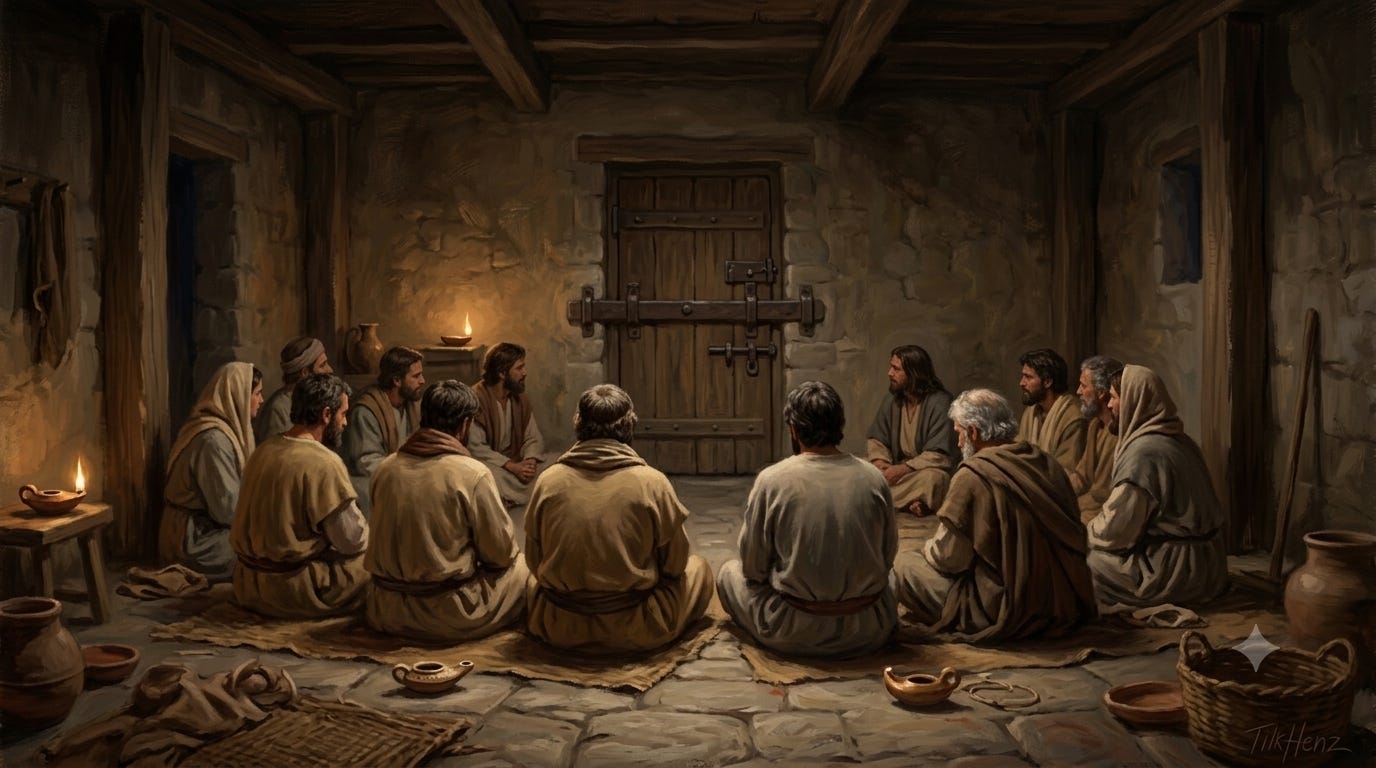
A week later his disciples were again inside and Thomas was with them. Jesus came, although the doors were locked, and stood in their midst and said, peace be with you. Then he turns to Thomas directly. Put your finger here and see my hands, and bring your hand and put it into my side, and do not be unbelieving, but believe. Jesus offers Thomas precisely what he asked for. There is no rebuke for having asked, no shaming for the doubt that was voiced aloud rather than buried.
The wounds Jesus offers for Thomas to touch matter theologically. The resurrected body is glorified, but it carries real continuity with the body that was actually nailed to the cross. The suffering was not erased by the resurrection. It was carried into the glory, transformed but not removed, a sign that what love endures is not undone but transfigured.
Thomas answered and said to him, my Lord and my God. This is the clearest and most direct confession of Christ’s full divinity spoken by anyone in the four Gospels. Thomas does not call him merely teacher or even Messiah. He calls him God, and Jesus receives this confession without correction, which stands as its own kind of confirmation.
Have you come to believe because you have seen me? Blessed are those who have not seen and have believed. This final word reaches past the room and past the apostles and lands on every person who will ever read this account without the chance to touch the wounds themselves, which includes every single person alive today. We come to faith through testimony handed down, through Scripture, through the witness of others, through the same kind of trust the other ten disciples were asking of Thomas before he had any proof himself.
Thomas is not primarily a cautionary tale about doubt. He is a model for what an honest person does with doubt: he states it plainly, he does not pretend, and he stays close enough to receive the answer when it finally arrives.
Reflection Question
What evidence have you been demanding from God before you will fully believe, and what would it mean to bring that demand honestly to him rather than quietly staying away until you have it resolved on your own?