

The Gospel: Mark 12:18-27
¹⁸ Some Sadducees, who say there is no resurrection, came to him and put this question to him, ¹⁹ saying, "Teacher, Moses wrote for us, 'If someone's brother dies, leaving a wife but no child, his brother must take the wife and raise up descendants for his brother.' ²⁰ Now there were seven brothers. The first married a woman and died, leaving no descendants. ²¹ So the second married her and died, leaving no descendants, and the third likewise. ²² And the seven left no descendants. Last of all the woman also died. ²³ At the resurrection when they arise whose wife will she be? For all seven had been married to her." ²⁴ Jesus said to them, "Are you not misled because you do not know the scriptures or the power of God? ²⁵ When they rise from the dead, they neither marry nor are given in marriage, but they are like the angels in heaven. ²⁶ As for the dead being raised, have you not read in the Book of Moses, in the passage about the bush, how God told him, 'I am the God of Abraham, the God of Isaac, and the God of Jacob'? ²⁷ He is not God of the dead but of the living. You are greatly misled."
Today’s Focus
Jesus rebukes the Sadducees' resurrection trap on two grounds, showing that resurrection life transcends present social arrangements and proving the resurrection from Exodus 3 itself by noting that God's present-tense self-identification as God of the living patriarchs implies they are alive to Him.
In the Margins
The Sadducees arrive with what they consider an unanswerable question. Unlike the Pharisees, who accepted the full Hebrew canon and believed in bodily resurrection, the Sadducees recognized only the five books of Moses as authoritative and found no clear teaching of resurrection in them. Their rejection of resurrection was not a peripheral position. It was central to their theological identity and their practical alliance with the existing order, since resurrection hope tends to relativize present power arrangements.
They construct a scenario designed to make resurrection appear absurd. Deuteronomy 25 established levirate marriage, requiring a man to marry his deceased brother’s widow to produce heirs and preserve the family line. They describe seven brothers who successively marry the same woman, each dying childless. In the resurrection, whose wife will she be? The question assumes that resurrection simply restores present social arrangements, that the next life is the current life continued with the same legal structures intact.
Jesus addresses both the premise and the conclusion. You are badly misled because you know neither the Scriptures nor the power of God. The rebuke is precise and double, directed at their scriptural reading and their understanding of what God can do.
On the power of God: those who rise from the dead neither marry nor are given in marriage but are like the angels in heaven. The category error the Sadducees are making is applying the framework of the present mortal order to a transformed existence. The resurrection is not a restoration of mortal life with its biological and social necessities. It is a different mode of existence entirely, one that the present order gives us only partial categories to imagine.
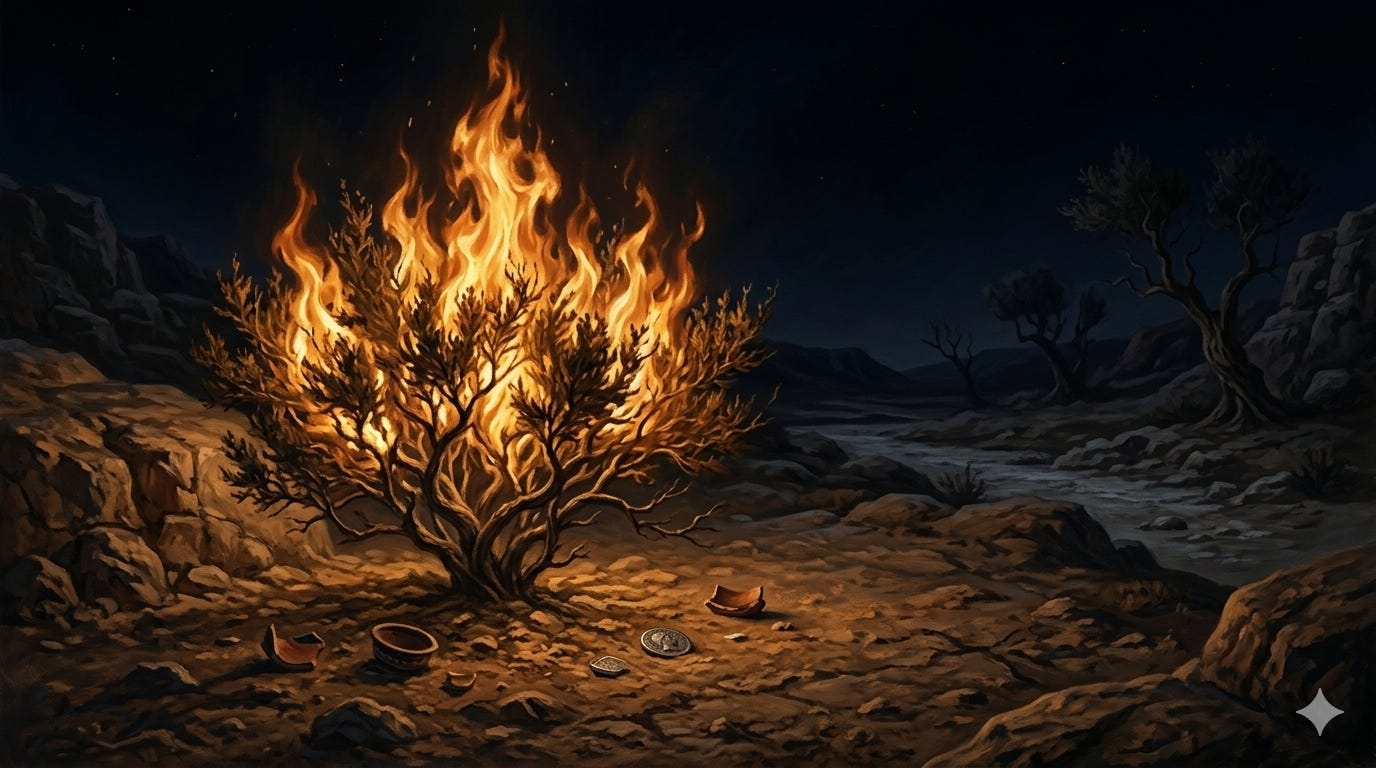
On the Scriptures: Jesus does not reach for Daniel 12 or Isaiah 26, texts the Sadducees did not accept as authoritative. He goes to Exodus 3, the burning bush, the very text at the heart of their canon. God says to Moses, I am the God of Abraham, the God of Isaac, and the God of Jacob. Present tense. He is not the God of the dead but of the living. If God identifies Himself in present tense as the God of the patriarchs, the patriarchs must be alive to Him. Resurrection is not introduced by the prophets. It is embedded in the Torah itself, in the most foundational self-disclosure of God to Moses.
The argument is both elegant and devastating. Jesus shows the Sadducees that the resurrection they deny is implied by the very text they held most sacred, read carefully. The problem was not insufficient evidence. It was insufficient attention to what the evidence contained.
The resurrection hope this passage defends is not a sentimental wish for the continuation of pleasant things. It is the claim that the God who said I am in present tense at the burning bush has not lost anyone He loves to death, and that the life He intends for His people exceeds every category the present order can supply.
Reflection Question
Where have you been applying the categories of the present order to what God promises for the future, and what would it mean to trust that His power exceeds every framework you currently have?