

The Gospel: Matthew 9:14-17
¹⁴ Then the disciples of John approached him and said, "Why do we and the Pharisees fast much, but your disciples do not fast?" ¹⁵ Jesus answered them, "Can the wedding guests mourn as long as the bridegroom is with them? The days will come when the bridegroom is taken away from them, and then they will fast. ¹⁶ No one patches an old cloak with a piece of unshrunken cloth, for its fullness pulls away from the cloak and the tear gets worse. ¹⁷ People do not put new wine into old wineskins. Otherwise the skins burst, the wine spills out, and the skins are ruined. Rather, they pour new wine into fresh wineskins, and both are preserved."
Today’s Focus
John's disciples ask why Jesus' followers do not fast, and Jesus answers by naming himself the bridegroom whose presence inaugurates a season of joy, while clearly anticipating that fasting will resume once he is taken away, illustrating the principle with the unshrunken cloth and the new wine that cannot be confined to old containers.
In the Margins
Then the disciples of John approached him and said, why do we and the Pharisees fast much, but your disciples do not fast? It is a fair question on its face. Both John’s disciples and the Pharisees had real and serious reasons for their fasting, expressions of repentance and longing for what God had promised but not yet delivered. They were not asking out of hostility. They were genuinely puzzled.
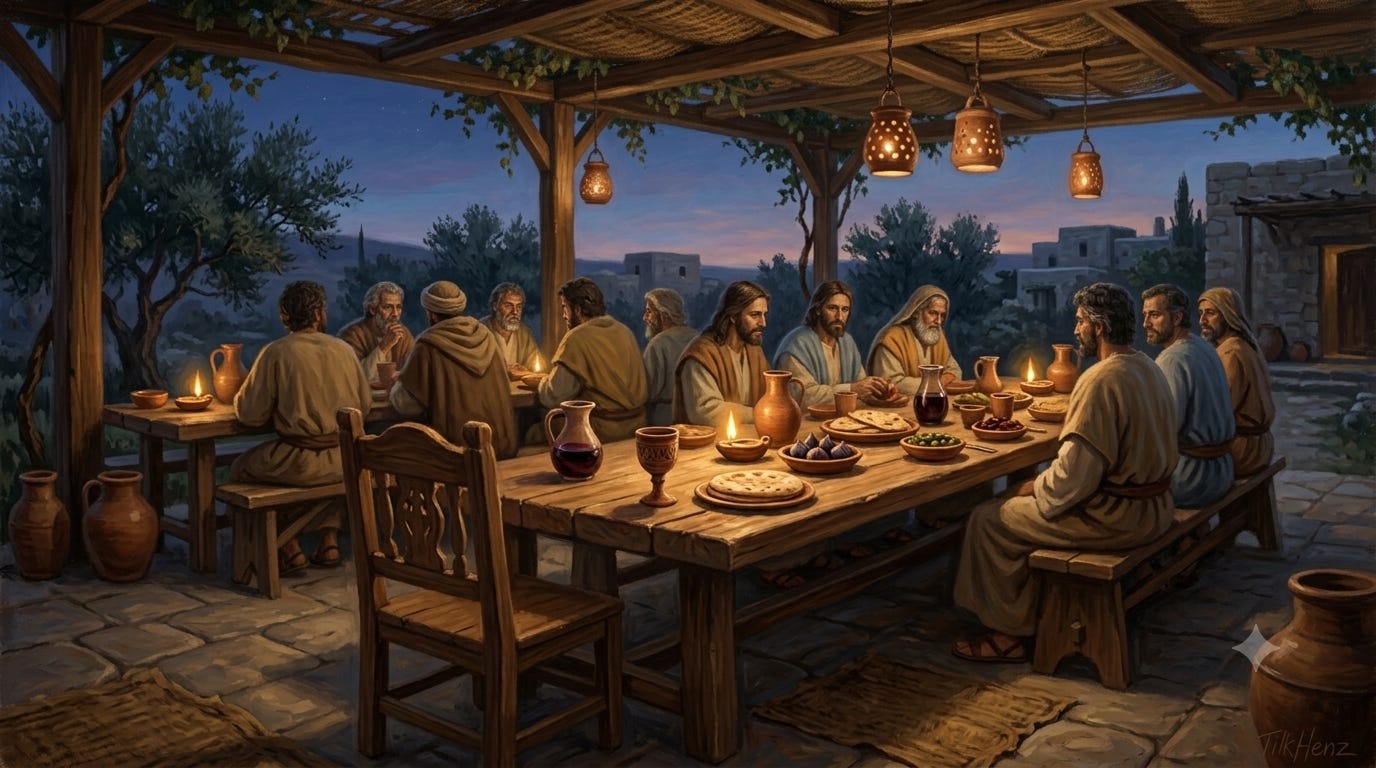
Jesus answers by redirecting the entire question toward who he is. Can the wedding guests mourn as long as the bridegroom is with them? The image of God as Israel’s bridegroom runs through the prophets, a relationship of covenant love described again and again in terms of marriage. A wedding in that culture was the most joyful event in ordinary social life, with celebrations lasting up to a week, and guests during that week were even excused from certain other religious obligations out of respect for the joy of the occasion. By naming himself the bridegroom, Jesus is claiming to be the one toward whom all of Israel’s prophetic longing for covenant union with God has actually been pointing.
The days will come when the bridegroom is taken away from them, and then they will fast. Even inside this brief and almost casual exchange about religious practice, Jesus speaks plainly about what is coming, his own passion and death. The joy of his present company will not last forever in this form, and when it is taken away, the fasting his disciples are not currently doing will resume in full.
No one patches an old cloak with a piece of unshrunken cloth, for its fullness pulls away from the cloak and the tear gets worse. People do not put new wine into old wineskins. Otherwise the skins burst, the wine spills out, and the skins are ruined. Rather, they pour new wine into fresh wineskins, and both are preserved. These two images reinforce the same point from different angles. What Jesus is bringing is not a patch applied to the old order, a minor adjustment layered onto existing practice. It is something genuinely new, and forcing it into old categories destroys both the new thing and the container meant to hold it.
This is not Jesus dismissing fasting altogether. He himself fasted forty days in the wilderness, and he assumes later in this same Gospel that his followers will fast, speaking not if you fast but when you fast. What he is naming here is the question of timing, the recognition that there is a season for mourning what has not yet arrived and a season for rejoicing in what has. His bodily presence among the disciples was, for that moment, an inbreaking of the very joy that fasting itself anticipates. To fast in the presence of the bridegroom would be to miss what was actually happening directly in front of you.
There is a kind of spiritual confusion that comes from applying the discipline of an old season to a new one God is actually bringing about. Knowing the difference, and trusting it enough to act on it, is its own form of faithfulness.
Reflection Question
Is there an area of your spiritual life where you are applying an old pattern, born from a different season, to something genuinely new that God is doing right now?