

The Gospel: John 20:1-9
¹ On the first day of the week, Mary of Magdala came to the tomb early in the morning, while it was still dark, and saw the stone removed from the tomb. ² So she ran and went to Simon Peter and to the other disciple whom Jesus loved, and told them, "They have taken the Lord from the tomb, and we don't know where they put him." ³ So Peter and the other disciple went out and came to the tomb. ⁴ They both ran, but the other disciple ran faster than Peter and arrived at the tomb first; ⁵ he bent down and saw the burial cloths there, but did not go in. ⁶ When Simon Peter arrived after him, he went into the tomb and saw the burial cloths there, ⁷ and the cloth that had covered his head, not with the burial cloths but rolled up in a separate place. ⁸ Then the other disciple also went in, the one who had arrived at the tomb first, and he saw and believed. ⁹ For they did not yet understand the scripture that he had to rise from the dead.
Today’s Focus
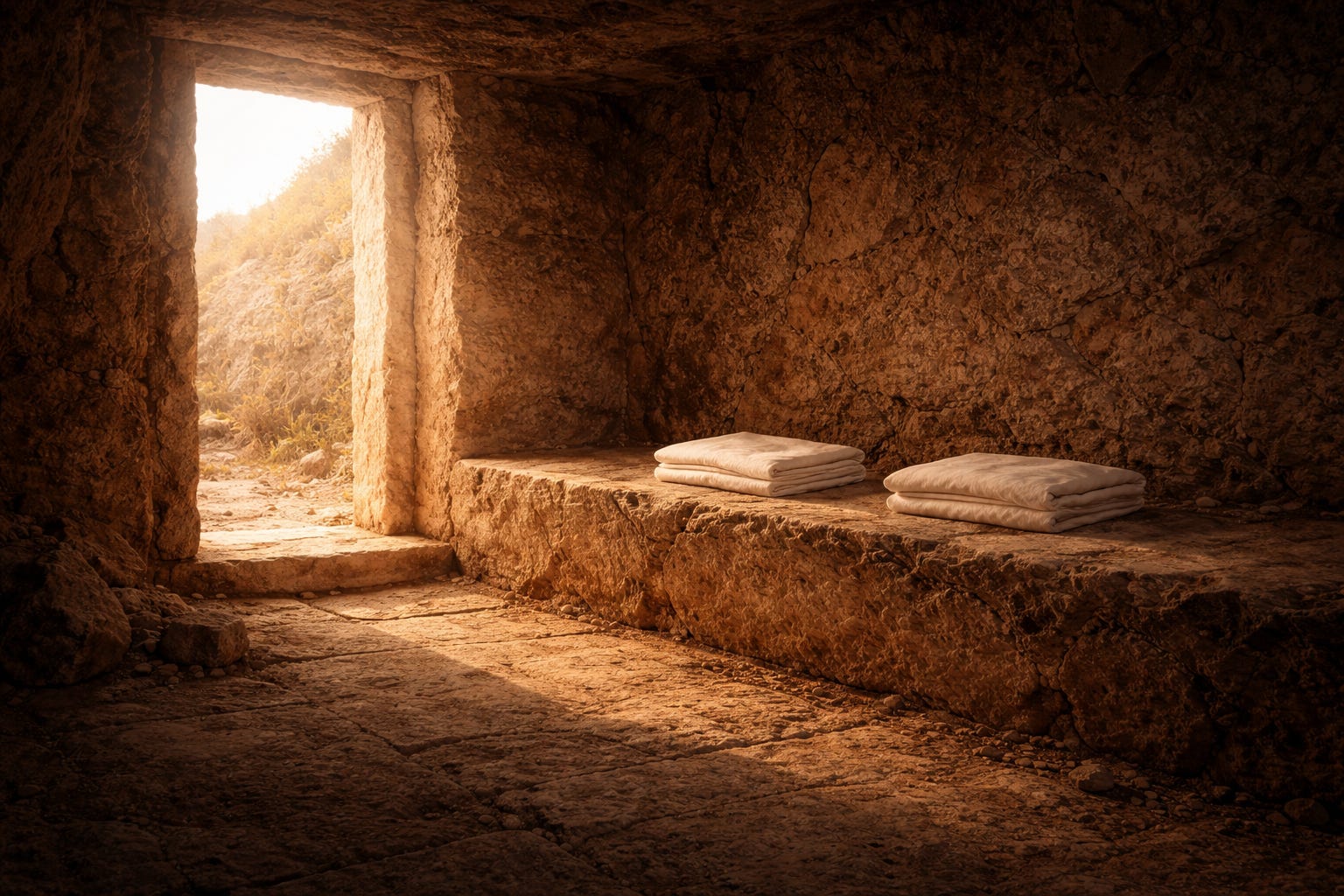
Mary comes in darkness and reads the empty tomb as a theft. Peter goes straight inside and sees everything. The beloved disciple enters last, sees the folded linen, and believes. Three people, the same evidence, three different responses. The burial cloths are lying there in an arrangement that no theft produces. The head cloth is folded separately, as if the body simply passed through what was wrapped around it and left the wrappings behind. This is John’s argument before any angel speaks or risen Jesus appears. The empty tomb, properly read, is enough. The beloved disciple believes before he understands. The faith arrives before the theology catches up. Sometimes that is exactly how it works.
In the Margins
Mary comes to the tomb while it is still dark. In John’s Gospel, darkness is never simply a time of day. Nicodemus came to Jesus by night. Judas walked out into the night after receiving the morsel at the Last Supper. The darkness Mary moves through on her way to the tomb is the last darkness of the old order.
She sees the stone removed and assumes the worst, that someone has taken the body. She does not consider resurrection or that He had risen. She runs to find Peter and another beloved disciple and her report is framed entirely as a theft, declaring that someone has taken the Lord. The resurrection has already occurred and its first witness reads it as a crime. No one was expecting this. The resurrection was not the projection of grieving people onto an ambiguous situation. It was an event that caught everyone by surprise, including the people who loved Jesus most.
Peter and the disciple run to the tomb and find the burial cloths lying there. Peter goes straight inside without hesitation. This is entirely consistent with how both we have seen Peter show up throughout the Gospel of John. The one disciple is attentive and reflective, present but sometimes at a threshold, yet Peter is always moving toward the center of things.
What Peter sees inside is described with a precision that slows this narrative down. The burial cloths are lying there. The cloth that had covered Jesus’ head is not with the other cloths. It is rolled up separately, in its own place. This is a big detail that tells us a deeper story. A stolen body is not unwrapped. Grave robbers in a hurry do not stop to fold linen. The cloths are not scattered in the chaos of someone carrying a body away. They are lying in an orderly arrangement, as if the body simply passed through them and left them behind.
There is a large contrast with what we saw when Lazarus emerged from his tomb. Lazarus was still bound in burial cloths and Jesus told the bystanders to untie him. Lazarus came out wrapped because he had been resuscitated. He would need his body again. He would die again. He required human help to be freed. Jesus leaves the cloths behind because He has no further need of them. He is not resuscitated; He is resurrected.
The un-named disciple enters after Peter, and John uses three different Greek words for seeing across this passage. When the beloved disciple first arrives, John uses blepō, ordinary physical sight. When Peter examines the scene, John uses theōreō, careful attentive observation. When the beloved disciple enters and the text says he saw and believed, John uses horaō, the verb he reserves throughout the Gospel for seeing that carries genuine perception and recognition. The three words map a progression from physical observation to attentive examination to the kind of seeing that produces faith.
John notes that they did not yet understand the scripture that He had to rise from the dead. This is not a failure of intelligence. Psalm 16 had said God would not abandon His holy one to see corruption. Hosea had spoken of being raised up on the third day. Isaiah’s suffering servant was promised that after making his life an offering he would see his offspring and prolong his days. The pattern was embedded in Israel’s scriptures across centuries, but in forms that required the event itself to unlock their meaning. The disciples who ran to that tomb had read those texts. They still did not see it coming.
The resurrection is the interpretive key that opens what the scriptures were pointing toward all along. Before it happened, even those closest to Jesus could not read the signs clearly enough to expect it. The beloved disciple believes first, and he believes before he understands. The faith arrives before the theology catches up. Understanding is not the condition of belief, in fact, sometimes it is the fruit of it.
Reflection Question
Is there something about the resurrection you are waiting to fully understand before you allow yourself to fully believe it?
A Small Invitation
If this reflection helped you, consider sharing it with someone who may benefit from hearing this message.