

The Gospel: Mark 12:35-37
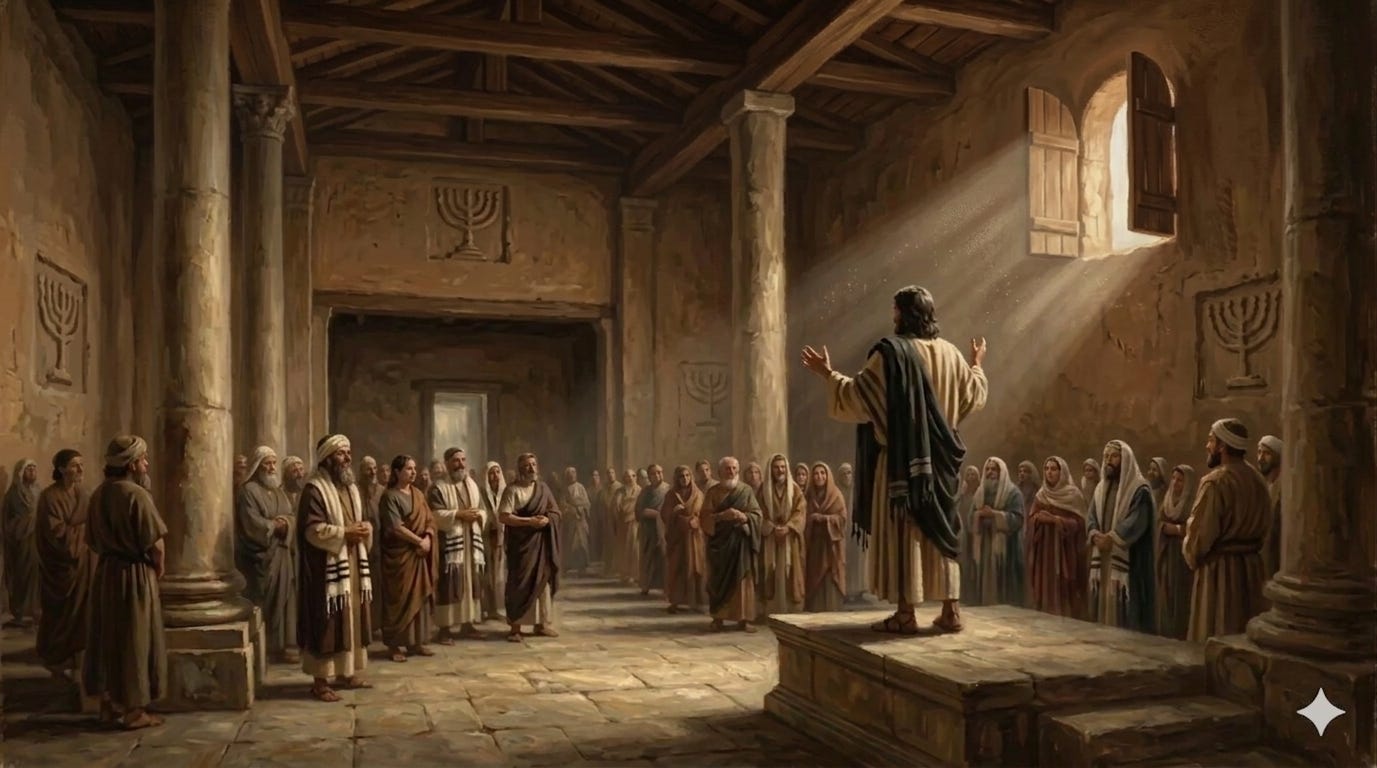
³⁵ As Jesus was teaching in the temple area he said, "How do the scribes claim that the Messiah is the son of David? ³⁶ David himself, inspired by the holy Spirit, said:
'The Lord said to my lord,
"Sit at my right hand
until I place your enemies under your feet."'
³⁷ David himself calls him 'lord'; so how is he his son?" The great crowd heard this with delight.
Today’s Focus
Jesus uses Psalm 110:1 to press beyond the son of David category by showing that David himself called the Messiah his Lord, implying a relationship to God that transcends Davidic ancestry and pressing the question of Jesus' divine identity through implication rather than direct declaration.
In the Margins
The hostile questioners have gone silent. For the first time in the Temple discourse Jesus raises a question of His own. It is the most theologically compressed question He has asked in Mark’s Gospel, and it dismantles the most central category of messianic expectation.
How do the scribes claim that the Messiah is the son of David? He then quotes Psalm 110:1, which David wrote under the inspiration of the Holy Spirit. The Lord said to my Lord, sit at my right hand until I place your enemies under your feet. David himself calls him Lord. If David calls the Messiah Lord, how is the Messiah his son?
The question is not a denial that the Messiah comes from David’s lineage. Bartimaeus called Jesus Son of David and Jesus did not correct him. Matthew’s genealogy establishes the Davidic lineage explicitly. The question is about adequacy. Is son of David a sufficient description of who the Messiah is?
In the first century Jewish context, Psalm 110 was a recognized royal and priestly psalm understood to point toward the Messiah. God addresses a figure described as my Lord, inviting him to sit at His right hand, a position of co-regency, of shared authority with the divine. David, who wrote the psalm, uses a word for Lord, adonai, that in the Septuagint translates YHWH. He is calling the Messiah by a name reserved for God.
If David calls him Lord, the Messiah cannot be simply a royal descendant of David, however great. He must be something more than David’s tradition can fully contain. He must occupy a position in relation to God that places Him above David himself, which is only possible if the Messiah’s relationship to God transcends the category of human kingship.
Mark notes that the great crowd heard this with delight. They heard something that the religious establishment found threatening. The claim that the Messiah is both David’s son and David’s Lord is the claim that the one standing in the Temple is simultaneously the fulfillment of the Davidic covenant and the one to whom David himself bowed.
Psalm 110:1 is the most quoted Old Testament verse in the New Testament, cited or alluded to more than thirty times. The early Church seized on this exchange as the moment in the Synoptic Gospels where Jesus presses the question of His divine identity most directly through implication rather than declaration. Who the Messiah is cannot be answered by genealogy alone. The question Jesus leaves hanging does not resolve into a comfortable answer unless you are willing to follow it all the way.
Reflection Question
Who do you say that Jesus is, and have you followed that question all the way to where the evidence actually leads?