

The Gospel: Luke 16:19-31
Jesus said to the Pharisees:
"There was a rich man who dressed in purple garments and fine linen
and dined sumptuously each day.
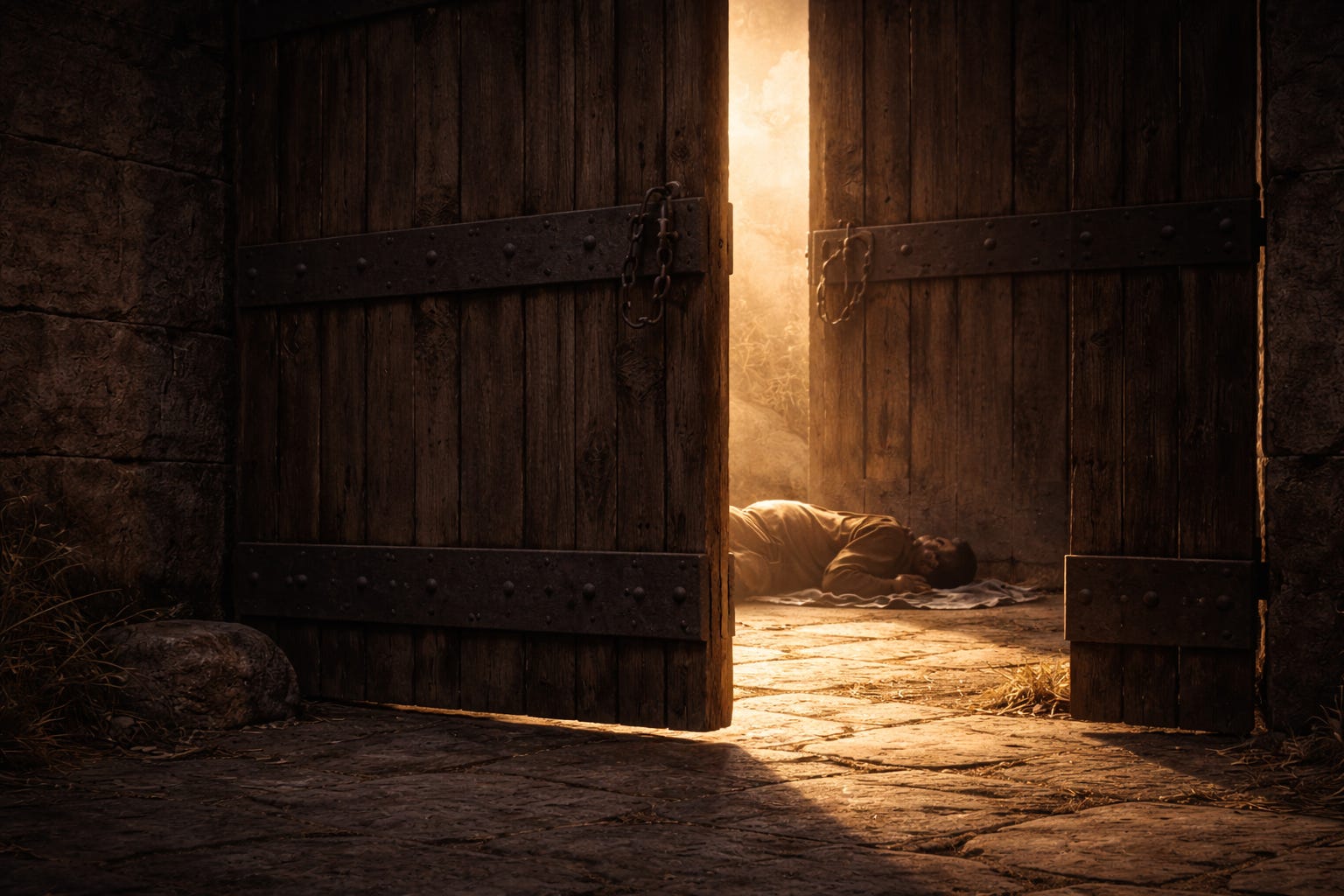
And lying at his door was a poor man named Lazarus, covered with sores,
who would gladly have eaten his fill of the scraps
that fell from the rich man's table.
Dogs even used to come and lick his sores.
When the poor man died,
he was carried away by angels to the bosom of Abraham.
The rich man also died and was buried,
and from the netherworld, where he was in torment,
he raised his eyes and saw Abraham far off
and Lazarus at his side.
And he cried out, 'Father Abraham, have pity on me.
Send Lazarus to dip the tip of his finger in water and cool my tongue,
for I am suffering torment in these flames.'
Abraham replied, 'My child,
remember that you received what was good during your lifetime
while Lazarus likewise received what was bad;
but now he is comforted here, whereas you are tormented.
Moreover, between us and you a great chasm is established
to prevent anyone from crossing
who might wish to go from our side to yours
or from your side to ours.'
He said, 'Then I beg you, father, send him
to my father's house,
for I have five brothers, so that he may warn them,
lest they too come to this place of torment.'
But Abraham replied, 'They have Moses and the prophets.
Let them listen to them.'
He said, 'Oh no, father Abraham,
but if someone from the dead goes to them, they will repent.'
Then Abraham said,
'If they will not listen to Moses and the prophets,
neither will they be persuaded
if someone should rise from the dead.'"
Today’s Focus
This parable is not primarily about the mechanics of the afterlife; it is about the condition of the heart in this life. The rich man’s sin is not wealth but indifference, stepping over suffering while living in comfort. Lazarus, whose name means “God has helped,” is seen and remembered by God even when ignored by man. The great reversal reveals that Scripture has already spoken clearly about mercy and justice. The tragedy is not ignorance, but refusal to listen.
In the Margins
The audience for this message is explicitly stated as the Pharisees. The parable is not abstract commentary on the afterlife; it is a prophetic warning about wealth, covenant responsibility, and hardened hearts. We see that the message of Jesus has been to reverse roles, to serve the poor and sick, and love everyone. This is an illustration of Jesus’ Sermon on the Plain from earlier in Luke.
The rich man here is described in purple (a royal color) and fine linen, able to feast every day. This is not a person that has enough to live comfortably. Jesus is telling the story of a man that is living in excess. During this period, wealth was not condemned, but Deuteronomy 15 commanded the caring of the poor. Proverbs repeatedly warns against neglect, and Amos 6 condemns those who feast while the afflicted suffer. The rich man is not condemned for his wealth; he is condemned for his indifference.
Lazarus (from Eleazar, “God has helped”) is the only one named in this passage. Jesus goes into great detail about the issues facing Lazarus. It paints a stark distinction. A major standout is that Lazarus has nothing, but his name is known. The rich man appears to have everything, but he remains anonymous for eternity. This reversal signals Luke’s theology of divine remembrance (cf. Luke 1:52–53).
When Lazarus dies, he is carried by angels. The “Bosom of Abraham” reflects Second Temple Jewish imagery of post-mortem comfort for the righteous (cf. 1 Enoch traditions). It indicates covenant belonging. The rich man dies and is buried, a detail emphasizing honor in death. It tells us that this man was honored from his time on earth, yet he finds himself in torment for eternity.
We hear through this story that “a great chasm is established.” There was an eternal divide from heaven and hell. This portrays a fixed, irreversible divide after judgment. The rich man now sees Lazarus, something he failed to do in life. The chasm reflects hardened character now made permanent.
The rich man asks that someone go warn his family since he cannot be saved. This is a shift, showing that the message is already there for them to follow. There only needs to be the one message – their choice to not follow it is their own. The Torah commands this through Deuteronomy 15, Isaiah 58, and Amos 5-6. This is decisive and was a message carried to them by Moses and the prophets. The issue is not a lack of information, it’s a deliberate refusal to listen to the message.
The final line is loaded with irony, especially coming from Jesus. He says, “If they will not listen to Moses and the prophets, neither will they be persuaded if someone should rise from the dead.” This is written after the Passion and resurrection. The reader already knows that Jesus had died and was risen. At the time when this happened though, it would have preceded Jesus’ raising of Lazarus in John 11 and His own resurrection.
We hear from Jesus time and again that the miracle alone will never be enough to permanently mend a hardened heart. We see examples of this in how people respond to the miracles of Jesus along the way. Here Jesus is teaching us about the importance of how we live this life. He does not focus on a curiosity of hell. He teaches that we are accountable for what we already know and this standard will be used for our eternal judgment. He came and reminded us of our role in caring and loving one another, but ultimately – this is a message that has been around and passed on through Moses and the prophets. When we examine our lives, we need to question whether we are living to this standard. It has been told to us for thousands of years, yet it is easy for us to miss in practice.
Reflection Question
Where in my life have I grown comfortable enough to stop seeing the Lazarus at my gate?
A Small Invitation
If this reflection helped you, consider sharing it with someone who may benefit from hearing this message.