

The Gospel: Matthew 21:33-43, 45-46
Jesus said to the chief priests and the elders of the people:
"Hear another parable.
There was a landowner who planted a vineyard,
put a hedge around it,
dug a wine press in it, and built a tower.
Then he leased it to tenants and went on a journey.
When vintage time drew near,
he sent his servants to the tenants to obtain his produce.
But the tenants seized the servants and one they beat,
another they killed, and a third they stoned.
Again he sent other servants, more numerous than the first ones,
but they treated them in the same way.
Finally, he sent his son to them,
thinking, 'They will respect my son.'
But when the tenants saw the son, they said to one another,
'This is the heir.
Come, let us kill him and acquire his inheritance.'
They seized him, threw him out of the vineyard, and killed him.
What will the owner of the vineyard do to those tenants when he comes?"
They answered him,
"He will put those wretched men to a wretched death
and lease his vineyard to other tenants
who will give him the produce at the proper times."
Jesus said to them, "Did you never read in the Scriptures:
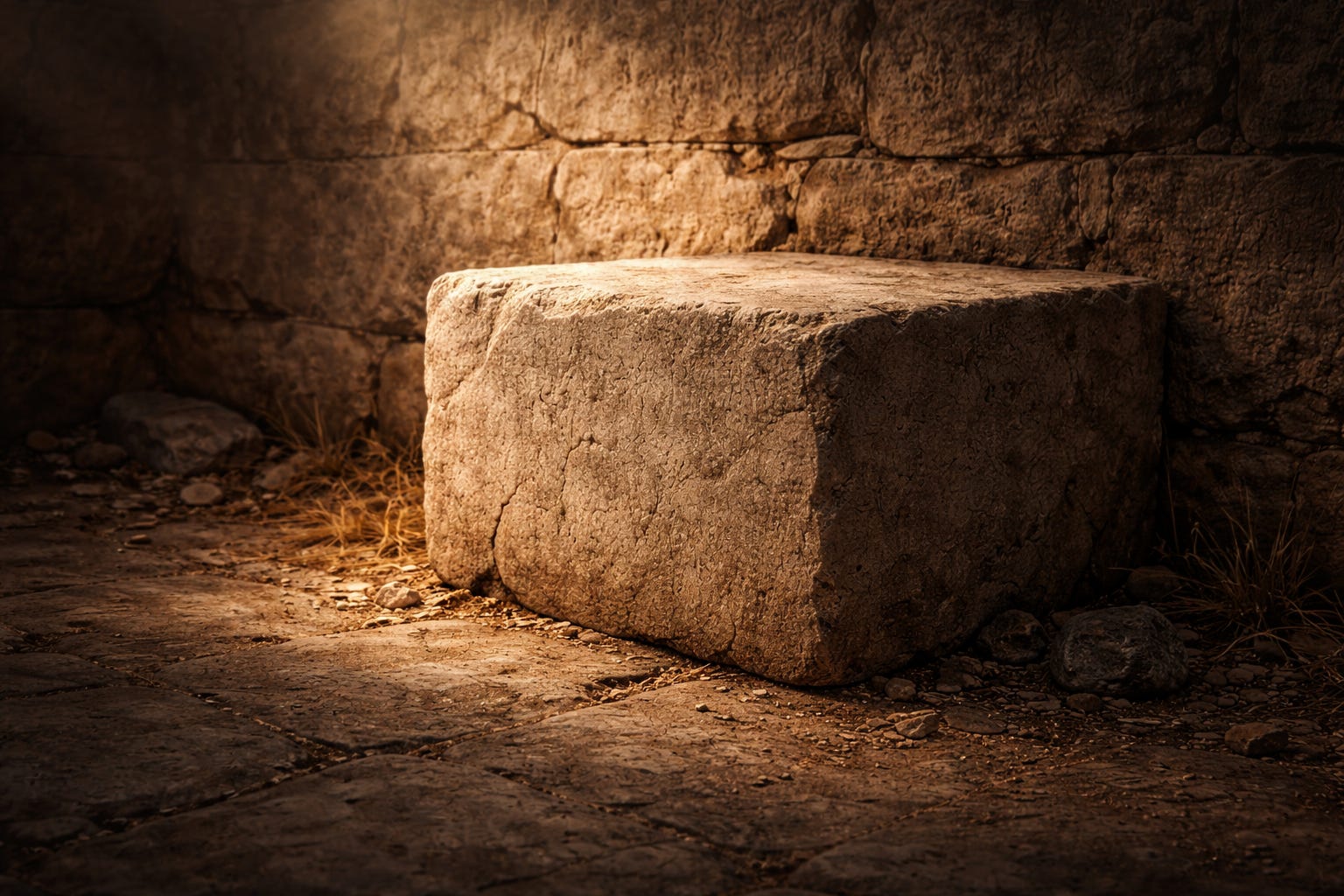
The stone that the builders rejected
has become the cornerstone;
by the Lord has this been done,
and it is wonderful in our eyes?
Therefore, I say to you,
the Kingdom of God will be taken away from you
and given to a people that will produce its fruit."
When the chief priests and the Pharisees heard his parables,
they knew that he was speaking about them.
And although they were attempting to arrest him,
they feared the crowds, for they regarded him as a prophet.
Today’s Focus
This parable is a covenant warning. The vineyard belongs to God. The leaders are stewards, not owners. The servants represent the prophets repeatedly sent and rejected. The Son is different, not another messenger, but the heir. The turning point of history is not ignorance, but the decision to reject Him. The Kingdom is not inherited by status or title; it is entrusted to those who bear fruit. The rejected stone becomes the cornerstone, and stewardship shifts to those willing to live in fidelity.
In the Margins
This parable has some debate that surrounds it. Some scholars argue that the close correspondence between this parable and Israel’s history suggests later theological shaping within the early Church. Others propose that Jesus told a more basic parable that was later expanded in light of post-Resurrection reflection. This view tends to be supported by Thomas (saying 65), where another form of this parable can be found. The Gospel of Thomas, a non-canonical Gnostic text.
The audience is explicitly the chief priests and elders. This is temple confrontation language. The vineyard parable is not abstract teaching, rather it is covenant indictment. In Isaiah, the vineyard is explicitly identified as Israel. Matthew’s audience would recognize this immediately. The landowner leaving reflects absentee landownership common in first-century Palestine. Tenant farmers worked land owned by elites and owed produce. This mirrors Israel’s leadership, caretakers of God’s covenant, not possessors of it. The servants sent to the vineyard represents the prophets sent by God to Israel. The produce they are looking for would have been the good works that God demanded. Matthew emphasizes escalation, more servants are sent, yet violence increases.
“Finally, he sent his son.” This is decisive. Unlike the servants, the son is qualitatively different. If a Jew was to die without an heir, the tenants would inherit the land. With this logic, they killed the son, reflecting a level both greed and rebellion. Throwing him out also reflects the story of Jesus. A son that is sent and “thrown out” or in this case killed outside the city of Jerusalem.
Some believe that the original allegory may have ended at verse 39. The necessity to complete it was to highlight Gods vindication. Here, Jesus quotes Psalm 118:22–23. In this Psalm, God vindicated the rejected Son. The rejected one becomes the essential one, the cornerstone of it all.
Another difference that stands out is the use of “The Kingdom of God.” In a lot of Matthew, we see “Kingdom of Heaven” used, but here there is a shift. The people that were to produce these fruits are both Israelites and Gentiles, the full church of Jesus. The shift here does not indicate a different concept, but may intensify the divine ownership being emphasized.
Verse 44 is written as “the one who falls on this stone will be dashed to pieces; and it will crush anyone on whom it falls.” It is commonly omitted or bracketed in many Bibles. It is widely believed to be an early addition to Matthew, coming from Luke 20:18 which it almost identical. Because the more authoritative texts do not have it, many Bibles omit it as the original likely did not include the verse.
The people hearing this message were the known leaders of Judaism at the time. They did not repent, they desired to arrest Him. They didn’t arrest Him out of fear, but it doesn’t change the desire or irony. Their reaction to this is the fulfillment of the parable itself. We also have a choice. We know that there are times where we cast Jesus aside for other things in our life. There is always a choice to make in this, but God’s forgiveness is eternal, His patience is long, and His mercy is perfect. Just as there are many that are sent, so too does God have patience. We must focus on being the opposite of these Pharisees though, with a focus on recognition instead of greed. A willingness to grow and change, instead of focusing on what will bring us personal joy or satisfaction now.
Reflection Question
Where in my life am I treating what belongs to God as if it were mine and resisting the authority of the Son instead of bearing fruit for Him?
A Small Invitation
If this reflection helped you, consider sharing it with someone who may benefit from hearing this message.