

06 May 26 | The Vine Is the Source
Jesus declares himself the true vine that Israel was always meant to be, and the command he repeats ten times across eight verses is the entire point of the passage.
The Gospel: John 15:1-8
¹ "I am the true vine, and my Father is the vine grower. ² He takes away every branch in me that does not bear fruit, and every one that does he prunes so that it bears more fruit. ³ You are already pruned because of the word that I spoke to you. ⁴ Remain in me, as I remain in you. Just as a branch cannot bear fruit on its own unless it remains on the vine, so neither can you unless you remain in me. ⁵ I am the vine, you are the branches. Whoever remains in me and I in him will bear much fruit, because without me you can do nothing. ⁶ Anyone who does not remain in me will be thrown out like a branch and wither; people will gather them and throw them into a fire and they will be burned. ⁷ If you remain in me and my words remain in you, ask for whatever you want and it will be done for you. ⁸ By this is my Father glorified, that you bear much fruit and become my disciples.
Today’s Focus
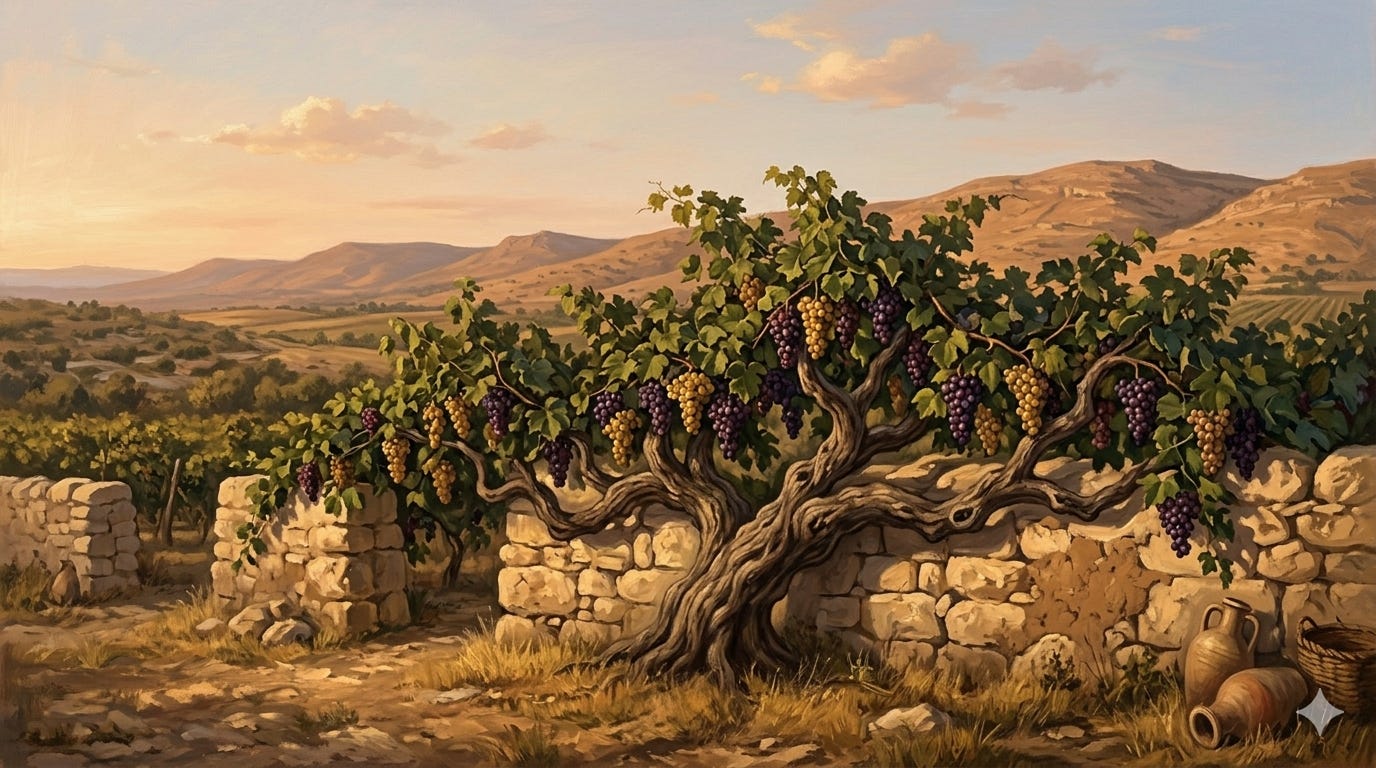
Every prophet who used the vine image was describing a failure. Israel as God’s vine produced wild grapes. Jesus declares himself the true vine, the original of which Israel was always a copy, the one that will actually produce what the vineyard was planted for. The Father tends it with two actions: removing what does not bear fruit and pruning what does. The disciples have already been pruned by the word spoken to them. Then comes the command repeated ten times: remain in me. The disciples are about to lose the physical presence of Jesus and face the temptation to seek fruitfulness elsewhere. The repeated command is the answer before the temptation arrives. Without him they can do nothing. Not less. Nothing. The vine is the source. The branches bear what the vine produces. The abiding is the condition for any fruit at all, and the bearing of fruit is simultaneously the evidence that the abiding is real and the means by which the Father is glorified.
In the Margins
Every image Jesus uses in John’s Gospel reaches back into Israel’s history, and the vine reaches back further and more painfully than most. Psalm 80 describes God bringing a vine out of Egypt, planting it in the land, and then lamenting its desolation. Isaiah 5 is the Song of the Vineyard, where God plants a choice vine on a fertile hill, tends it carefully, and it produces wild grapes. God identifies the vineyard explicitly as the house of Israel and asks what more could have been done for it. Jeremiah and Ezekiel both use the vine as an image for Israel’s failure and the judgment that follows. The consistent pattern across the prophets is that Israel as God’s vine did not produce the fruit the vineyard was planted for.
Jesus declares Himself the true vine. The word alēthinē, true, genuine, the real thing, signals that this vine is the original of which something else was a copy. He is the vine Israel was always meant to be, the one that will actually produce what the vineyard was planted for. The disciples grafted into Him are the branches of the vine that Israel as a nation failed to be.
The Father is the vine grower. He tends the vine with two actions. He removes branches that do not bear fruit. He prunes branches that do. The pruning is not punishment; it is the necessary work of removing what draws energy away from fruit production. The dead wood, misdirected growth, and things in a disciple’s life that are not ordered toward fruitfulness are removed to help them grow in Jesus. Jesus tells the disciples they have already been pruned by the word He has spoken to them. The teaching, the challenges, the demands of the farewell discourse have been doing the vine grower’s work throughout the relationship.
The command that follows is stated ten times across eight verses. Remain in me. The Greek verb meno means to abide, to dwell, to stay. The repetition is not rhetorical decoration. It is the entire point of the passage. The disciples who hear this are about to lose the physical presence of Jesus. They will face the temptation to seek life and fruitfulness from sources other than the vine. The repeated command is the answer to that temptation before it arrives.
The abiding is mutual, as Jesus remains in the disciples and they remain in Him. This is the same mutual indwelling described in John 14, now expressed through the organic image of vine and branches. Branches do not merely attach to the vine for external support. They draw life from within it. They exist as extensions of the vine’s own life. A severed branch does not produce less fruit. It produces none. Organic connection to the vine is the necessary condition for any fruit at all.
One of the most absolute statements in the farewell discourse is the notion that without Him they can do nothing. Not less. Not with difficulty. Nothing. The fruit the Father planted the vine to produce, the love and witness and works done in the Father’s name, cannot come from any other source. This is not a statement designed to produce dependence for its own sake. It is a description of how the life of discipleship actually works. The vine is the source. The branches bear what the vine produces. The bearing of fruit is simultaneously the evidence that the abiding is real and the means by which the Father is glorified.
The prayer promise in verse 7 belongs inside this framework. Whatever you ask will be done for you, on the condition that you remain in Jesus and His words remain in you. The abiding produces the formation that makes the asking trustworthy. The one who genuinely abides in Jesus and is genuinely formed by His words asks from within the Father’s will rather than from outside it. The promise is not unlimited. It is unlimited within the abiding, which is itself unlimited in what it can produce.
Reflection Question
Where are you currently trying to bear fruit from a branch that has been severed from the vine?
A Small Invitation
If this reflection helped you, consider sharing it with someone who may benefit from hearing this message.