

The Gospel: John 20:11-18
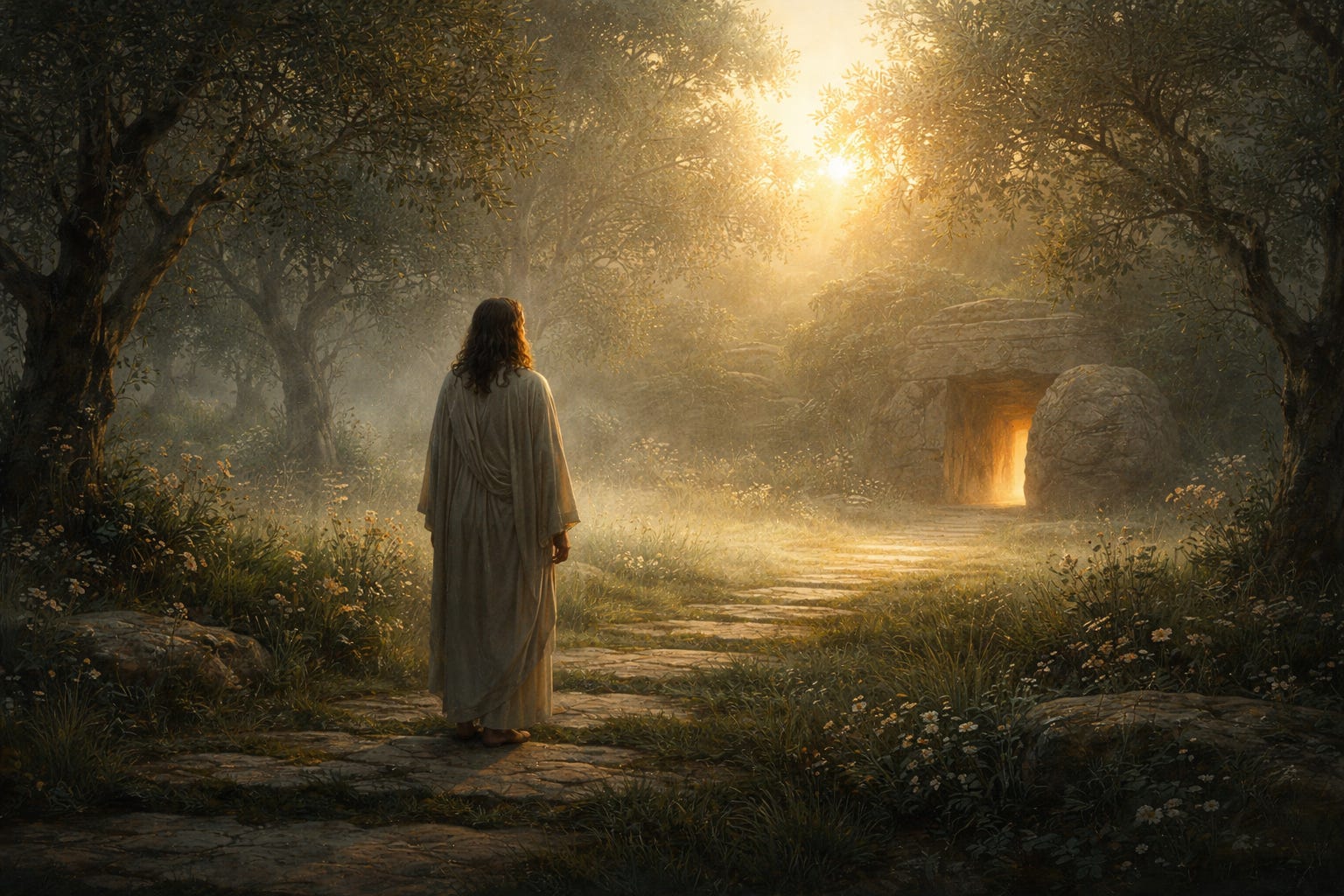
¹¹ But Mary stayed outside the tomb weeping. And as she wept, she bent over into the tomb ¹² and saw two angels in white sitting there, one at the head and one at the feet where the body of Jesus had been. ¹³ And they said to her, “Woman, why are you weeping?” She said to them, “They have taken my Lord, and I don’t know where they laid him.” ¹⁴ When she had said this, she turned around and saw Jesus there, but did not know it was Jesus. ¹⁵ Jesus said to her, “Woman, why are you weeping? Whom are you looking for?” She thought it was the gardener and said to him, “Sir, if you carried him away, tell me where you laid him, and I will take him.” ¹⁶ Jesus said to her, “Mary!” She turned and said to him in Hebrew, “Rabbouni,” which means Teacher. ¹⁷ Jesus said to her, “Stop holding on to me, for I have not yet ascended to the Father. But go to my brothers and tell them, ‘I am going to my Father and your Father, to my God and your God.’” ¹⁸ Mary of Magdala went and announced to the disciples, “I have seen the Lord,” and what he told her.
Today’s Focus
Peter and the beloved disciple came, saw, and went home. Mary stayed. She had no answer and she would not leave without one. She is looking for a body and finds a person. She does not recognize him by sight. She recognizes him by voice, by the single word he speaks in the way only he speaks it. The Good Shepherd calls his own by name and they know his voice. That promise becomes literal in a garden at dawn with one word spoken in Hebrew. He sends her to announce what she has seen, not to the world but to the brothers, and she goes. The one who stayed when everyone else left becomes the first voice of the Gospel’s greatest claim.
In the Margins
Peter and the beloved disciple came, saw, and went home. Mary stays at the tomb. She has no answer yet and she will not leave without one. She was there when Jesus died, was there at the burial, and is the last one standing at the empty tomb while the disciples have already returned to their homes. The verb John uses for her weeping, klaiousa, is the same word used for the mourning at Lazarus’s tomb in John 11, where Jesus arrived and was deeply troubled by the grief He encountered.
When she bends down into the tomb she sees two angels, one seated at the head and one at the feet where the body had been. Their positioning carries a specific resonance for anyone formed in Israel’s scriptures. In Exodus 25, God instructs Moses to place two cherubim on the mercy seat of the Ark of the Covenant, one at each end, facing each other. The mercy seat was the holiest point in Israel’s worship, the place where God’s presence dwelt and where atonement was made. The two angels positioned at the head and feet of where Jesus had lain signal that the empty tomb is the new mercy seat, the place where divine presence and human need meet in a way the Ark could only anticipate.
The angels ask Mary why she is weeping and she gives the same answer she gave Peter and the beloved disciple. Someone has taken the body. The presence of angels has not shifted her framework. She is so deep in grief that even the supernatural does not register as significant. She turns and sees Jesus standing there and does not recognize Him. John gives no explanation for this, and none of the resurrection appearances in the Gospels produce immediate recognition. The disciples on the road to Emmaus walk with Jesus for hours without knowing Him. The disciples on the shore of Galilee do not recognize Him at first. The resurrection body is real and physical, but perception of it operates differently than ordinary sight.
She assumes He is the gardener. The word John uses here, ho kepouros, appears nowhere else in the New Testament. The detail is humanly plausible and theologically loaded. In Genesis 2, the first human was placed in a garden to tend it. In Genesis 3, the rupture between God and humanity began in a garden. Jesus was arrested in a garden. He was buried in a garden. The resurrection happens in a garden. This event has been drawing the full arc of the garden across human history, and the one Mary mistakes for the gardener is, in the deepest sense, exactly that. He is the new Adam, tending the garden of the new creation, closing the circle that opened in Eden.
Then He speaks her name. One word, in Hebrew, in the voice she knows. Everything turns on this moment. Jesus had said in John 10 that the Good Shepherd calls his own sheep by name and they know his voice. Mary does not recognize Him by sight. She recognizes Him by the particular way He speaks the one word that belongs to her. The promise of John 10 becomes literal at this moment. Her response, Rabbouni, is Aramaic for my teacher, carrying more warmth and personal devotion than the English translation conveys. It is the word of someone who has found not just a teacher but the person who defined their entire understanding of the world.
Jesus immediately redirects her. The instruction not to hold on to Him is not a prohibition on touch. The Greek construction indicates she is already holding on and He is telling her to stop. The reason He gives is not that contact is forbidden but that the relationship she is trying to secure through physical presence is about to be transformed into something closer. The ascension is not a departure that ends what they have. It is the next stage of a relationship that will no longer depend on physical proximity. Thomas will be explicitly invited to touch Jesus’ wounds later in this same chapter. The issue is not contact, rather clinging to the present moment as if it were the final destination.
The message He sends through her introduces language that has not appeared in this Gospel before this moment. Throughout the Gospel Jesus spoke of the Father as His Father in ways that indicated a unique relationship. Now He says my Father and your Father, my God and your God. The structure mirrors Ruth 1:16, where Ruth declares to Naomi your people shall be my people and your God my God, a declaration of total incorporation into a belonging that was not originally hers. The disciples are being drawn into the relationship Jesus has with the Father, not as equals in nature but as participants in the same love.
Mary goes and announces to the disciples that she has seen the Lord. She does not report an empty tomb or describe folded linen. She proclaims an encounter with a risen person. She is the first to say it, and the Church has recognized what that means. Augustine called her Apostle to the Apostles, sent by Jesus Himself to announce the resurrection to those He would send to the world. The one who stayed when everyone else left became the first voice of the Gospel’s greatest claim.
Mary would not have been a reliable witness under first century Jewish laws. Jesus chose her based on relationship, not on what would have been expected. If it were expected we would have seen the message carried by two men. The point of this is that Jesus calls His own in any way He wishes. The importance comes from our relationship with the Lord, not our relationship with the world. We should frame our actions this way, even today, choosing the Lord over the world. Remember, we are called to be like Mary in the sense that we proclaim the word to those we encounter.
Reflection Question
Is there a place in your faith where you have stopped staying, stopped waiting, stopped refusing to leave without an answer?
A Small Invitation
If this reflection helped you, consider sharing it with someone who may benefit from hearing this message.