

Today’s Takeaway
Faith is not proven by the absence of fear, but by learning to recognize and trust Jesus when He comes to us in the midst of it.
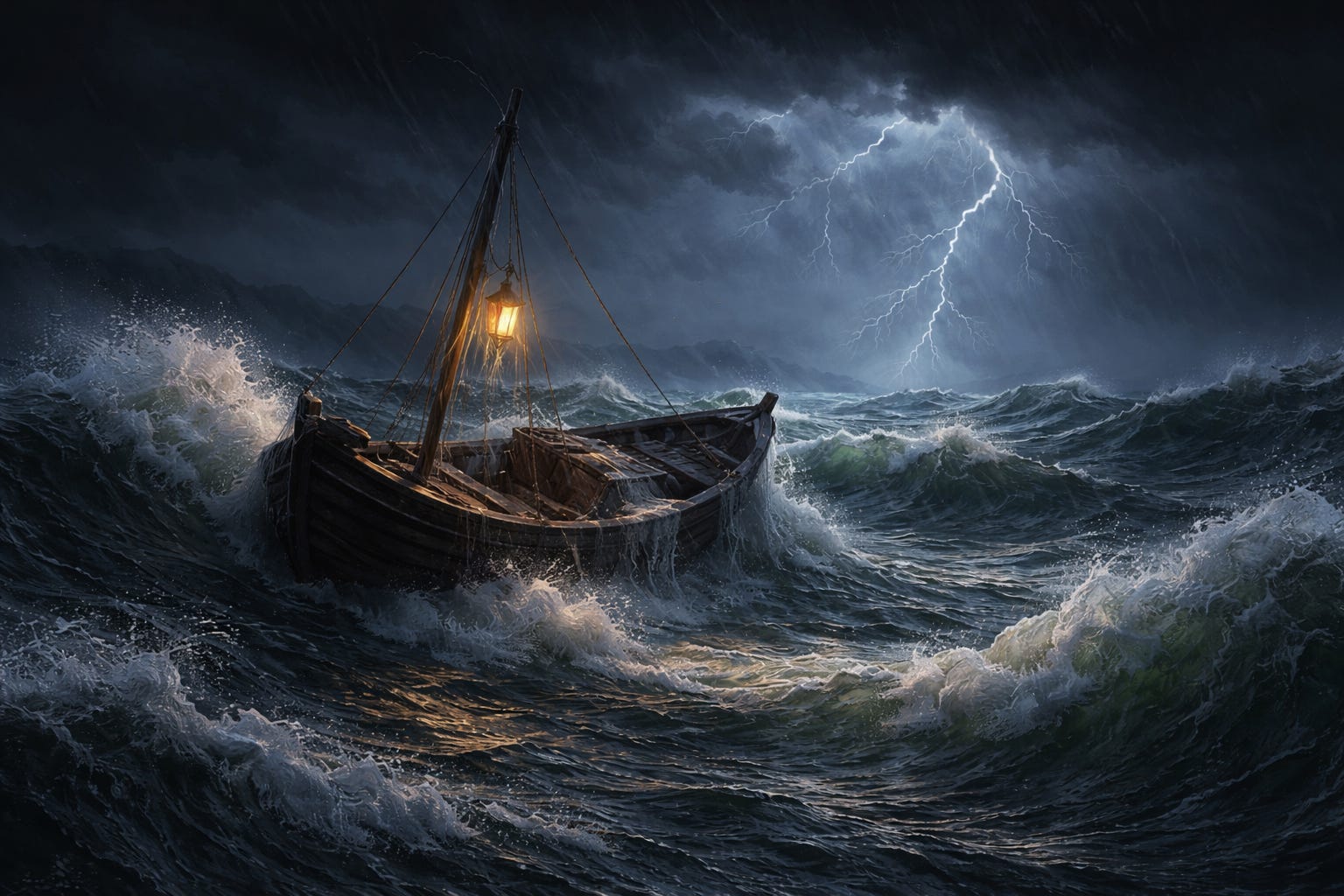
The Gospel
After the five thousand had eaten and were satisfied,
Jesus made his disciples get into the boat
and precede him to the other side toward Bethsaida,
while he dismissed the crowd.
And when he had taken leave of them,
he went off to the mountain to pray.
When it was evening,
the boat was far out on the sea and he was alone on shore.
Then he saw that they were tossed about while rowing,
for the wind was against them.
About the fourth watch of the night,
he came toward them walking on the sea.
He meant to pass by them.
But when they saw him walking on the sea,
they thought it was a ghost and cried out.
They had all seen him and were terrified.
But at once he spoke with them,
“Take courage, it is I, do not be afraid!”
He got into the boat with them and the wind died down.
They were completely astounded.
They had not understood the incident of the loaves.
On the contrary, their hearts were hardened.
Reflection
Jesus was on the eastern side of the Sea of Galilee, near the region of Bethsaida, after the feeding of the five thousand. It says that he went up to pray alone. Since the terrain around the Sea of Galilee rises quickly into rocky hills and mountains, this means Jesus would have had a clear vantage point over the water below. Mark tells us that He saw the disciples struggling, which is entirely plausible given the geography. It is also possible that Mark could mean this to be through a divine vision, but either works in this case!
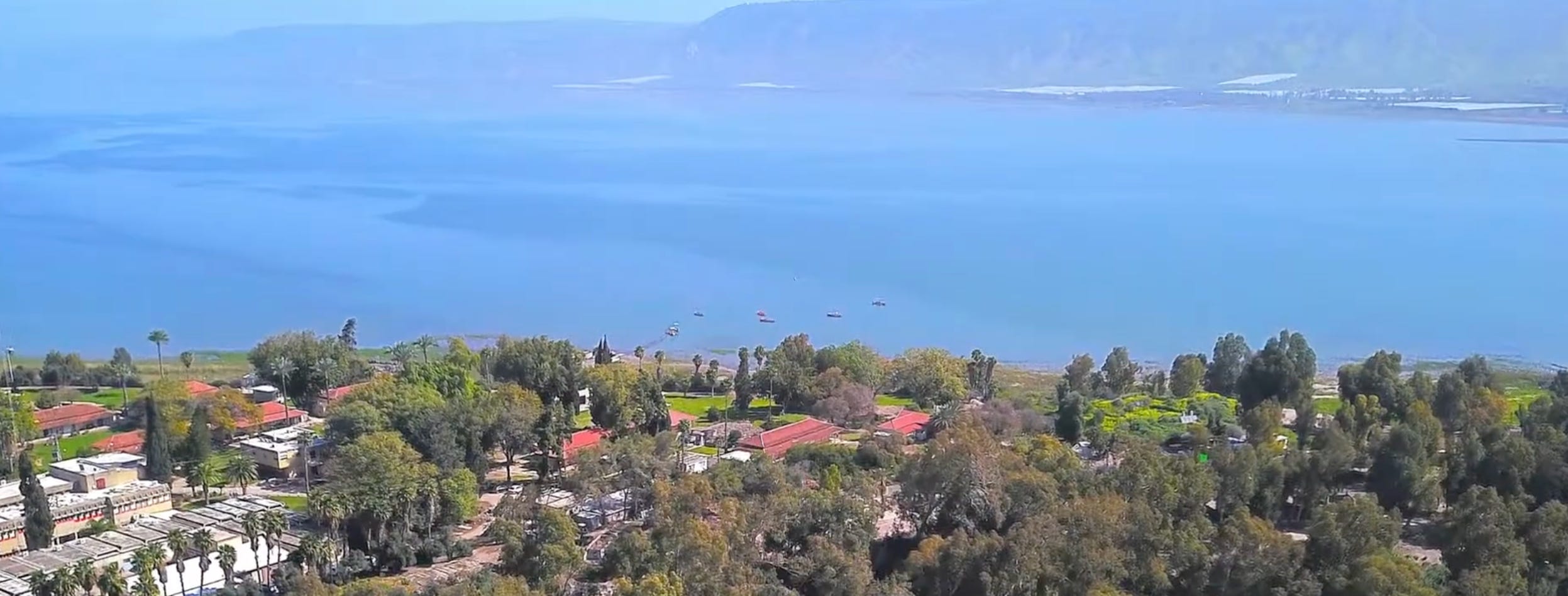
The Sea is actually a freshwater lake that sits about 700 feet below sea level. It is roughly 13 miles long and 8 miles wide. It is easy to not understand modern or historical weather patterns if you do not live or visit the area. Modern observations help illustrate how severe conditions can become
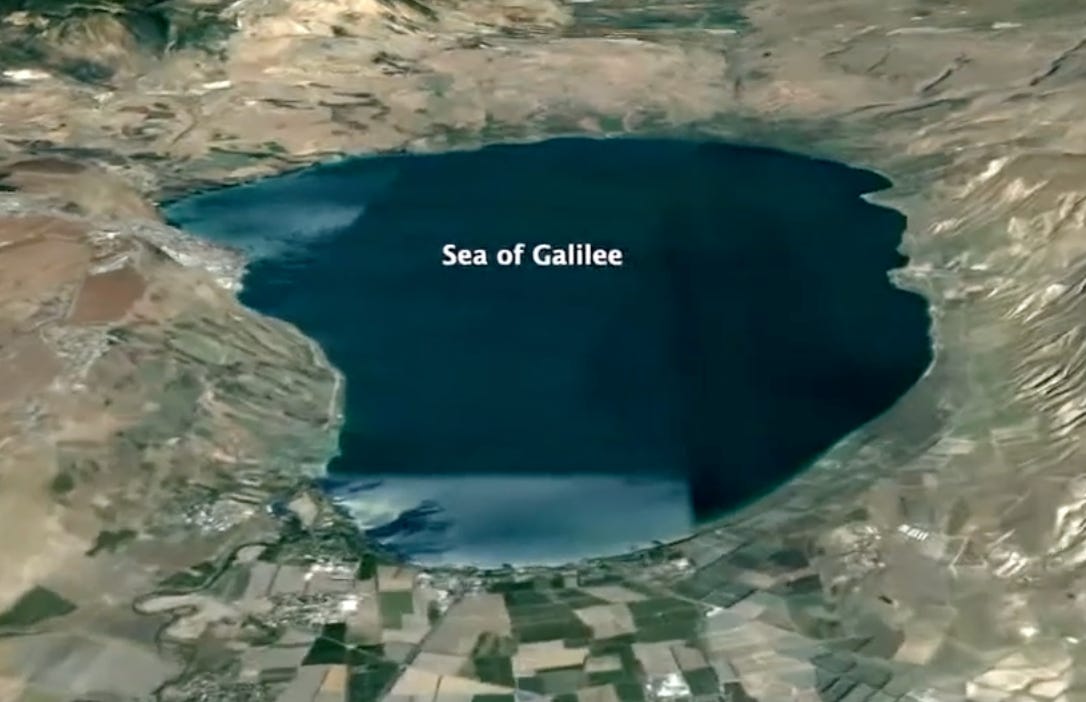
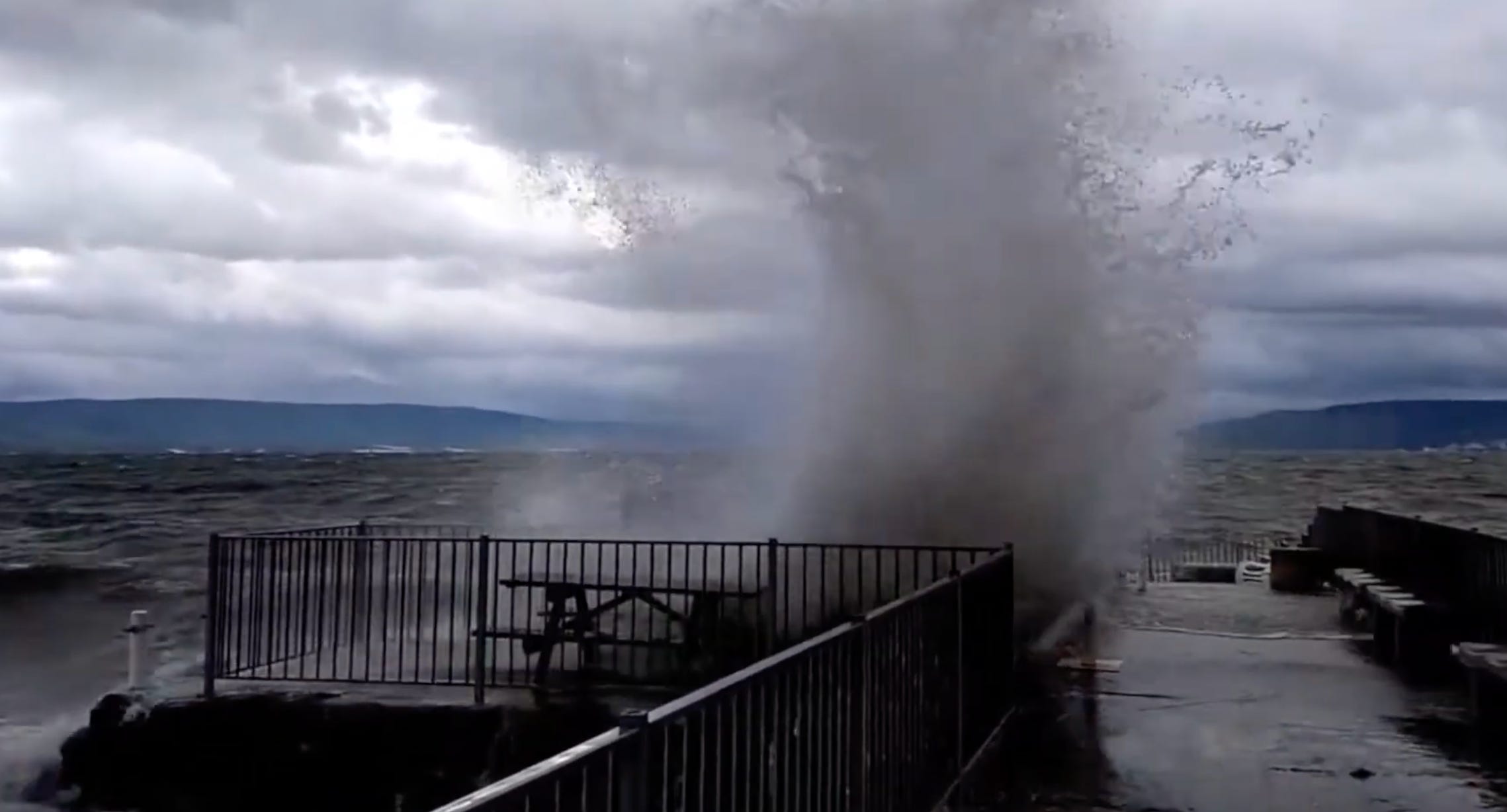
.It turns out that the Sea of Galilee is notoriously dangerous because cold air funnels down from the surrounding mountains and collides with warm air sitting over the lake. This makes for sudden and violent storms with the bowl acting as a wind tunnel.
Ancient boats were typically 26 feet long, low to the water, and easily swamped. Even seasoned fishermen could be genuinely terrified. This was not mild discomfort or fishermen getting a little seasick, this was a life-threatening situation.
It says that it was the “fourth watch of the night” – which would be roughly 3–6 in the morning. It is the darkest and most exhausting part of the night, emphasizing the disciples’ physical and emotional limits.
The Old Testament connections with this part of the Gospel is significant! If we look at Job 9:8 points to what God can do, “He alone stretches out the heavens and treads upon the waves of the sea.” It is in the Psalms as well, where 77:19 “Your way was through the sea, your path through the mighty waters, though your footprints were unseen.”
This miracle is less about calming the storm, Jesus has just performed a massive miracle. This miracle was about Jesus revealing who He was. The Gospel then ties in the miracle of the loaves. The disciples have witnessed countless miracles by this point, yet they were still astounded. They just saw him feed five thousand people and have leftovers, he had cured all sorts of diseases, but this is something they were astounded by.
When Jesus is feeding the masses, it echoes Moses feeding the people in the wilderness. It is fulfilling his shepherd imagery, God feeding the people. The disciples didn’t understand it at the time and we hear that their hearts were hardened. This is what we also heard about Pharaoh when he refused to believe the plagues of God. In this way, the disciples were still understanding Jesus based on human expectation and not his truly divine nature.
If we reflect on the storms that occur in all our lives, we should recall this Gospel. The wind and the waves do not cease because the disciples figure things out or row harder; the storm ends only when Jesus enters the boat. Mark is clear about this detail because it reveals something essential about faith. Peace is not the result of control, effort, or understanding, but of presence.
In our own lives, many of the storms we face are not caused by God, but they persist because we attempt to endure them without truly inviting Christ into them. We may believe in Jesus, follow Him, and even pray regularly, yet still keep Him at a distance from our fear, anxiety, or decisions. Like the disciples, we can be close to Him and still fail to recognize Him at work. The Gospel reminds us that lasting calm does not come from escaping the storm, but from allowing Christ to enter fully into it with us.
Reflection Question
Where in my life am I overwhelmed by the storm, yet failing to recognize that Christ is already present and approaching me?