

The Gospel: Luke 24:13-35
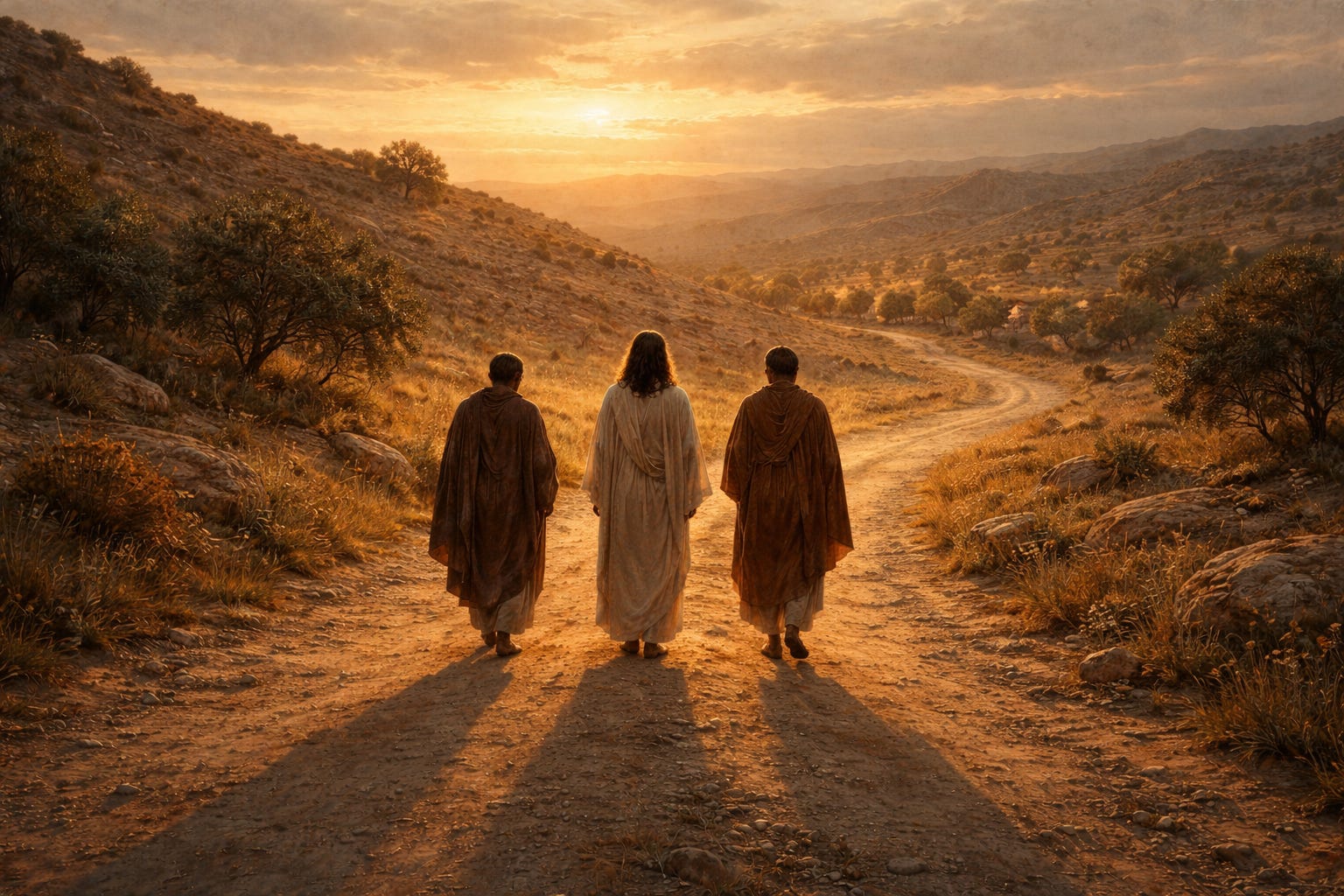
¹³ Now that very day two of them were going to a village seven miles from Jerusalem called Emmaus, ¹⁴ and they were conversing about all the things that had occurred. ¹⁵ And it happened that while they were conversing and debating, Jesus himself drew near and walked with them, ¹⁶ but their eyes were prevented from recognizing him. ¹⁷ He asked them, “What are you discussing as you walk along?” They stopped, looking downcast. ¹⁸ One of them, named Cleopas, said to him in reply, “Are you the only visitor to Jerusalem who does not know of the things that have taken place there in these days?” ¹⁹ And he replied to them, “What sort of things?” They said to him, “The things that happened to Jesus the Nazarene, who was a prophet mighty in deed and word before God and all the people, ²⁰ how our chief priests and rulers both handed him over to a sentence of death and crucified him. ²¹ But we were hoping that he would be the one to redeem Israel; and besides all this, it is now the third day since this took place. ²² Some women from our group, however, have astounded us: they were at the tomb early in the morning ²³ and did not find his body; they came back and reported that they had indeed seen a vision of angels who announced that he was alive. ²⁴ Then some of those with us went to the tomb and found things just as the women had described, but him they did not see.” ²⁵ And he said to them, “Oh, how foolish you are! How slow of heart to believe all that the prophets spoke! ²⁶ Was it not necessary that the Messiah should suffer these things and enter into his glory?” ²⁷ Then beginning with Moses and all the prophets, he interpreted to them what referred to him in all the scriptures. ²⁸ As they approached the village to which they were going, he gave the impression that he was going on farther. ²⁹ But they urged him, “Stay with us, for it is nearly evening and the day is almost over.” So he went in to stay with them. ³⁰ And it happened that, while he was with them at table, he took bread, said the blessing, broke it, and gave it to them. ³¹ With that their eyes were opened and they recognized him, but he vanished from their sight. ³² Then they said to each other, “Were not our hearts burning within us while he spoke to us on the way and opened the scriptures to us?” ³³ So they set out at once and returned to Jerusalem where they found gathered together the eleven and those with them ³⁴ who were saying, “The Lord has truly been raised and has appeared to Simon!” ³⁵ Then the two recounted what had taken place on the way and how he was made known to them in the breaking of the bread.
Today’s Focus
They were walking away. The resurrection had already been announced and they were headed in the opposite direction, toward a village of no significance, carrying the past tense of abandoned hope. A stranger joined them, rebuked their slowness, and showed them how the entire Hebrew canon had been pointing toward what they thought was a defeat. They did not recognize him until he broke the bread, using the same four verbs Luke recorded at the multiplication of loaves and at the Last Supper. The moment he was recognized he vanished. They sat with that for a moment and then asked each other whether their hearts had not been burning the whole time. Then they got up and walked seven miles back to Jerusalem in the dark. The resurrection does not produce rest. It produces return and proclamation.
In the Margins
Two disciples are walking away from Jerusalem on the day the resurrection has already been announced. The women have reported the empty tomb and these two are heading in the opposite direction, seven miles toward a village of no significance, on the most significant day in human history. The direction they are walking is not just geographical; it is the direction of abandoned hope.
Their summary of Jesus when the stranger joins them is an interesting point. They describe Him as a prophet mighty in deed and word. That description is accurate and it is not enough, especially considering their proximity to Jesus. Prophet is the category the crowds had used after the raising of the widow’s son at Nain, the same category some applied at the triumphal entry. It is true as far as it goes, but we can see that they have doubts. They are headed away and say that they were hoping that He would be the one to redeem Israel. The past tense is the grammar of a future that is no longer available to them. The word they use for redeem, lytrousthai, draws directly on the Exodus vocabulary of God ransoming Israel from Egypt. They expected a political and national deliverance. They got a crucifixion. In their framework these two things cannot both be true at once.
Jesus’ rebuke is sharp. Foolish and slow of heart are not gentle corrections. The problem He identifies is not that they lacked information. They had the scriptures. The problem is that they had not read them in a way that prepared them for a suffering Messiah. What follows is the earliest description of what the Church later calls typological interpretation, Jesus showing them beginning with Moses and moving through all the prophets how the entire Hebrew canon had been pointing toward what just occurred. The specific texts are not recorded. Luke preserves the method and withholds the content, which means every reader is invited to make the same journey, to go back to the scriptures and read them in light of the risen Christ.
The word Jesus uses for the necessity of the Messiah’s suffering, edei, is one of this Gospels most theologically significant terms. It is used throughout the Gospel for the divine necessity of Jesus’ mission. What happened on the cross was not a tragedy God permitted, but a path God had always designated. Suffering is the road to glory, and the scriptures had been saying so the whole time.
As they approach Emmaus, Jesus gives the impression He is continuing on. He does not force Himself into the house, but waits to be invited. Their urging Him to stay is the invitation that opens what follows. When He sits at table with them He takes bread, says the blessing, breaks it, and gives it to them. Those four verbs, took, blessed, broke, gave, appear in precisely the same sequence at the multiplication of the loaves in Luke 9 and at the Last Supper in Luke 22. The Gospel of Luke uses the sequence three times to establish a pattern. The recognition occurs at the moment the Eucharistic action is performed. Their eyes are opened and they know Him, and then He vanishes.
The disappearance at the moment of recognition is consistent with every resurrection appearance in the Gospels. The risen Jesus is not subject to ordinary physical presence. He appears and withdraws as He chooses, and the recognition does not require continued visibility. What He has opened cannot be closed again by His absence.
Their retrospective question to each other is the passage’s most enduring line. The burning had been happening the whole time. The Word had been working before the meal completed what the Word had begun. They rise that same hour and walk the seven miles back to Jerusalem. It is evening and they had walked seven miles on uneven surfaces. The resurrection encounter does not produce rest, it produces immediate return and proclamation. When they arrive they find the eleven already gathered and reporting that the Lord has appeared to Simon. The Emmaus disciples add their testimony and two independent streams of witness converge in the same room on the same night. The resurrection is no longer a single report. It is the convergence of multiple witnesses who have encountered the same person from different directions and arrived at the same declaration.
This shows us that Jesus can come and go as He pleases, and that we may not always recognize the significance of what is happening in the exact moment it happens. Everyone will respond differently to these encounters as they happen. the disciples at Emmaus were not less loved for their slowness to realize or believe. Jesus walked with them anyway and opened their eyes when the time was right. Coming to know the Lord is not a race and there are no extra points for getting there first. That being said, we should work to ensure our hearts are open to receive the Lord, for the sooner we experience this the longer we have to live in the fullness that is true connection with God.
Reflection Question
Is there a place in your life where Jesus has been walking with you and working in you that you have not yet recognized yet?
A Small Invitation
If this reflection helped you, consider sharing it with someone who may benefit from hearing this message.