

The Gospel: Matthew 5:1-12
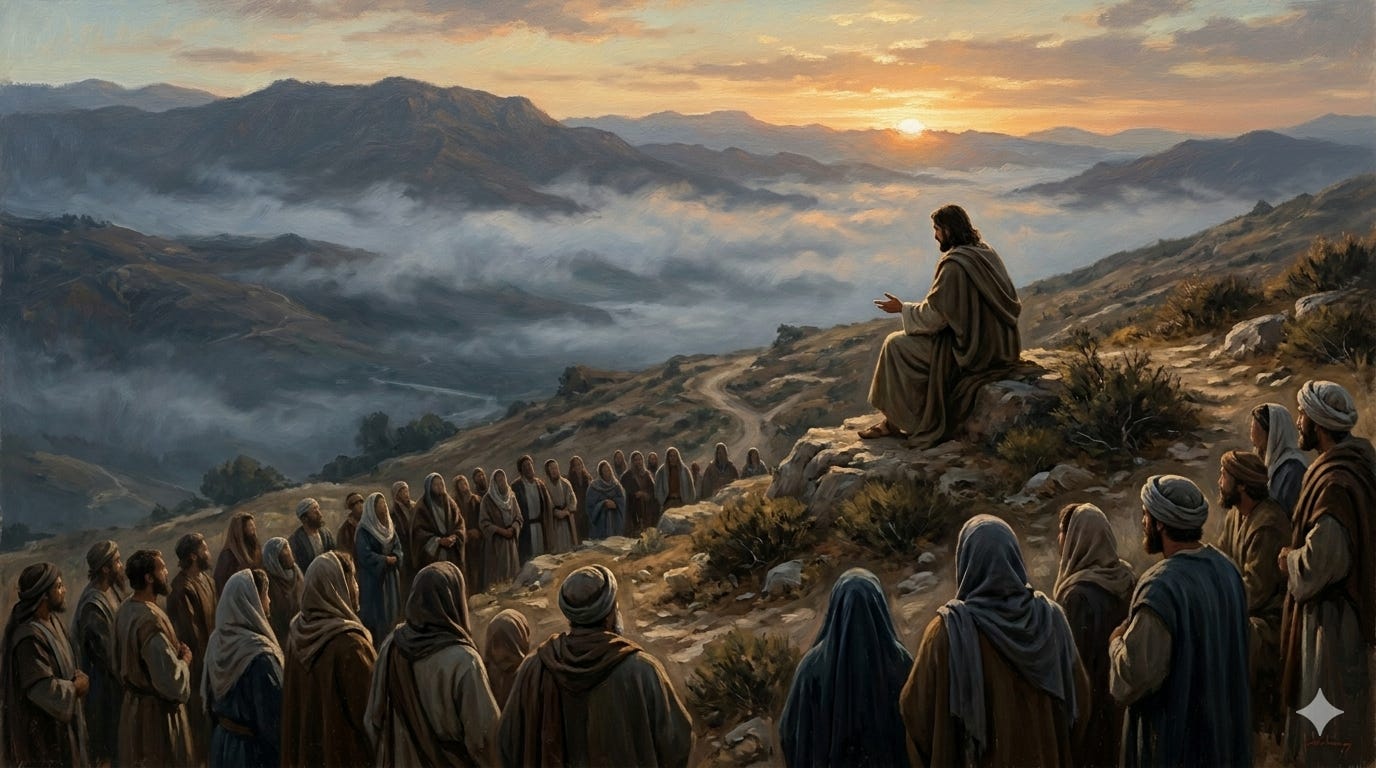
¹ When he saw the crowds, he went up the mountain, and after he had sat down, his disciples came to him. ² He began to teach them, saying:
³ "Blessed are the poor in spirit,
for theirs is the kingdom of heaven.
⁴ Blessed are they who mourn,
for they will be comforted.
⁵ Blessed are the meek,
for they will inherit the land.
⁶ Blessed are they who hunger and thirst for righteousness,
for they will be satisfied.
⁷ Blessed are the merciful,
for they will be shown mercy.
⁸ Blessed are the clean of heart,
for they will see God.
⁹ Blessed are the peacemakers,
for they will be called children of God.
¹⁰ Blessed are they who are persecuted for the sake of righteousness,
for theirs is the kingdom of heaven.
¹¹ Blessed are you when they insult you and persecute you and utter every kind of evil against you falsely because of me. ¹² Rejoice and be glad, for your reward will be great in heaven. Thus they persecuted the prophets who were before you."
Today’s Focus
Jesus intensifies the Bread of Life claim by naming the bread as His flesh and blood, using the visceral verb trogo for ongoing habitual eating, invoking the Torah's blood prohibition to press the literalness of the claim, establishing mutual indwelling as the fruit of eating and drinking, and grounding it all in the chain of life from the living Father through the Son to the believer.
In the Margins
Jesus sees the crowds and goes up the mountain. Matthew’s first readers would have felt the weight of that detail immediately. Sinai was the mountain where God gave the Torah and constituted Israel as His covenant people. Moses went up and came down with the law. Jesus goes up and sits down, the posture of a teacher with authority, and begins to constitute a new community around a new teaching. This is the new Sinai and Matthew wants you to know it from the first sentence.
What follows is not a list of virtues to achieve or a moral improvement program. The Beatitudes are declarations spoken over people who are already in specific conditions, pronouncements of divine favor over the very people the world has written off. The Greek word makarios, translated as blessed, does not primarily mean happy in the emotional sense. It describes a state of divine favor, a wellbeing that circumstances cannot remove or supply.
Each Beatitude names a condition the world marks as a disadvantage and declares it the location of God’s specific attention. The poor in spirit are those who have no spiritual self-sufficiency to offer, who know they have nothing to bring. The kingdom of heaven is theirs precisely because they are not claiming it on their own terms. The mourners grieve genuinely over loss, over sin, over the suffering of the world. They will be comforted, not because mourning ends on demand but because the God of all comfort specifically meets those who are not performing wellness.
The meek are not the weak. The Greek word praus describes powerful things held under control. A well-trained horse, strength that has been directed rather than eliminated. They will inherit the land, the language of Psalm 37, where the meek outlast the wicked not by overpowering them but by a patient faithfulness the restless cannot maintain.
Those who hunger and thirst for righteousness will be satisfied. The combination of hunger and thirst together describes a desperate, consuming need, not a mild preference. The merciful will receive mercy. The pure in heart, those whose interior life is undivided and unguarded before God, will see God. The peacemakers will be called children of God, bearing the family resemblance of the one whose mission was reconciliation.
Then the persecuted. Both the poor in spirit at the beginning and the persecuted at the end are told the kingdom of heaven is theirs. The entire list is bracketed by the kingdom as the possession of those who seem to have nothing. This is the shape of the community Jesus is forming. Not the triumphant, not the powerful, not the theologically sophisticated. The empty-handed who have stopped pretending otherwise.
Most of us spend enormous energy avoiding the conditions the Beatitudes pronounce blessed over, mistaking comfort for favor and difficulty for absence. This passage invites a different reading of our circumstances entirely. The places where we have run out of ourselves may be precisely the places where God is most specifically present.
Reflection Question
Which of the Beatitudes describes a condition you are currently in but have been treating as something to escape rather than a place where God's specific favor is present?