

The Gospel: Matthew 10:7-15
⁷ "As you go, make this proclamation: 'The kingdom of heaven is at hand.' ⁸ Cure the sick, raise the dead, cleanse lepers, drive out demons. Without cost you have received; without cost you are to give. ⁹ Do not take gold or silver or copper for your belts; ¹⁰ no sack for the journey, or a second tunic, or sandals, or walking stick. The laborer deserves his keep. ¹¹ Whatever town or village you enter, look for a worthy person in it, and stay there until you leave. ¹² As you enter a house, wish it peace. ¹³ If the house is worthy, let your peace come upon it; if not, let your peace return to you. ¹⁴ Whoever will not receive you or listen to your words — go outside that house or town and shake the dust from your feet. ¹⁵ Amen, I say to you, it will be more tolerable for the land of Sodom and Gomorrah on the day of judgment than for that town."
Today’s Focus
Jesus sends the Twelve with the proclamation of the kingdom and the authority to demonstrate it, prohibiting them from carrying independent resources so that the mission remains entirely dependent on and expressive of grace, while establishing that refusing the Gospel carries consequences more serious than the destruction that fell on Sodom.
In the Margins
As you go, make this proclamation: the kingdom of heaven is at hand. The commission comes before the instructions about provisions. The content of what the disciples are being sent to announce is stated first: the kingdom of heaven is at hand, not coming eventually, not available under certain conditions, but pressing right up against the present moment. Then the accompanying actions: cure the sick, raise the dead, cleanse lepers, drive out demons. The announcement and the demonstration belong together. The kingdom being at hand is not an abstraction requiring only verbal affirmation. It is a reality that shows itself in specific kinds of reversals.
Without cost you have received, without cost you are to give. This single sentence governs everything that follows about what the disciples should and should not carry. The mission cannot be turned into a transaction, because the thing being given was never purchased. It was received. The logic of the kingdom does not run on marketplace economics. What flows from grace must flow as grace or it has already changed into something else.
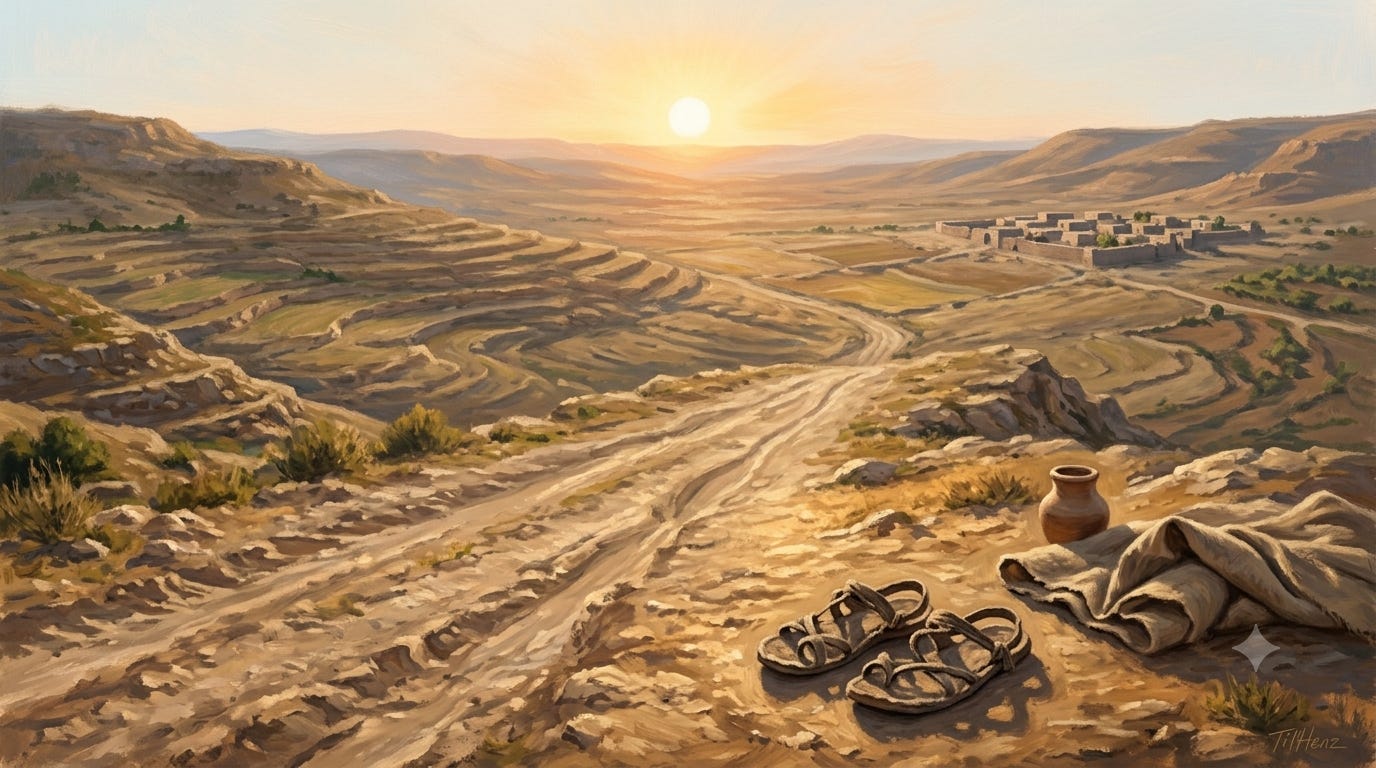
Do not take gold or silver or copper for your belts, no sack for the journey, no second tunic, no sandals, no walking stick. The disciples are being sent without a safety net, deliberately. This is not asceticism for its own sake. It is a structural statement about dependence. A person traveling with full provisions does not need hospitality. A person traveling with none does. The mission is designed to require the receiving of welcome from others, both because that welcome is itself part of what is being given, and because the dependence makes visible, to everyone watching, that the disciples are not operating out of their own resources.
The laborer deserves his keep. Jesus establishes the principle of just support while simultaneously prohibiting them from seeking it independently. Whatever town or village you enter, look for a worthy person in it, and stay there until you leave. The instruction to find one host and remain rather than moving between households protects both the disciples and the community. Moving around, sampling different levels of hospitality, would turn the mission into something that looks more like taking advantage than receiving welcome.
As you enter a house, wish it peace. If the house is worthy, let your peace come upon it. If not, let your peace return to you. The peace offered at the door is not a formality. It is something substantive, given and received or withheld and returned. What the disciples carry is real enough to transfer. It is also real enough that its refusal has consequences.
Whoever will not receive you or listen to your words, go outside that house or town and shake the dust from your feet. This gesture, used by observant Jews returning from Gentile territory to symbolically remove pagan contamination, is here redirected toward Jewish towns that refuse the Gospel. The reassignment is serious. A town that hears the proclamation of the kingdom and consciously turns away has placed itself in a category not ordinarily assigned to Israel’s own cities. It will be more tolerable for the land of Sodom and Gomorrah on the day of judgment than for that town. Sodom and Gomorrah were destroyed in ignorance of what was being offered. The town that consciously hears and refuses is in a more serious position than they were.
Reflection Question
Where have you been treating what God has freely given you as something that belongs to you to manage and distribute on your own terms rather than something to pass on as freely as you received it?