

The Gospel: Mark 16:9-15
⁹ When he had risen, early on the first day of the week, he appeared first to Mary Magdalene, out of whom he had driven seven demons. ¹⁰ She went and told his companions who were mourning and weeping. ¹¹ When they heard that he was alive and had been seen by her, they did not believe.
¹² After this he appeared in another form to two of them walking along on their way to the country. ¹³ They returned and told the others; but they did not believe them either.
¹⁴ But later, as the eleven were at table, he appeared to them and rebuked them for their unbelief and hardness of heart because they had not believed those who saw him after he had been raised. ¹⁵ He said to them, “Go into the whole world and proclaim the gospel to every creature.
Today’s Focus
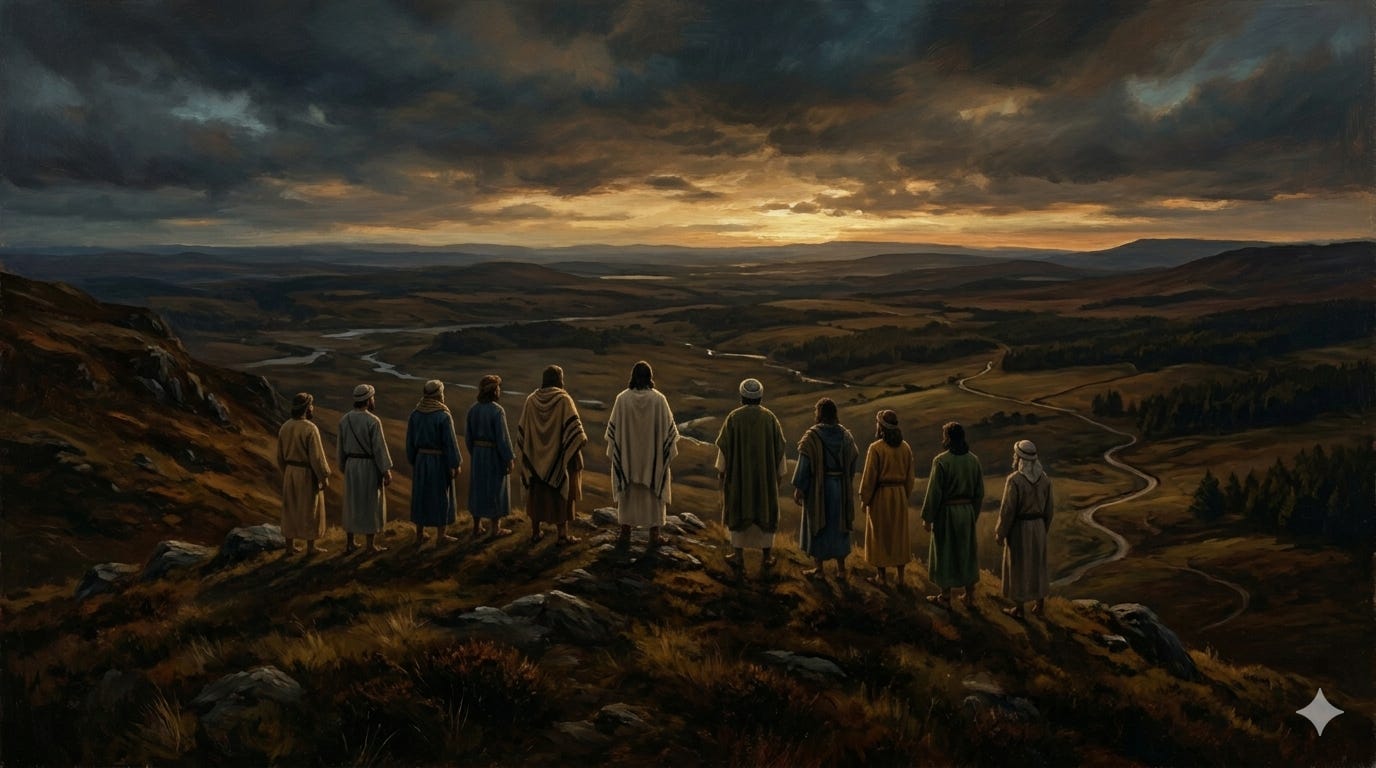
Three people brought testimony about the risen Jesus. Three times it was rejected. Then Jesus appeared, named their hardness of heart, placed it in the oldest pattern of human resistance to God in Scripture, and sent them anyway. He did not wait for repentance or improved character. The commission followed the rebuke directly because being sent is part of how God forms the people he sends. It has always worked this way. Moses, Isaiah, Jeremiah, Peter, all commissioned before they were ready, all formed by the sending itself. The scope of what they were given is the widest in any Gospel. The whole world. Every creature. The people carrying it are the same ones who hours earlier refused to believe the women who told them the tomb was empty. We are an extension of that same commission, sent in our own imperfection, formed by the going.
In the Margins
Before entering this passage it is worth noting some historical points around it. Mark 16:9-20 does not appear in the earliest Greek manuscripts of the Gospel. The oldest manuscripts end at verse 8, with the women fleeing the tomb in fear. The longer ending was added in the early centuries and draws on the resurrection appearances recorded in Luke and John, compressing them into a single sequence. Its inclusion was affirmed by the Council of Trent and is included in the NAB and NABRE translations with a note about its textual history. What it contains is consistent with the apostolic tradition.
Three times testimony about the risen Jesus is brought to the disciples and three times it is rejected. Mark’s compressed form makes the pattern visible in a way the longer accounts do not, because the surrounding narrative has been removed and the refusal is left standing alone. Mary Magdalene comes first and this Gospel identifies her not by her devotion or her standing but by her history. Out of her Jesus had driven seven demons. Seven in the Hebrew canon is the number of completeness. She had been in a state of total bondage and was completely freed. The first witness to the resurrection is a woman defined entirely by her deliverance, not by her credentials. She brings her testimony to the disciples, but they do not believe her.
Two disciples come next, the Emmaus account reduced to a single sentence. Mark notes that Jesus appeared to them in another form, en hetera morphe, a phrase that does not appear in Luke’s fuller account. The word morphe is the same word Paul uses in Philippians 2 for the form of God Christ possessed before the Incarnation and the form of a servant He took on in it. The resurrection body is a new form, continuous with the crucified body and transformed beyond it. These two disciples return with their testimony and the others do not believe them either. The key note here is that these are two men, which should have carried legal weight for first century Jews.
When Jesus appears to the eleven directly He rebukes them before anything else. The rebuke names two things, apistia and sklerokardia, unbelief and hardness of heart. Hardness of heart carries a specific weight in the biblical tradition. In Exodus it is Pharaoh’s defining characteristic, the repeated obstacle to Israel’s liberation. In Deuteronomy and Jeremiah, God commands Israel to circumcise their hearts, to remove the hardness that prevents genuine hearing. In Ezekiel 36, God promises to remove the heart of stone and replace it with a heart of flesh. Jesus applying this language to the eleven is not a casual accusation. He is placing their refusal inside the deepest pattern of human resistance to God in the Old Testament. They had sufficient testimony. Two credible witnesses had come to them. The problem was not the quality of the evidence. It was the will to receive it.
What follows the rebuke is the commission. The sequence of events is important. Jesus does not wait for the eleven to repent, to demonstrate improved character, or to articulate a satisfying explanation for why they rejected what they were told. He rebukes them and then sends them. The commission does not follow the completion of their formation. It is part of how the formation happens.
This pattern runs through every major commission in Scripture. Moses is sent after fleeing Egypt as a fugitive. Isaiah is commissioned immediately after confessing he is a man of unclean lips. Jeremiah protests that he is too young before the word of the Lord overrides his objection. Peter says depart from me, for I am a sinful man, and Jesus tells him to follow. The commission always arrives before the commissioned person is ready, because being sent is one of the primary means by which God forms the people He sends.
The scope of what the eleven are sent to do is the widest formulation of the Great Commission in any of the Gospels. Matthew sends them to all nations. Luke sends them to the ends of the earth. Mark sends them into the whole world to proclaim the Gospel to every creature. That final phrase, to every creature, to all creation, is unique to Mark. Paul writes in Romans 8 that creation itself is groaning and waiting in eager longing for the revelation of the children of God. The proclamation that goes to every creature is consistent with the cosmic scope of what the resurrection has set in motion.
The Gospel is not only the restoration of human beings. It is the beginning of the restoration of all things, and the people commissioned to carry it are the same people who, hours earlier, refused to believe the women who told them the tomb was empty. We are an extension of this commission. Jesus made it clear in His sermon on the mount that we were meant to be the light of the world. A light that could not be hidden. In Acts, we see that this is how the earliest followers behaved, “those who were scattered went about preaching the word.” For us today, we can follow this model, spreading the Word, and being that light that guides others to the Lord.
Reflection Question
Is there something God has been placing before you that you have been waiting to feel ready for before you accept it?
A Small Invitation
If this reflection helped you, consider sharing it with someone who may benefit from hearing this message.