

The Gospel: John 20:19-31
¹⁹ On the evening of that first day of the week, when the doors were locked, where the disciples were, for fear of the Jews, Jesus came and stood in their midst and said to them, “Peace be with you.” ²⁰ When he had said this, he showed them his hands and his side. The disciples rejoiced when they saw the Lord. ²¹ Jesus said to them again, “Peace be with you. As the Father has sent me, so I send you.” ²² And when he had said this, he breathed on them and said to them, “Receive the holy Spirit. ²³ Whose sins you forgive are forgiven them, and whose sins you retain are retained.”
²⁴ Thomas, called Didymus, one of the Twelve, was not with them when Jesus came. ²⁵ So the other disciples said to him, “We have seen the Lord.” But he said to them, “Unless I see the mark of the nails in his hands and put my finger into the nailmarks and put my hand into his side, I will not believe.” ²⁶ Now a week later his disciples were again inside and Thomas was with them. Jesus came, although the doors were locked, and stood in their midst and said, “Peace be with you.” ²⁷ Then he said to Thomas, “Put your finger here and see my hands, and bring your hand and put it into my side, and do not be unbelieving, but believe.” ²⁸ Thomas answered and said to him, “My Lord and my God!” ²⁹ Jesus said to him, “Have you come to believe because you have seen me? Blessed are those who have not seen and have believed.”
³⁰ Now Jesus did many other signs in the presence of his disciples that are not written in this book. ³¹ But these are written that you may come to believe that Jesus is the Messiah, the Son of God, and that through this belief you may have life in his name.
Today’s Focus
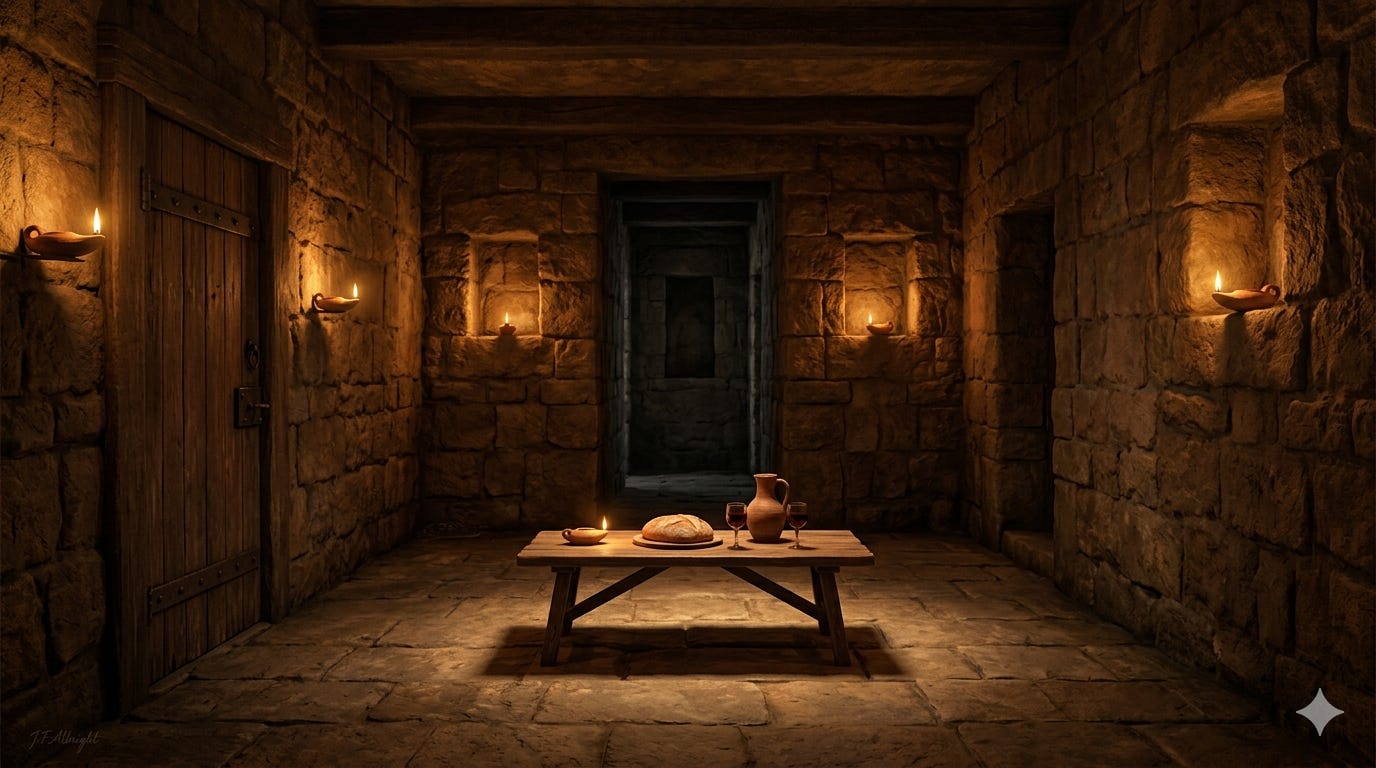
Easter Sunday evening and the disciples are hiding behind locked doors. Jesus walks through them, speaks peace, shows the wounds, breathes the Spirit, and gives the authority to forgive sins. Thomas misses all of it. When he hears what happened he says he will not believe without the same direct encounter the others had. A week later Jesus comes back specifically for him, offers the wounds, and Thomas responds with the highest confession in the Gospel. My Lord and my God. The prologue opened by declaring the Word was God. The main narrative closes with a man saying it directly to the risen Lord’s face. That arc is the whole Gospel. And then John tells the reader why he wrote it, so that you might believe what Thomas confessed, and through that belief receive the life Thomas received. The Gospel was written for this moment and for every reader who arrives at it without having seen.
In the Margins
It is Easter Sunday evening and the disciples are behind locked doors, hiding in fear. They have received Mary Magdalene’s testimony and some have seen the empty tomb. The news has arrived and it has not yet become the thing they stand on, fearing further persecution from others. Jesus appears without the doors being opened, He is simply present. The resurrection body throughout the Gospel accounts occupies physical space, can be touched, eats food, and passes through locked doors without contradiction.
The first word Jesus speaks into that room is peace, and it carries more than a greeting. Isaiah 52 announces the messenger who brings good news of peace and declares that God reigns. Isaiah 53 says the punishment that brought us peace was upon the servant. The risen Jesus speaking peace into that locked room is the proclamation that what the servant died to accomplish has been achieved and is now being given away.
He shows them His hands and His side. The wounds are the identifying marks of continuity between the crucified body and the risen body. The resurrection does not erase the cross. The glorified body retains the marks of the passion, and the disciples’ joy at seeing them is the fulfillment of a specific promise Jesus made before His arrest in John 16, that their grief would turn to joy when they saw Him again and that no one would be able to take that joy from them.
The commission He gives is grounded in the deepest structure of the entire Gospel. As the Father has sent me, so I send you. John’s Gospel is built on the sending of the Son by the Father, and that sending now becomes both the model and the source of the disciples’ own mission. They are not sent with independent authority. They are sent the way the Son was sent, in dependence on the one who sends, carrying the message of the one who sends.
He breathes on them. The Greek verb John uses here, enephysesen, appears nowhere else in the New Testament. Its only other significant use in the Greek Bible is in Genesis 2:7, where God forms the first human from the dust of the ground and breathes into his nostrils the breath of life. The same verb, the same act. The risen Jesus breathing the Spirit on the disciples is a new creation act, a new Genesis. Ezekiel 37 is the second layer beneath this moment, the vision of the valley of dry bones where God commands the prophet to call the breath from the four winds to breathe into the slain so they might live. The Spirit Jesus breathes is the breath that raises the dead community to new life exactly as Ezekiel’s vision anticipated. The authority to forgive and retain sins that accompanies this breath is where the early Church tradition of going to reconciliation comes from. The early Church identifies as the institution of the sacrament of Penance, a juridical authority delegated by Jesus to the community He is forming.
Thomas is not present during all of this. When the others tell him they have seen the Lord his response has defined him for two thousand years. Unless he sees the wounds and touches them himself, he will not believe. They saw the hands and the side before they believed. He is asking for the same experience they had. The specific problem is not the demand for evidence, but the refusal to receive testimony as sufficient. The beloved disciple believed at the tomb. Mary believed when Jesus spoke her name. Thomas is placing himself outside the chain by which faith normally moves from one person to another.
A week later, on the eighth day, Jesus appears again. In Jewish reckoning the eighth day follows the completion of the seven-day week and begins a new cycle. The early Church gathered on the first day of the week as the day of resurrection, understanding it as the eighth day, the day of eschatological renewal. Jesus appears on the same day of the week specifically for Thomas, and He comes with exactly what Thomas demanded. The invitation to touch is given and is followed by a proclamation to the Lord for him to believe.
My Lord and my God. That confession is the highest Christological statement in the entire Gospel. Kyrios, Lord, is the Greek rendering of the divine name YHWH throughout the Septuagint. Theos, God, is the direct predicate of divinity. Thomas is not confessing a prophet or a Messiah in the political sense. He is addressing the risen Jesus with the names that belong to God alone. And the personal pronouns, my Lord and my God, make clear this is not an abstract theological proposition. It is a declaration of personal relationship addressed directly to a person.
John 1:1 opens the Gospel with the narrator’s declaration that the Word was God. John 20:28 closes the main narrative with a disciple’s personal confession of the same truth spoken directly to the risen Lord. The arc the Gospel has been drawing from the prologue arrives at its destination in Thomas’s mouth.
The beatitude Jesus speaks over those who have not seen and have believed is addressed to every reader from the first century forward. It does not diminish Thomas’s faith. It elevates the faith of those who will come after, whose belief rests entirely on testimony and the work of the Spirit rather than on direct physical encounter. These things are written so that you may believe that Jesus is the Messiah, the Son of God, and that through believing you may have life in His name. The Gospel is not primarily a historical record. It is a document written with a specific destination in mind, the confession Thomas made, and through that confession the life that Thomas received.
Reflection Question
Is your faith resting on testimony you have received and chosen to believe, or are you still waiting for the kind of encounter that removes all doubt before you commit?
A Small Invitation
If this reflection helped you, consider sharing it with someone who may benefit from hearing this message.