

The Gospel: Mark 8:1-10
In those days when there again was a great crowd without anything to eat,
Jesus summoned the disciples and said,
“My heart is moved with pity for the crowd,
because they have been with me now for three days
and have nothing to eat.
If I send them away hungry to their homes,
they will collapse on the way,
and some of them have come a great distance.”
His disciples answered him, “Where can anyone get enough bread
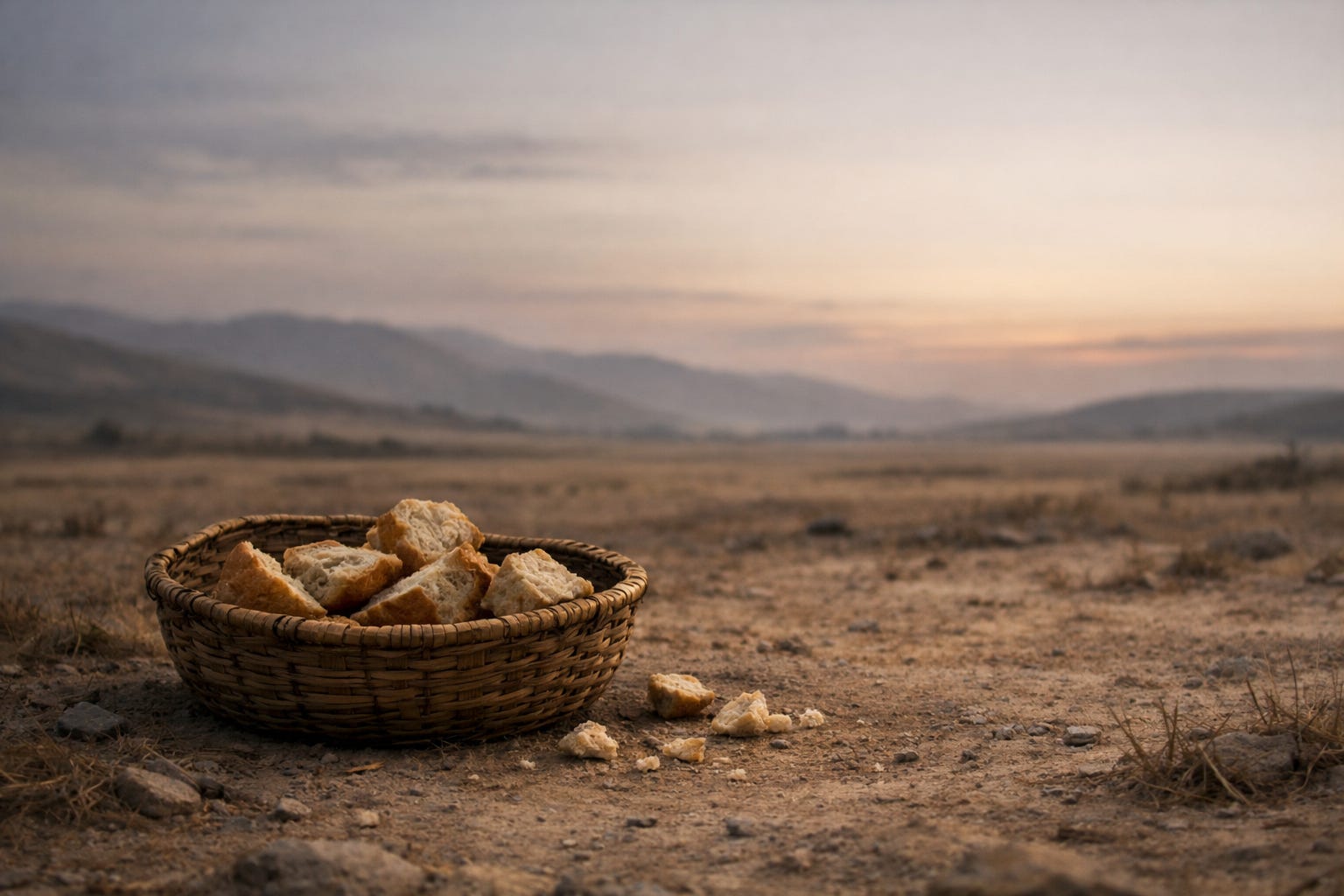
to satisfy them here in this deserted place?”
Still he asked them, “How many loaves do you have?”
They replied, “Seven.”
He ordered the crowd to sit down on the ground.
Then, taking the seven loaves he gave thanks, broke them,
and gave them to his disciples to distribute,
and they distributed them to the crowd.
They also had a few fish.
He said the blessing over them
and ordered them distributed also.
They ate and were satisfied.
They picked up the fragments left over–seven baskets.
There were about four thousand people.
He dismissed the crowd and got into the boat with his disciples
and came to the region of Dalmanutha.
Today’s Focus
This Gospel reveals more than a second act of generosity; it shows the unfolding structure of salvation history. In a deserted place that echoes Israel’s wilderness testing, Jesus provides bread once again, this time in Gentile territory, demonstrating that the covenant mercy first given to Israel is now extending outward without being diminished. The repetition is deliberate: the same Christ, the same compassion, the same divine provision, now reaching beyond its original borders. The miracle is not merely about feeding a crowd, but about revealing that God’s sustaining power is sufficient for all who remain with Him.
In the Margins
This Gospel passage gives us a look at a second miracle that happens. The first was in Mark 6:30-44. The place where this all takes place is a “deserted place”, or as we had heard other places in the Bible, “the wilderness.” Typically, we know that when God’s people go to the wilderness, it is a place of testing and dependence, where God’s people are stripped of self-sufficiency and confronted with their need for divine provision. It is a harsh environment where people are often tested, but always need God. In Exodus 16, God provides manna when Israel cannot provide for itself and here we have Jesus feeding thousands knowing there is no way they can provide for themselves. This is God having loving compassion for His people who had traveled to hear the Word, but were left in a situation where they needed His assistance.
The previous group that was fed had five loaves to start with twelve baskets left over. This passage has seven loaves to start and seven baskets left over. The twelve baskets evokes Israel’s twelve tribes. Seven, from a Biblical standpoint, often signals completeness or fullness. In this way, Jesus’ moving through these Gentile territories, but having seven baskets left over, gestures toward fullness among the many nations. This is showing Jesus’ expansion, not just another miracle about feeding.
Another number that stands out is the length of time people stayed. It says the crowd had remained for three days. Biblically, three days often signaled testing or transition of some kind. Even if this is not the immediate intention of this, it at the very least intensifies how serious the hunger situation would have been. These are not casual listeners, these are people who are so enthralled that they have stayed beyond the point of comfort.
After they eat, the people are said to be satisfied. Noting that the people were satisfied echoes Psalms. God is described many times in the Psalms as satisfying His people. This echoes Psalmic language in which the Lord satisfies the hungry, reinforcing that divine provision is sufficient and trustworthy. It shows that God is indeed enough and will provide enough to those in need.
Within a Second Temple Jewish framework, the Messiah restores Israel first. Yet prophetic texts like Isaiah 49:6 anticipate expansion: Israel restored in order to become light to the nations. This feeding shows that expansion in motion, not by abolishing Israel’s role, but by repeating Israel’s wilderness blessing in Gentile territory. Some may contend that this is the same as the first feeding told two separate ways, but Mark will later show that this is not the case in 8:19-20.
The major takeaway from these two miracles is partially feeding, but what the feedings represent in the greater context. We see two main points here. First, God feeds Israel (12 baskets leftover) and then feeds all nations (7 baskets leftover). The second is that God is enough, the people are satisfied. This is something we can hold on to today. It doesn’t matter if you were born from the people of Israel or if you are one of the other nations, we are all called to be children in the eyes of the Lord. There is enough love for all of God’s people, and we must recognize that God is enough. We may be tempted by so many things day in and day out. Ultimately, it doesn’t matter if our names are written in history books, it matters if they are written in the book of life.
Reflection Question
Where in my life am I tempted to believe that God’s provision is limited rather than trusting that Christ is enough, even in the wilderness seasons?
A Small Invitation
If this reflection helped you, consider sharing it with someone who may be carrying more than they think they can.