

The Gospel: Matthew 9:36 – 10:8
³⁶ At the sight of the crowds, his heart was moved with pity for them because they were troubled and abandoned, like sheep without a shepherd. ³⁷ Then he said to his disciples, "The harvest is abundant but the laborers are few; ³⁸ so ask the master of the harvest to send out laborers for his harvest."
¹ Then he summoned his twelve disciples and gave them authority over unclean spirits to drive them out and to cure every disease and every illness. ² The names of the twelve apostles are these: first, Simon called Peter, and his brother Andrew; James, the son of Zebedee, and his brother John; ³ Philip and Bartholomew, Thomas and Matthew the tax collector; James, the son of Alphaeus, and Thaddeus; ⁴ Simon the Cananean, and Judas Iscariot who betrayed him.
⁵ Jesus sent out these twelve after instructing them thus, "Do not go into pagan territory or enter a Samaritan town. ⁶ Go rather to the lost sheep of the house of Israel. ⁷ As you go, make this proclamation: 'The kingdom of heaven is at hand.' ⁸ Cure the sick, raise the dead, cleanse lepers, drive out demons. Without cost you have received; without cost you are to give."
Today’s Focus
Jesus is moved with gut-level compassion for the troubled and abandoned crowds, describes them as a ready harvest needing workers, instructs the disciples to pray for workers, and immediately commissions the Twelve as the answer to that prayer, extending His own compassion and authority into their mission.
In the Margins
Jesus has been moving through every town and village, teaching in synagogues, proclaiming the Gospel of the kingdom, and healing every disease and illness. Matthew 9:35 is a summary of the scope of the ministry before the narrative stops and Jesus looks at the crowds.
When He saw the crowds He was moved with compassion for them because they were troubled and abandoned, like sheep without a shepherd. The word for compassion, splagchnizomai, is one of the most visceral words in the Greek New Testament. It describes a physical sensation in the gut, a deep interior movement of the whole person in response to suffering. This is not mild sympathy observed from a careful distance. It is the response of someone who has been fully affected by what they see. Jesus does not analyze the crowd’s condition. He is moved by it.
The image of sheep without a shepherd reaches back to Numbers 27:17, where Moses asks God to appoint a leader so the congregation will not be left leaderless, and to Ezekiel 34, the long indictment of Israel’s shepherds who scattered and exploited the flock rather than caring for it. The crowds Jesus sees are the legacy of inadequate leadership across generations. They are spiritually homeless, adrift without genuine guidance, harassed by religious systems that accumulated burden rather than offering life.
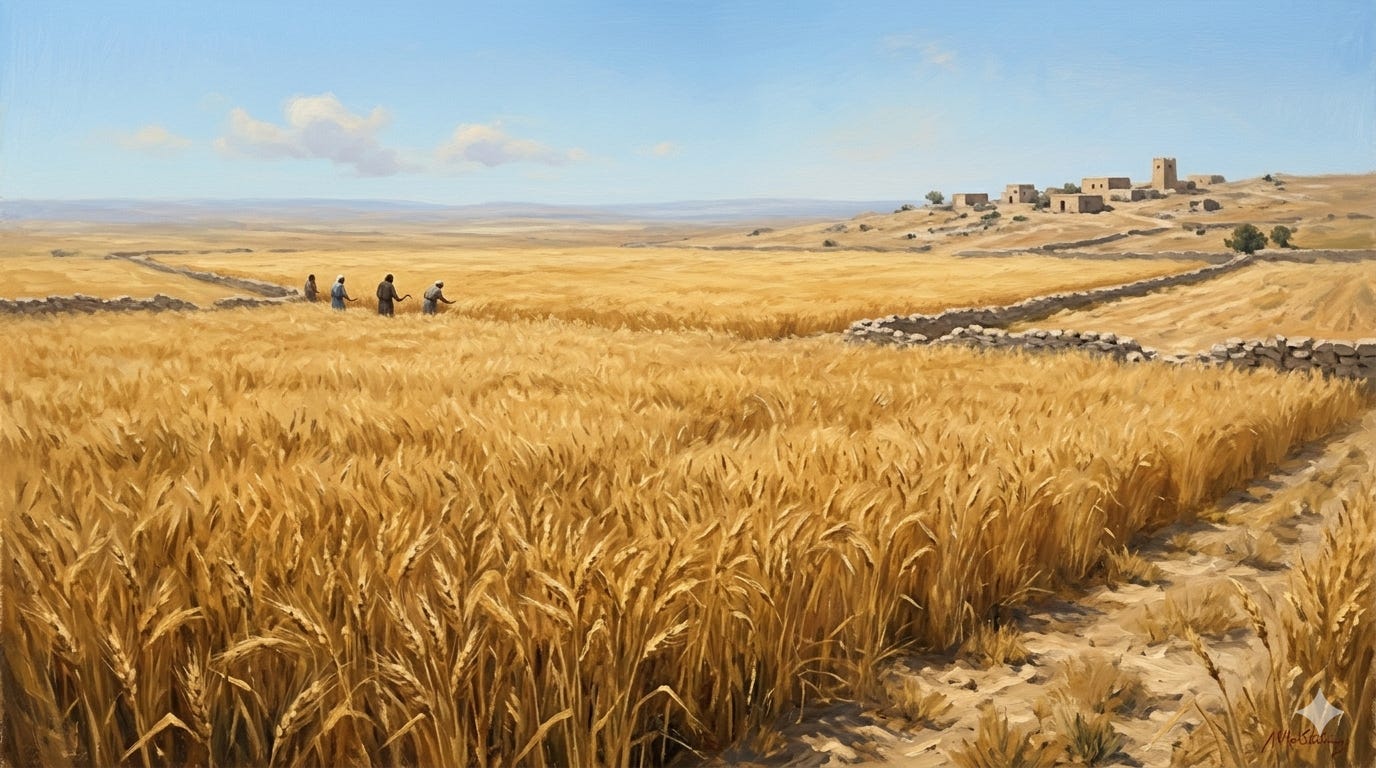
The harvest is abundant but the laborers are few. The agricultural shift in metaphor is significant. The crowds are not only suffering people who need care. They are a field that is ready, a harvest that is waiting. The urgency is the urgency of a crop that will be lost if workers are not sent in time. Time matters. The readiness is now.
Jesus instructs the disciples to ask the Lord of the harvest to send out workers into His harvest. Then He immediately commissions the Twelve as the answer to that prayer. The movement from prayer to commission happens in the same breath. This is characteristic of how Jesus operates. The prayer is not a passive waiting for someone else to act. It is the posture from which the pray-er becomes the one sent. The ones praying for workers are the workers.
The commission they receive is the extension of everything Jesus has been doing. Cure the sick, raise the dead, cleanse lepers, drive out demons. The authority is real and the scope is wide. And the principle governing the whole is given simply. Without cost you have received, without cost you are to give. The mission is not a transaction and cannot become one. It flows from the same gut-level compassion that moved Jesus when He looked at the crowds, and it must keep flowing from that source or it becomes something other than what it is.
Reflection Question
Who in your immediate world looks like the troubled and abandoned crowds Jesus saw, and what would it mean to let yourself be moved in your gut to do anything about it?