

15 May 26 | Your Grief Will Become Joy
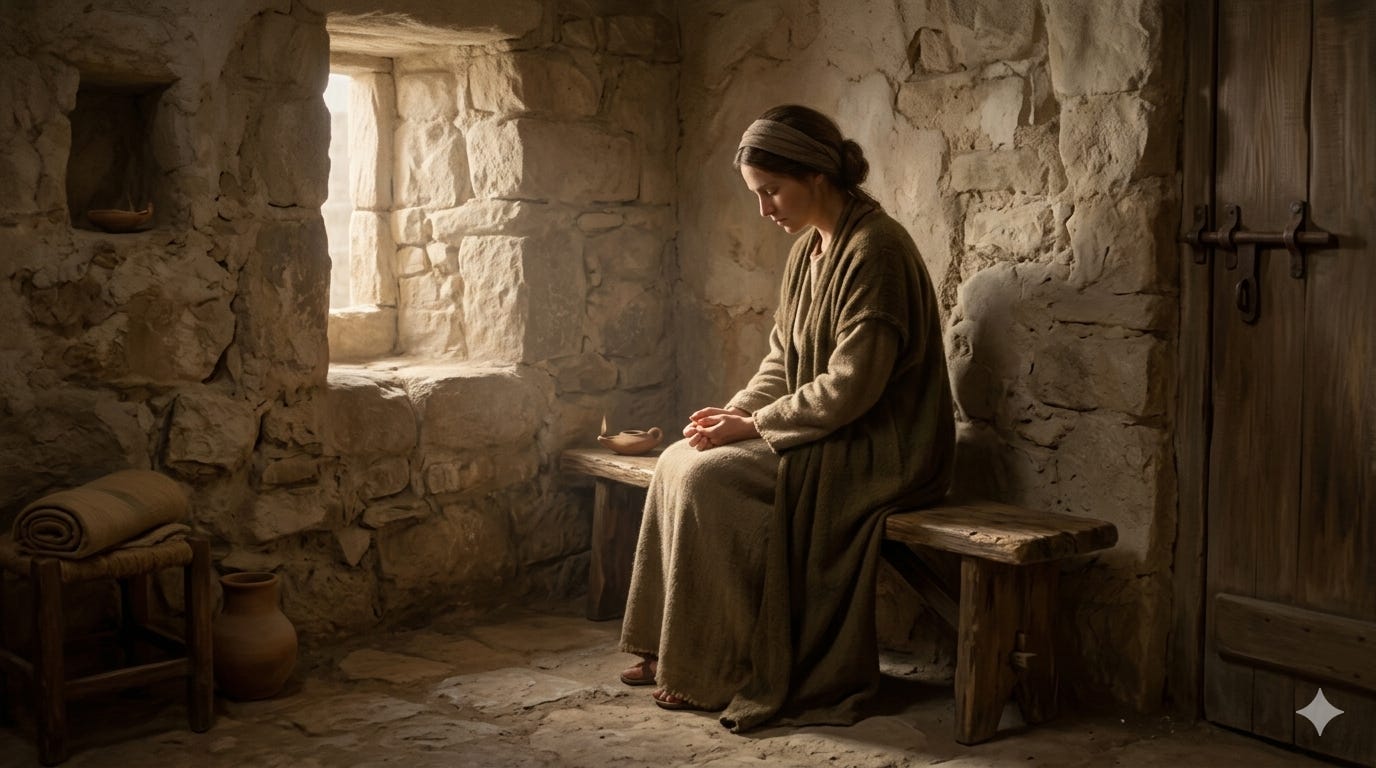
Jesus doesn't tell the disciples their grief is wrong. He tells them what it is.
The Gospel: John 16:20-23
²⁰ "Amen, amen, I say to you, you will weep and mourn, while the world rejoices; you will grieve, but your grief will become joy. ²¹ When a woman is in labor, she is in anguish because her hour has arrived; but when she has given birth to a child, she no longer remembers the pain because of her joy that a child has been born into the world. ²² So you also are now in anguish. But I will see you again, and your hearts will rejoice, and no one will take your joy away from you. ²³ On that day you will not question me about anything. Amen, amen, I say to you, whatever you ask the Father in my name he will give you.
Today’s Focus
Jesus reframes the disciples' grief through the rabbinic concept of chevlei mashiach, the birth pangs of the Messiah, placing their anguish inside the specific theological category of suffering that precedes the inauguration of the new age. The resurrection joy He promises is permanent because it flows from the risen Lord Himself rather than from circumstances, and the day of eschatological clarity He points toward dissolves the questions the disciples cannot yet answer.
In the Margins
Jesus does not tell the disciples their grief is wrong. He tells them what their grief is. When a woman is in labor she is in anguish because her hour has arrived, but when the child is born she no longer remembers the pain because of the joy. This is not a general pastoral consolation. It is a specific theological category the disciples would have recognized immediately. The rabbis spoke of chevlei mashiach, the birth pangs of the Messiah, as the defined period of suffering that would precede the coming of the Messiah and the inauguration of the new age. The Talmud described the signs in detail. The shaking of social structures, the reversal of natural order, the suffering of the faithful. This was not vague apocalyptic imagery. It was a developed theological framework for understanding what the tradition had long anticipated. When Jesus uses the labor image, He is making a precise claim. The anguish the disciples are carrying is not the collapse of God’s plan. It is the chevlei mashiach, the labor that precedes the birth of the new age. Isaiah 26 uses the same image for Israel in distress awaiting divine deliverance. Isaiah 66 uses it for the birth of the new Zion. Paul will later write in Romans 8 that the whole creation groans in labor pains awaiting the redemption of all things. The disciples’ grief is a microcosm of the cosmic labor the entire creation is undergoing on the way to what God has determined to bring forth.
The contrast Jesus draws is sharp. The world will rejoice while the disciples grieve. Both are looking at the same event from within opposite frameworks. The world will understand the death of Jesus as a victory, the silencing of a troublemaker, the vindication of the establishment’s judgment. The disciples will understand it as catastrophic loss. Psalm 22 had already described this scene, the righteous sufferer surrounded by those who mock and wag their heads. But the world’s rejoicing is not the rejoicing of those who are right. It is the temporary satisfaction of a verdict that will be reversed. The one in labor and those watching her are in different states, but the labor ends and what comes through it belongs to a different order entirely.
I will see you again and your hearts will rejoice. The promise is personal and specific. Not that the situation will improve or that understanding will gradually come. Jesus will see them again. The resurrection appearances are the primary fulfillment, but in John’s understanding the seeing encompasses all the modes of the risen Lord’s presence, the appearances, the Spirit’s coming, the ongoing presence of the risen Jesus in the community He has formed. The labor image makes the comparison precise. She no longer remembers the pain because of the joy. The resurrection joy does not compete with the memory of the grief. The birth overwhelms it.
No one will take your joy away from you. The Greek verb here, airō, is the same word used in John 10 for the wolf snatching the sheep. The forces that caused the grief cannot seize the joy that comes through the resurrection. This is not the joy of favorable circumstances, which can be removed by changed circumstances. It is the joy that flows from the risen Lord Himself, from the mutual indwelling of the disciples and the one death could not hold. Isaiah 35:10 describes everlasting joy on the heads of the ransomed returning to Zion, sorrow and sighing fleeing away. Nehemiah 8:10 declares to the returned exiles that the joy of the Lord is their strength, a joy belonging to God Himself made available to those who are His. The complete joy Jesus promised in John 15:11, His own joy extended into the disciples, is joy of exactly this kind. Permanent because its source is permanent.
On that day, Jesus says, you will not question me about anything. The rabbis spoke of questions that could not be resolved in the present age but would become clear le’atid lavo, in the age to come, when God would explain what the present could not contain. On that day Jesus is speaking the language of that eschatological clarity. The questions the disciples have been asking across the entire farewell discourse, where are you going, how can we know the way, show us the Father, will dissolve in the encounter with the risen Lord. Thomas who demanded proof will say my Lord and my God. The questions do not need answering when the one they were asking about is standing in front of you. And whatever you ask the Father in Jesus’ name He will give you, approaching with the Son’s own legal standing before the Father, as the first century understanding of acting in someone’s name implied, the full representative authority of the one whose name is invoked.
Most of us know what it is to be somewhere in the labor. The grief is real, the waiting is real, and the joy that has been promised is not yet visible on the other side of it. Whatever form that labor takes, the loss that will not resolve, the suffering that has gone on longer than seems bearable, the circumstances that the world around you seems to navigate with ease while you carry something they do not see, Jesus names it precisely. It is not the end. It is the labor. What is coming through it is the joy of the age that God is bringing forth, a joy that no wolf can snatch, no circumstance can remove, no verdict of the world can touch. The birth pangs the tradition anticipated have a name now. They have a face. And the one who stood on the other side of his own death and said I will see you again is the same one who speaks into whatever hour has arrived for you.
Reflection Question
What labor are you carrying right now that you have been tempted to read as evidence that something has gone wrong, and what would it mean to hold it instead as the suffering that precedes what God is bringing forth?