

The Gospel: Matthew 16:24-28
²⁴ Then Jesus said to his disciples, "Whoever wishes to come after me must deny himself, take up his cross, and follow me. ²⁵ For whoever wishes to save his life will lose it, but whoever loses his life for my sake will find it. ²⁶ What profit would there be for one to gain the whole world and forfeit his life? Or what can one give in exchange for his life? ²⁷ For the Son of Man will come with his angels in his Father's glory, and then he will repay everyone according to his conduct. ²⁸ Amen, I say to you, there are some standing here who will not taste death until they see the Son of Man coming in his kingdom."
Today’s Focus
Jesus set the terms of following Him in three verbs. Deny yourself, take up your cross, follow me. To people living under Roman occupation, the cross was not a symbol. It was an execution they had watched. And the exchange He offers is the one nobody would take on paper, losing your life in order to find it.
In the Margins
The placement of this teaching is everything. Peter has just confessed that Jesus is the Christ, and then, moments later, heard Jesus predict His own death and objected to it. God forbid, Lord. No such thing shall ever happen to you. Jesus answered him with the sharpest rebuke He ever gave a disciple. Now He turns to all of them and says that not only is He going to the cross, so are they.
Whoever wishes to come after me must deny himself. The Greek word for deny is aparneomai, and Matthew uses it again in this Gospel for something specific. It is the word for what Peter does in the courtyard when he says he does not know Jesus. To deny yourself is to say about your own self what Peter said about his Lord. I do not know this person. His claims on me are not binding.
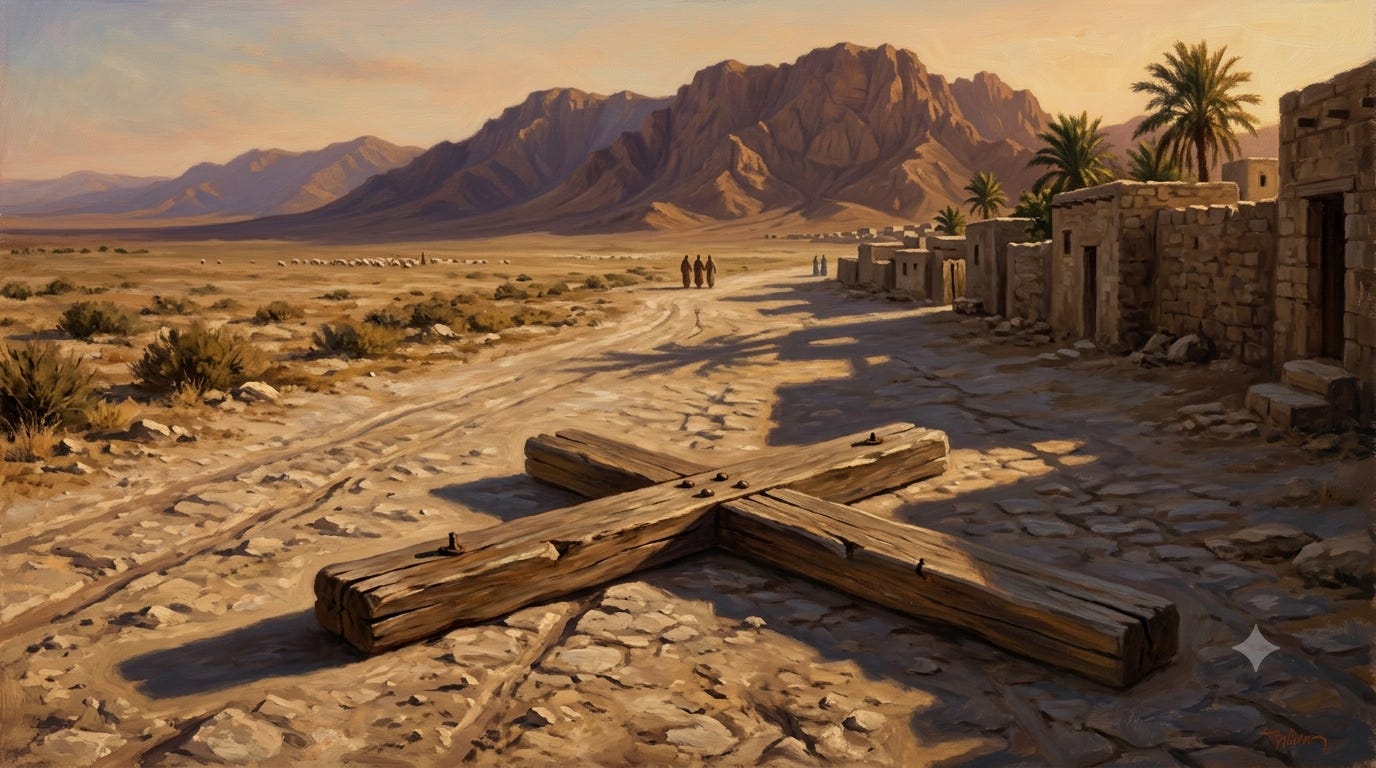
Take up his cross. There is no version of first century Palestine in which this was a figure of speech. Rome crucified in public, along the roads, at the city gates. Two thousand were crucified in Galilee after a revolt within living memory of some in that crowd. Everyone listening had seen a condemned man carrying the crossbeam through the streets to the place he would die on it. That walk was the image Jesus chose.
Then the paradox. Whoever wishes to save his life will lose it, but whoever loses his life for my sake will find it. The word translated as life here is psyche, and it carries a double meaning that the English cannot hold. It means physical life and it also means the self, the soul, who you actually are. Both meanings are live in this sentence. The person who spends everything protecting his own life ends up losing the very self he was protecting.
What profit would there be for one to gain the whole world and forfeit his life. Or what can one give in exchange for his life. That second question echoes Psalm 49, which observes that no amount of wealth can purchase a single life back from death. Jesus is not making a point about greed. He is making a point about accounting. There is no exchange rate. Nothing you accumulate can be traded back for the thing you spent to get it.
He closes with judgment, quoting the language of the Psalms and Proverbs about God repaying each person according to what they have done. And then a difficult verse. Some standing here will not taste death until they see the Son of Man coming in His kingdom. Readers have taken this several ways across the centuries, pointing to the resurrection, to Pentecost, or to the fall of Jerusalem. It is worth noticing what Matthew does next. He tells the Transfiguration, and he opens it with a note that it happened six days later. Three men were about to see the Son of Man in His glory.
The hard thing about self denial is that it is rarely dramatic. Most of us will not be asked for our lives in a single moment. We are asked in much smaller increments, on ordinary weekdays, in the decision to put someone else first when nobody will know, in the ambition quietly set down, in the grudge released with no apology received. The cross Jesus describes is picked up daily, and usually nobody is watching.
Reflection Question
What is the specific thing you are protecting most carefully right now, and what would it mean to hold it the way Jesus describes rather than the way you have been?