

The Gospel
When Jesus returned to Capernaum after some days,
it became known that he was at home.
Many gathered together so that there was no longer room for them,
not even around the door,
and he preached the word to them.
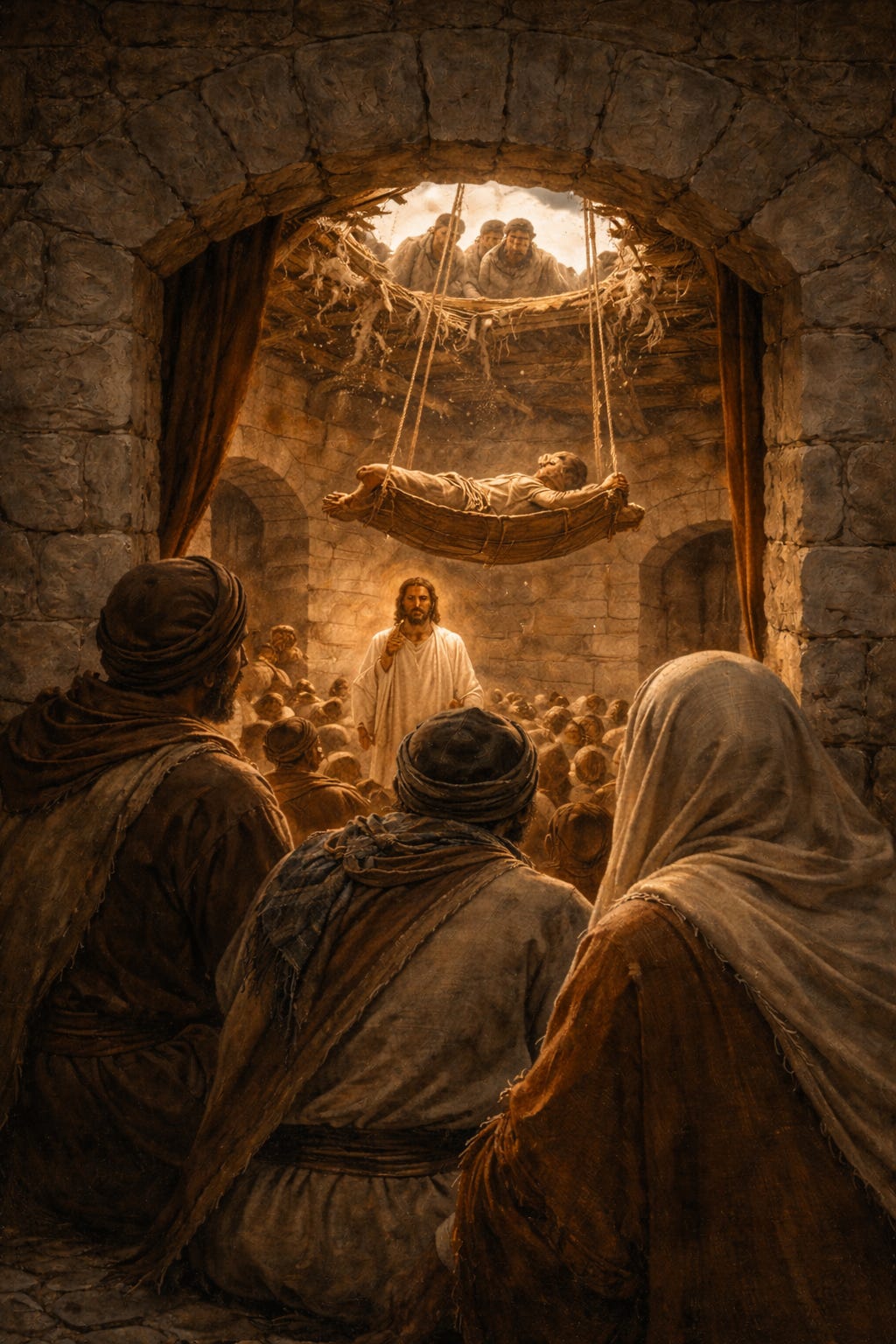
They came bringing to him a paralytic carried by four men.
Unable to get near Jesus because of the crowd,
they opened up the roof above him.
After they had broken through,
they let down the mat on which the paralytic was lying.
When Jesus saw their faith, he said to him,
“Child, your sins are forgiven.”
Now some of the scribes were sitting there asking themselves,
“Why does this man speak that way? He is blaspheming.
Who but God alone can forgive sins?”
Jesus immediately knew in his mind what
they were thinking to themselves,
so he said, “Why are you thinking such things in your hearts?
Which is easier, to say to the paralytic,
‘Your sins are forgiven,’
or to say, ‘Rise, pick up your mat and walk’?
But that you may know
that the Son of Man has authority to forgive sins on earth”
–he said to the paralytic,
“I say to you, rise, pick up your mat, and go home.”
He rose, picked up his mat at once,
and went away in the sight of everyone.
They were all astounded
and glorified God, saying, “We have never seen anything like this.”
Today’s Focus
The roof-breaking is dramatic, but the real shock is theological: Jesus does what only God can do, forgives sin, and then heals the body to demonstrate that the Kingdom is not only relief from suffering but restoration of communion with God.
In the Margins
This Gospel uses unique phrasing when it says that Jesus is “at home.” It shows Capernaum functions like a base of operations for Jesus. It would have been an ideal spot for Jesus to base the ministry out of as it was a town on major trade routes near the Sea of Galilee. It’s a place where crowds form quickly, where the synagogue and household spaces become stages for public revelation, and where Jesus’ authority is repeatedly tested.
Mark shows that proximity to Jesus is not automatic in this Gospel. There were so many people that they had to work to get closer to Him. This shows that even our own relationship with Jesus can require perseverance, humility, and even friends who continue to carry us to Him when we need it. The people carrying the paralytic show that our journey in faith is strengthened when we do it in groups. Mark is showing that God’s healing often comes through the faithful persistence of others.
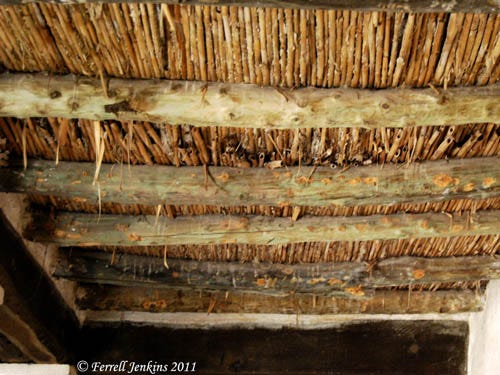
The roof referenced is likely one made of reeds and timber or constructed using packed mud. Breaking through this would have been disruptive, costly, and created quite the stir. These people were so persistent that they would have caused real damage to the residence.
The theological center for this passage is the scandal it would have been for Jesus to say “your sins are forgiven.” In Jewish thought, forgiveness was for God alone. Priests could allow for purification and sacrifices, but the forgiveness was through God’s covenant and not spoken by a human authority. Here Jesus does not conflate the forgiveness saying “God forgives you.” He forgives the sins Himself. The accusation of the scribes as blasphemy would have stemmed this declaration of forgiveness. The only two options would have been that He is either blaspheming, or He is claiming divine authority. We know it was the latter.
We can see that it was Jesus claiming divine authority based through the fact that the scribes were asking themselves these questions – not one another. This is what they were merely thinking. Jesus knew their thoughts. In Scripture, discerning the heart is something associated with God’s knowledge. The narrative is quietly stacking evidence: Jesus forgives sins, perceives hearts, and then demonstrates power over the body. These are not disconnected wonders. They form one argument about authority.
Jesus grounds His authority in the title “Son of Man.” This phrase can be easily confused in casual reading. It is linked to Daniel 7.
“One like a son of man coming with the clouds of heaven;
he approached the Ancient of Days and was presented before him.
To him was given dominion, glory, and kingship;
all peoples, nations, and languages serve him.
His dominion is an everlasting dominion that shall not pass away.”
Jesus is not claiming to merely human identity or the fact that He is born of another. This statement does not detract from His divinity, but reinforces it. It describes authority given in heaven, but exercised over all nations. Jesus’ statement bridges that gap.
This Gospel speaks directly to the pace, pressure, and fragmentation of modern life. There are so many things that can crowd us or get in the way of us and our connection to Jesus. If we let these things win, we simply walk past the room where Jesus is sitting (to keep with the metaphor). Those that truly want access to Him will work for it. If they cannot get there alone, we must look to surround ourselves with those that care as much about our spiritual health as our physical health. When we are strong, we help others. When we are in need, we ask for the help of others. Together we can all work to draw close to Jesus and the miracles His divinity offers.
Reflection Question
How can I be strong and help someone far from Christ get closer? If I am in need of the help, who can I reach out to for this support? Send me a message at n281catholic@gmail.com if you are struggling or would like support. You don’t have to be Catholic or even Christian.