

The Gospel: John 16:23-28
²³ "On that day you will not question me about anything. Amen, amen, I say to you, whatever you ask the Father in my name he will give you. ²⁴ Until now you have not asked anything in my name; ask and you will receive, so that your joy may be complete.
²⁵ "I have told you this in figures of speech. The hour is coming when I will no longer speak to you in figures but I will tell you clearly about the Father. ²⁶ On that day you will ask in my name, and I do not tell you that I will ask the Father for you. ²⁷ For the Father himself loves you, because you have loved me and have come to believe that I came from God. ²⁸ I came from the Father and have come into the world. Now I am leaving the world and going back to the Father."
Today’s Focus
Jesus promises a coming day of plain speech about the Father, grounds the prayer-in-His-name promise in the Father’s direct and personal love for those who love the Son, and compresses the arc of the entire Incarnation into a single sentence drawn from the Wisdom tradition’s deepest anticipation.
In the Margins
The farewell discourse has been full of figures. The vine and the branches. The shepherd and the sheep. The woman in labor. The dwelling places in the Father’s house. Jesus now identifies all of this as paroimia, a word used in the Greek translation of the Old Testament for the wisdom sayings of Proverbs, speech that carries more beneath the surface than it immediately reveals. The hour is coming when He will no longer speak in figures but will tell them plainly about the Father. This is not a promise of different content. It is a promise of different reception. The same truths communicated through figures will become transparent in the light of the resurrection and the Spirit’s coming. Daniel’s visions were sealed until the time of their fulfillment.
The prophets who spoke of the suffering servant and the new covenant were speaking what would only become fully clear when the moment arrived. Plain speech about the Father is the speech of the fulfilled moment, the age in which figures give way to the reality they were always pointing toward. The disciples who could not fully understand the vine or the dwelling places will understand them on the other side of what is coming.
Whatever you ask the Father in Jesus’ name He will give you. The prayer promise has appeared twice already in the farewell discourse and returns here with new depth. In first century Jewish legal practice, acting beshem, in someone’s name, meant acting with their full legal authority. It was the equivalent of power of attorney, the right to approach and receive as if the principal were present. When Jesus authorizes the disciples to ask the Father in His name, He is granting them the legal standing of the Son before the Father. They approach not on the basis of their own record but with His authority and His standing. Until now, Jesus notes, they have not asked in this mode. The asking in Jesus’ name is the practice of the post-resurrection community, requiring the Ascension to have established the authority and the Spirit to have enabled the access. This is a new mode of prayer that the present moment has not yet opened.
Then He says something that would have been astonishing to anyone formed in the tradition. He does not tell them He will intercede with the Father on their behalf, because the Father Himself loves them directly. First century Judaism had developed elaborate understandings of the heavenly court, angelic hierarchies presenting prayers before the throne, the high priest on Yom Kippur as the single figure permitted to stand before the divine presence in the Holy of Holies. Direct access to God was reserved for the greatest figures of Israel’s history. The ordinary person approached through layers of mediation. Jesus is dismantling that entire structure. The Father loves the disciples personally. The access is direct because the love is direct. They are known to the Father through the Son, and the Father’s own love reaches them without intermediary because they have loved Jesus and believed that He came from God.
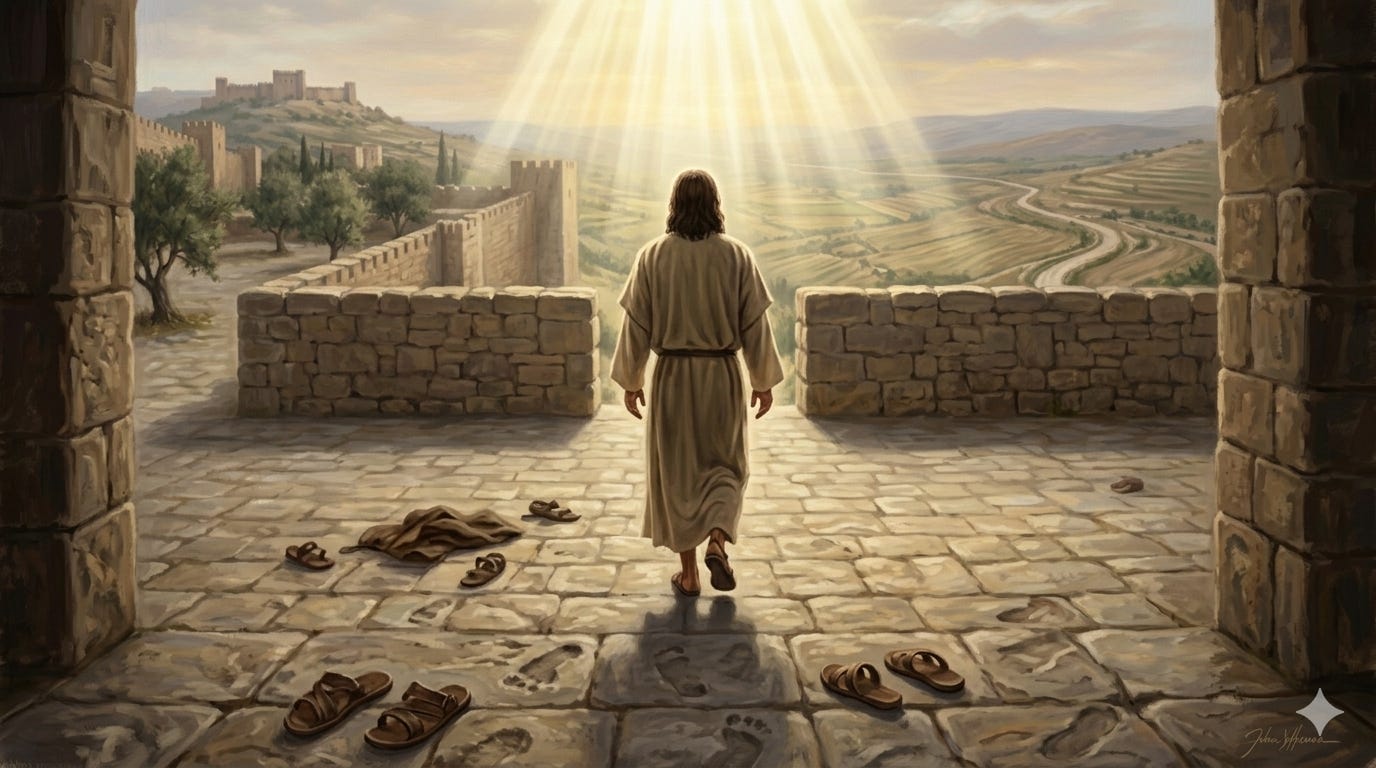
He then compresses the entire arc of the Incarnation into a single sentence. He came from the Father and entered the world. He is leaving the world and returning to the Father. A first century Jewish listener formed in the Wisdom tradition would have heard a specific resonance. Sirach 24 describes Wisdom coming forth from the mouth of the Most High, covering the earth like mist, seeking rest among every people. Proverbs 8 describes Wisdom present with God from the beginning through whom creation was made. The pattern of divine self-communication going out from God into the world and returning is exactly the pattern Jesus describes for Himself. He is not saying He is like Wisdom. He is claiming to be the one the Wisdom tradition was always pointing toward, the divine Word that came into the world in person and is now returning to the source from which He came. John 1:1-14 is the theological unpacking of what Jesus states here as bare fact.
The disciples respond with their clearest confession of the entire discourse. Now you are speaking plainly. Now we believe you came from God. What the farewell discourse has been building toward is beginning to take hold. The questions are not gone. The scattering Jesus predicts is still coming. But the faith that will carry them through is finding its footing in the plain statement of what they have been receiving all night.
For those of us who come to prayer carrying the weight of feeling distant from God, feeling as though our requests must pass through layers before they arrive, this passage offers something direct and grounding. The Father Himself loves you. Not reluctantly. Not from a distance that requires elaborate mediation. Personally, because you have loved the Son and believed in Him. The prayer you bring in Jesus’ name arrives in the presence of a Father who was already looking for it. That is not a small thing. It is the thing.
Reflection Question
When you bring something to God in prayer, do you approach as someone whose access depends on your own standing, or as someone carrying the name and authority of the Son into the presence of a Father who already loves you personally?