

The Gospel: Mark 8:14-21
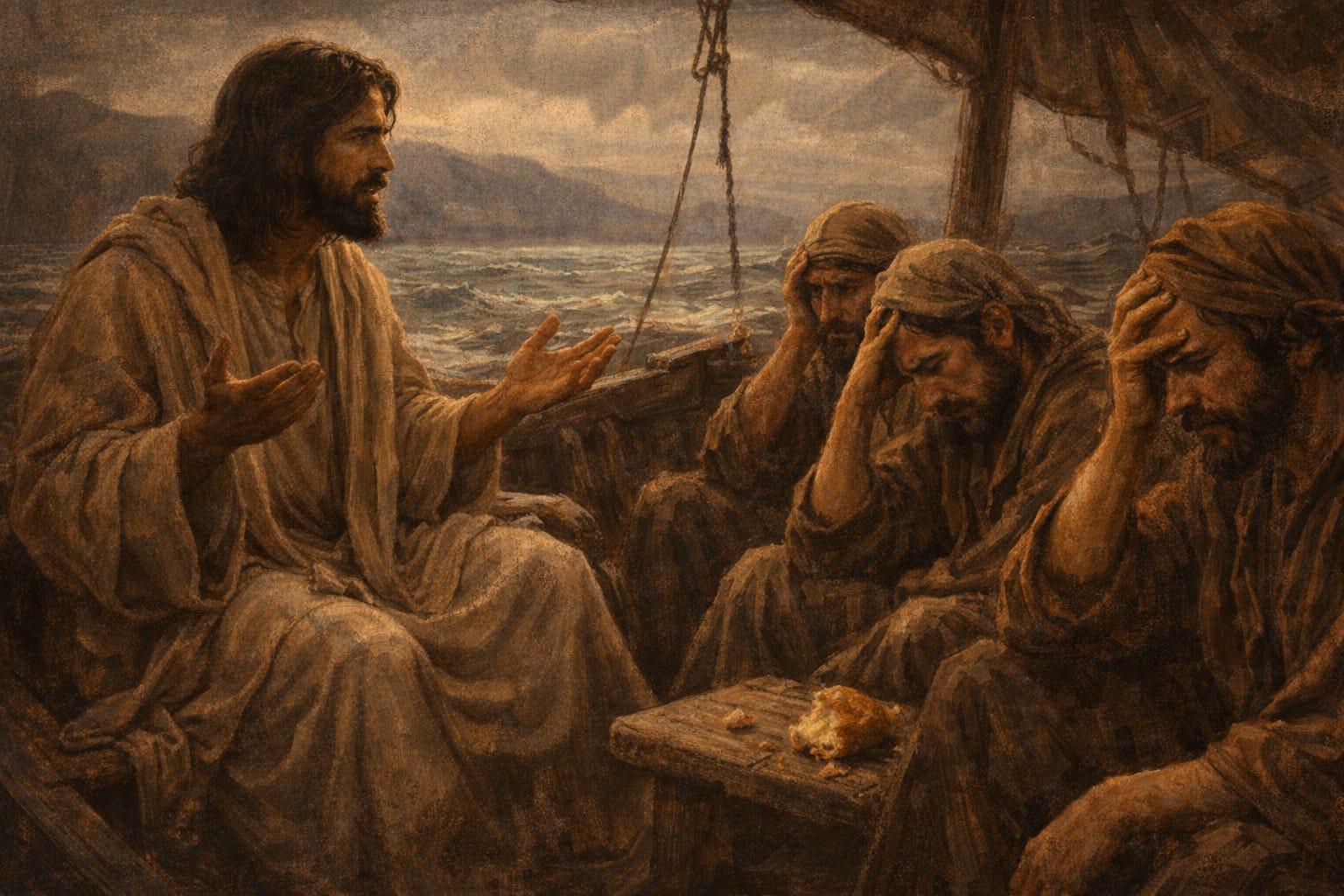
The disciples had forgotten to bring bread,
and they had only one loaf with them in the boat.
Jesus enjoined them, "Watch out,
guard against the leaven of the Pharisees
and the leaven of Herod."
They concluded among themselves that
it was because they had no bread.
When he became aware of this he said to them,
"Why do you conclude that it is because you have no bread?
Do you not yet understand or comprehend?
Are your hearts hardened?
Do you have eyes and not see, ears and not hear?
And do you not remember,
when I broke the five loaves for the five thousand,
how many wicker baskets full of fragments you picked up?"
They answered him, "Twelve."
"When I broke the seven loaves for the four thousand,
how many full baskets of fragments did you pick up?"
They answered him, "Seven."
He said to them, "Do you still not understand?"
Today’s Focus
In this Gospel, the danger is not hunger but misunderstanding. After witnessing abundance and confronting opposition, the disciples still worry about bread and miss Jesus’ warning about the leaven of distortion. Pharisaic hardness and Herodian compromise represent subtle influences that shape the heart long before they shape behavior. By recalling the twelve and seven baskets, Jesus presses them to remember what they have seen and to interpret it rightly. The issue is not provision, but perception; not scarcity, but spiritual sight.
In the Margins
At this point in the Gospel, Jesus has just fed thousands and was confronted by the Pharisees. The disciples witnessed all of this and yet they panic over only having one loaf. The irony of this is deliberate. Mark is exposing their spiritual dullness. Jesus overhears this and warns them of the leaven of the Pharisees and Herod. He is essentially warning them of “baking” into one of these two.
The disciples try to make sense of this and conclude that it is because they did not bring enough bread. When Jesus heard this He knew they didn’t understand the meaning. The Pharisees had just openly argued and challenged Jesus, they are on the boat that is leaving that situation! Herod was a man of moral compromise and political self-preservation that would go on to behead John the Baptist. Pharisaic religiosity and Herodian worldliness represent two forms of distortion. The disciples are concerned with provisions and not the spiritual dangers.
When Jesus asks about their eyes and ears, it is directly echoing Isaiah and Jeremiah. Isaiah 6:9-10, “Keep on hearing, but do not understand; keep on seeing, but do not perceive.” Jeremiah 5:21, “…who have eyes, but see not, who have ears, but hear not.” This prophetic language carries strong covenantal resonance. Jesus points out their short memories, recounting the remaining 12 and 7 baskets.
In asking them about these miracles, Jesus is not asking them about provisions. He is showing that He has come for Israel and for all nations. The leaven Jesus warns against is the disposition that demands signs and resists true recognition. He is warning them about aligning to power instead of love and truth. What is happening here is that the disciples are the closest to these miracles and to the words of Jesus. These men see and hear everything, but they do not understand. They are missing the greater message.
With this in mind, we can see how we can miss the message. We are removed from this message by thousands of years. It is easy to say, “the disciples struggled, so it makes sense that I do too.” That misses the point though. What we risk with this type of mindset is spiritual dullness. Jesus’ merciful passion was for all of us. We just need to ensure we truly listen to the Word. The point of this is not that the disciples struggle. It is that proximity alone does not mean holiness. It is that just being at the church does not make you holy. It is if your heart is in the right place. If your eyes and ears truly see and hear our hearts remain receptive to the grace that God continually offers.
Reflection Question
Where has anxiety over visible needs distracted me from remembering how God has already provided?
A Small Invitation
If this reflection helped you, consider sharing it with someone who may be carrying more than they were meant to.