

The Gospel: Matthew 12:1-8
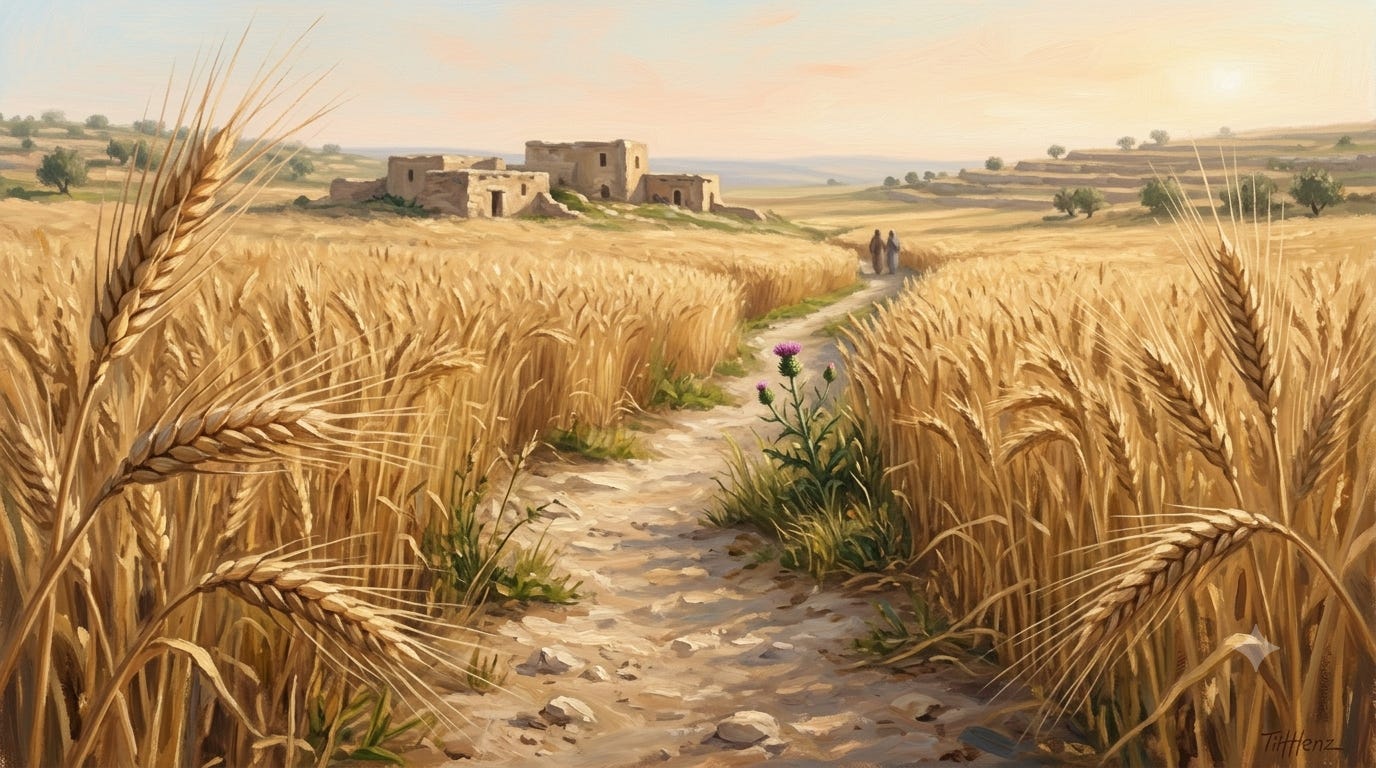
¹ At that time Jesus was going through a field of grain on the sabbath. His disciples were hungry and began to pick the heads of grain and eat them. ² When the Pharisees saw this, they said to him, "See, your disciples are doing what is unlawful to do on the sabbath." ³ He said to them, "Have you not read what David did when he and his companions were hungry, ⁴ how he went into the house of God and ate the bread of offering, which neither he nor his companions but only the priests could lawfully eat? ⁵ Or have you not read in the law that on the sabbath the priests serving in the temple violate the sabbath and are innocent? ⁶ I say to you, something greater than the temple is here. ⁷ If you knew what this meant, 'I desire mercy, not sacrifice,' you would not have condemned these innocent men. ⁸ For the Son of Man is Lord of the sabbath."
Today’s Focus
Jesus defends the disciples' Sabbath grain-picking through two examples that establish the law's purpose over its letter, declares that something greater than the Temple itself is present, and closes with the claim that the Son of Man is Lord of the Sabbath, the authority in whom the law's meaning is located.
In the Margins
The Sabbath controversy in this passage is not really about grain. It is about where authority over the law actually lives.
The Pharisees catch the disciples picking heads of grain as they walk through a field on the Sabbath. Under Pharisaic interpretation, this constituted harvesting, one of the thirty-nine categories of prohibited labor. Their objection is technically precise, their knowledge of the tradition is genuine, and their concern for Sabbath observance is not in itself the problem. The problem is what has happened to the Sabbath under their guardianship: a day designed to restore has become a system designed to police.
Jesus responds with two examples that cut in the same direction. The first is David eating the consecrated bread from the house of God when he and his men were hungry, a story from 1 Samuel 21 in which the priest Ahimelech gives David the bread of the presence, ordinarily reserved for the priests alone, because the need was real and the letter of the law was not the point. David was not condemned for this. The tradition itself held him up as the model of covenant faithfulness. The second example is the priests who perform Temple service on the Sabbath, which technically involves labor, and are innocent because the Temple work they perform is itself the purpose the Sabbath is meant to serve.
Both examples make the same point from different angles: the law has a purpose, and when the enforcement of its letter undermines its purpose, the letter has overreached. David ate the bread because God’s provision for human need is always operating underneath the ritual. The priests work on the Sabbath because the worship the day is for takes precedence over the rest the day prescribes.
Then Jesus says something the Pharisees almost certainly did not expect: something greater than the temple is here. This is not a passing comment. The Temple was the center of Israel’s entire religious universe, the dwelling place of God on earth, the reason the sacrificial system existed, the point toward which every pilgrimage was directed. For Jesus to say something greater is here, in a grain field on a Sabbath morning, is a claim the Pharisees would have recognized as either the most significant thing anyone had ever said or the most blasphemous.
He then quotes Hosea 6:6: I desire mercy, not sacrifice. This verse had been circulating in certain strands of Jewish thought as a corrective to the tendency to let ritual observance substitute for the interior dispositions the ritual was meant to express and cultivate. Jesus brings it here as a diagnosis. The Pharisees have condemned innocent men because they know the rules of the system but have missed what the system was always for. The Sabbath was made for humanity, as Mark’s version of this story adds, not humanity for the Sabbath.
The Son of Man is Lord of the Sabbath. This closing statement is the claim underneath everything else in the passage. The one standing in the grain field is not subject to the Pharisees’ interpretation of the law. He is the one in whom the law finds its meaning and its fulfillment. He is not appealing to a higher authority. He is the higher authority.
Reflection Question
Where in your own religious practice have you become more attentive to maintaining the form of faithfulness than to the mercy and relationship the form was always meant to produce?