

17 Jun 26 | Almsgiving, Prayer, and Fasting
Jesus did not say stop doing, praying and giving. He said stop performing them for an audience that cannot give you what you actually need.
The Gospel: Matthew 6:1-6, 16-18
¹ "But take care not to perform righteous deeds in order that people may see them; otherwise, you will have no recompense from your heavenly Father. ² When you give alms, do not blow a trumpet before you, as the hypocrites do in the synagogues and in the streets to win the praise of others. Amen, I say to you, they have received their reward. ³ But when you give alms, do not let your left hand know what your right is doing, ⁴ so that your almsgiving may be secret. And your Father who sees in secret will repay you.
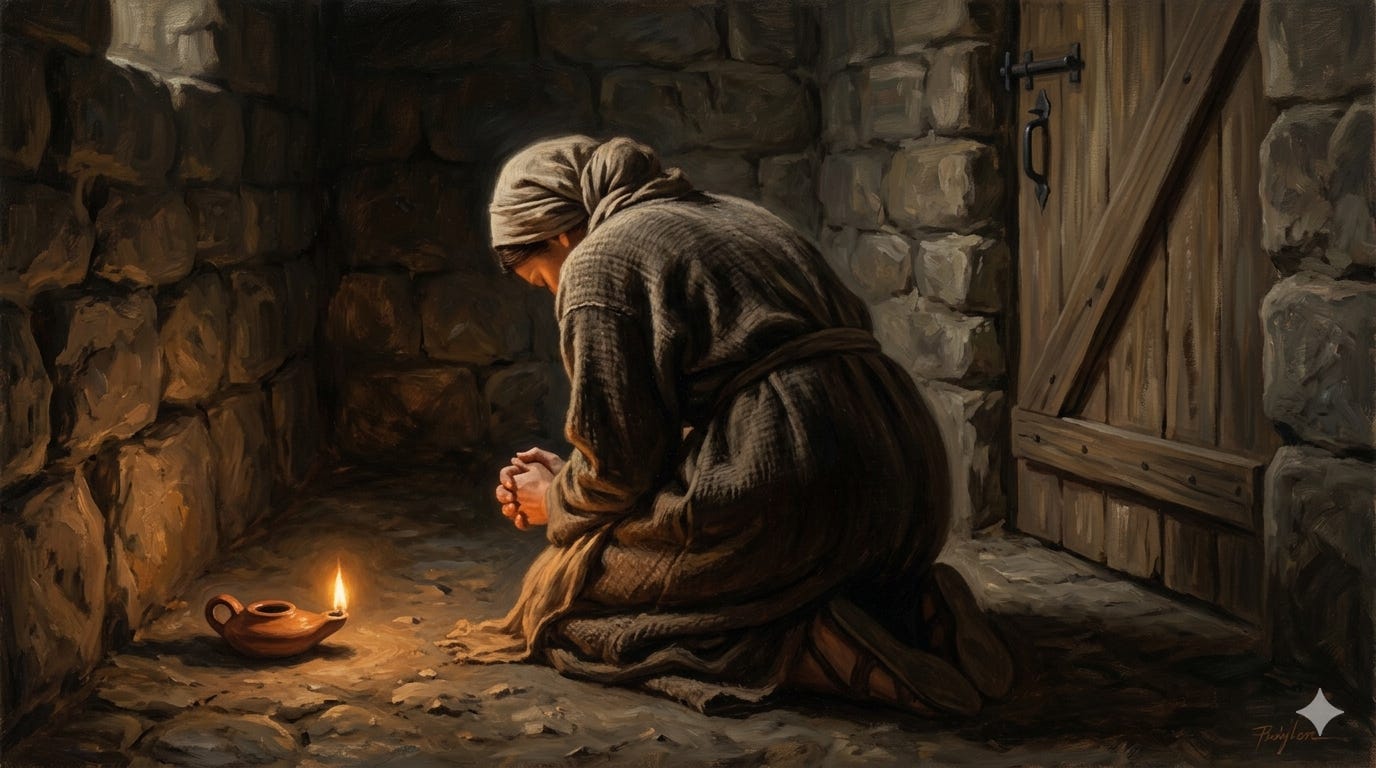
⁵ "When you pray, do not be like the hypocrites, who love to stand and pray in the synagogues and on street corners so that others may see them. Amen, I say to you, they have received their reward. ⁶ But when you pray, go to your inner room, close the door, and pray to your Father in secret. And your Father who sees in secret will repay you.
¹⁶ "When you fast, do not look gloomy like the hypocrites. They neglect their appearance, so that they may appear to others to be fasting. Amen, I say to you, they have received their reward. ¹⁷ But when you fast, anoint your head and wash your face, ¹⁸ so that you may not appear to others to be fasting, except to your Father who is hidden. And your Father who sees what is hidden will repay you."
Today’s Focus
Jesus addresses the three core practices of Jewish piety not to eliminate them but to correct their orientation, diagnosing religious performance aimed at human recognition as a completed transaction with nothing remaining from God, and calling for the radical privacy that directs each practice entirely toward the Father who sees in secret.
In the Margins
Jesus assumes the disciples will live in a manner of “good”, give alms, pray, and fast. He does not say if you give or if you pray. He says when you give and when you pray and when you fast. These are the assumed practices of the community He is forming. What He addresses is not whether to do them but the orientation from which they are done, because orientation changes everything about what the practice is.
The hypocrites blow a trumpet before giving alms in the synagogues and streets. The Greek word hypokrites was originally a theatrical term for an actor, someone who performs a role for an audience. The religious hypocrite has turned devotion into a performance, practicing religion in order to be seen practicing religion. Jesus delivers the verdict plainly and without embellishment: they have received their reward. The applause and admiration they sought is what they get. The transaction is complete and God is not party to it. The reward was collected at the moment of human recognition. There is nothing further coming.
The alternative is not the absence of giving but the absence of audience. Do not let your left hand know what your right hand is doing. This is not a literal instruction about physical unawareness. It is an image of giving so stripped of self-consciousness that even the giver’s own interior audience has been dismissed. The giving is between the giver and God alone. Your Father who sees in secret will repay you.
The same principle runs through prayer and fasting without variation. Go to your inner room, close the door, pray to your Father in secret. The Greek word for inner room, tameion, described the most private interior space of a house, a storage room or treasury that no one else entered. The most sacred act is the most private one. When you fast, anoint your head and wash your face, look normal, so that only your Father and not the people around you knows what you are doing.
The thread connecting all three is a single diagnosis. When religious practice is oriented toward a human audience it loses the thing that makes it what it is. The reward being sought shapes the practice into something that can no longer receive what the practice was designed to give. God does not compete with the audience. When the audience is present, He is not. Not because He withdraws but because the practice is no longer directed toward Him.
These words have been used to combat public prayer or public proclamation of the Gospel. We must remember that Jesus Himself had a public ministry. He told His disciples to go out to all places. The focus of this entire passage is the reason. This cannot be overstated. Do not let anyone tell you that God is displeased with public prayer and testimony. This does not mean you are not to help those in need if they are in public. It is about what is in your heart. Do you help because it is in public? Do you pray only when people are watching?
This is a word for anyone who has noticed their own religious life gradually drifting from intimacy with God toward the management of a reputation for being spiritual. The drift is subtle and the drift is universal. The question Jesus presses is simple. Who are you actually performing for?
Reflection Question
Which of your regular spiritual practices has most quietly drifted from being between you and God toward being a performance for some audience, even the audience inside your own head?