

The Gospel: Matthew 6:1-6, 16-18
Jesus said to his disciples:
"Take care not to perform righteous deeds
in order that people may see them;
otherwise, you will have no recompense from your heavenly Father.
When you give alms,
do not blow a trumpet before you,
as the hypocrites do in the synagogues and in the streets
to win the praise of others.
Amen, I say to you,
they have received their reward.
But when you give alms,
do not let your left hand know what your right is doing,
so that your almsgiving may be secret.
And your Father who sees in secret will repay you.
"When you pray,
do not be like the hypocrites,
who love to stand and pray in the synagogues and on street corners
so that others may see them.
Amen, I say to you,
they have received their reward.
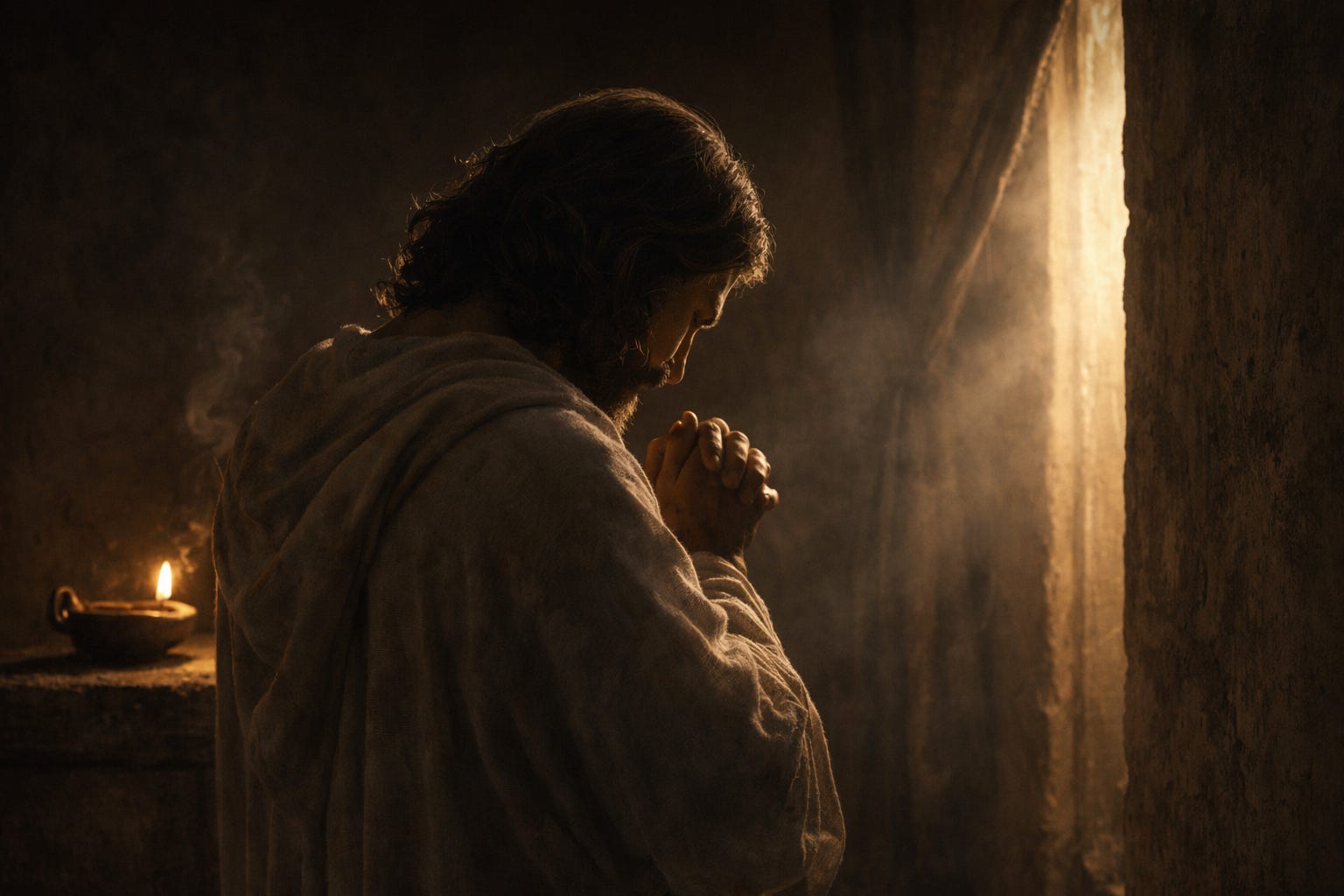
But when you pray, go to your inner room,
close the door, and pray to your Father in secret.
And your Father who sees in secret will repay you.
"When you fast,
do not look gloomy like the hypocrites.
They neglect their appearance,
so that they may appear to others to be fasting.
Amen, I say to you, they have received their reward.
But when you fast,
anoint your head and wash your face,
so that you may not appear to be fasting,
except to your Father who is hidden.
And your Father who sees what is hidden will repay you."
Today’s Focus
In this passage, Jesus purifies rather than abolishes the practices of almsgiving, prayer, and fasting. The Law already commanded these acts of devotion, but Christ redirects their orientation from public recognition to hidden communion with the Father. By warning against hypocrisy—religious performance for an audience—He reveals that righteousness is measured not by visibility but by motive. The Father who sees in secret becomes the true audience of every act of devotion. Holiness, then, is not theatrical display but interior fidelity rooted in relationship.
In the Margins
This passage is part of the Sermon on the Mount. Jesus just raised the standards for righteousness. During that part, He said that the righteousness had to surpass the Scribes and Pharisees. After saying this, He pointed that sins of the heart drove the other sins, tightening the law. Now Jesus warns of misdirected actions – again showing that they should be pure and from the heart, not for show. The issue is not whether to do them, but why and for whom.
Almsgiving, prayer, and fasting were visible expressions of covenant faithfulness. Almsgiving showed justice and mercy, prayer was dependence on God, and fasting signaled repentance or intensified supplication. When Jesus used the term “hypocrites” (hypokritēs), it carried a different meaning and carries a nuance that is broader than the modern English sense.
In classical Greek, this word was a performer in a drama or an interpreter. By the time of the New Testament, it commonly referred to a stage actor, someone who would put on a performance in a public theater. While today we use it to describe someone who says one thing and does another, the meaning Jesus was using it as applied more to actors who often wore large masks and performed for the public.
With this in mind, Jesus is not condemning the actions, he is rebuking those that do it for show. Jesus shows us time and time again that He comes to spread the message of the heart. This also aligned with numerous Old Testament themes. 1 Samuel tells us that the Lord looks on the heart. Psalm 51 is about interior contrition over external sacrifice. Hosea tells us that the desire is for Mercy.
Jesus is not calling for public display as the aim of devotion. The Law already commanded charity, prayer, and fasting. Jesus, having fulfilled the Law, called for orientation to be toward the Father. Righteousness comes from the relationship, not the public performance. This is a message that is core to how we should all aim to live our lives.
If we center our lives on Christ. If we open our eyes and ears to the Gospel and do what we can to profess the message of love from our hearts, we can make major change in the world through the love of God. This is the core revelation Jesus came to spread. When our heart is pure and aligned with Him, we are growing closer to the life we are meant to live, the life that glorifies God.
Reflection Question
If no one else noticed my devotion, would it still be offered fully to the Father?
A Small Invitation
If this reflection helped you, consider sharing it with someone who may be carrying more than they were meant to.