

19 Jun 26 | Treasures in Heaven
Jesus said where your treasure is your heart will follow. The question is where your anxiety goes when things get uncertain.
The Gospel: Matthew 6:19-23
¹⁹ "Do not store up for yourselves treasures on earth, where moth and decay destroy, and thieves break in and steal. ²⁰ But store up treasures in heaven, where neither moth nor decay destroys, nor thieves break in and steal. ²¹ For where your treasure is, there also will your heart be.²² "The lamp of the body is the eye. If your eye is sound, your whole body will be filled with light; ²³ but if your eye is bad, your whole body will be in darkness. And if the light in you is darkness, how great will the darkness be."
Today’s Focus
Jesus contrasts earthly treasure subject to moth, decay, and theft with heavenly treasure beyond corruption, then identifies the organizing principle: the heart follows the treasure, making investment the diagnostic indicator of the heart's true orientation, and warns that a divided eye produces darkness mistaken for light.
In the Margins
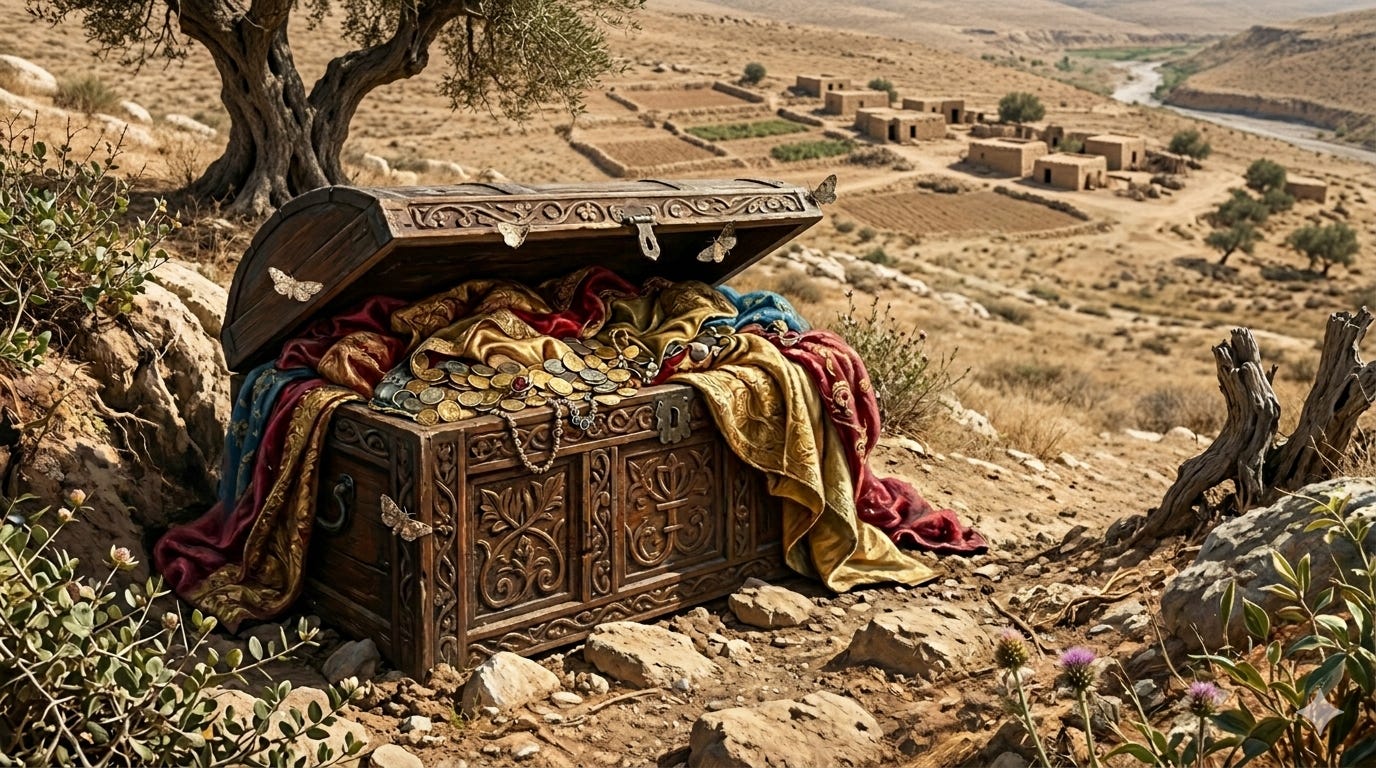
The contrast Jesus draws is not between wealth and poverty. It is between two different kinds of investment, and the distinction He makes is about permanence and the direction the heart follows. He reminds us to not store up for yourselves treasures on earth, where moth and decay destroy, and thieves break in and steal. It will all pass away some day.
The imagery of moth and decay was immediately recognizable in the first century world. Wealth in that context was not primarily liquid assets or account balances. It was stored in three forms: garments, grain, and precious metals. Fine clothing was one of the primary stores of value, passed down through generations and given as gifts. A moth could work through an entire inheritance overnight. Grain stored in barns could rot or be lost to vermin. Precious metals could be stolen. Every form of wealth the ancient world recognized was vulnerable to some version of moth, decay, or theft. Jesus is not making an abstract theological point. He is observing the material reality His listeners lived in.
Treasure in heaven, by contrast, is beyond the reach of every form of corruption or loss. It cannot be eaten, cannot rust, cannot be taken. The contrast is between what holds and what does not. Then comes the sentence that reframes the entire passage. Where your treasure is, there also will your heart be. This is the interpretive key.
Jesus is not primarily giving investment advice. He is making a diagnostic observation about how human beings work. The heart follows the treasure. What you have put your resources toward is where your attention, your anxiety, your energy, and your hope will go. You cannot simply redirect the heart by deciding to care about different things. The heart goes where the treasure has been placed. To redirect the heart you must redirect the investment.
The saying about the eye develops this further. The lamp of the body is the eye. If your eye is sound, your whole body will be filled with light. If your eye is bad, your whole body will be in darkness. The word translated as sound, haplous, also means single or undivided, focused on one thing. The word translated as bad, poneros, means evil but carries the sense of diseased or dysfunctional. An eye that is haplous sees clearly because it is directed at one thing. An eye that is divided between two competing focal points sees neither clearly.
The connection to treasure is direct. The person whose treasure is in heaven has a single focus, a single direction for the heart. The person whose treasure is divided between heaven and earth has an eye trying to focus on two things at once and ends up seeing neither clearly. And if the light in you is darkness, Jesus says, how great will the darkness be. The person who has mistaken the wrong treasure for the right one, who has invested the heart in what cannot hold, is not simply in darkness. They are in darkness while believing themselves to be in light, which is the deepest form of the condition.
The passage puts a diagnostic question to every reader. Not what do you say you value, but where does your anxiety go when things are uncertain? Where does your attention drift when it is unguarded? The heart goes where the treasure is, and the honest answers to those questions reveal where the treasure actually is. Where you seek (look with your eyes) your heart follows. If you are constantly set on worldy things, you will come to desire those things. If we set our eyes on Heaven, we can truly align our hearts and thoughts on what truly matters.
Reflection Question
When your mind is unguarded, where does it drift, is that where you place your treasure?