

The Gospel: John 6:22-29
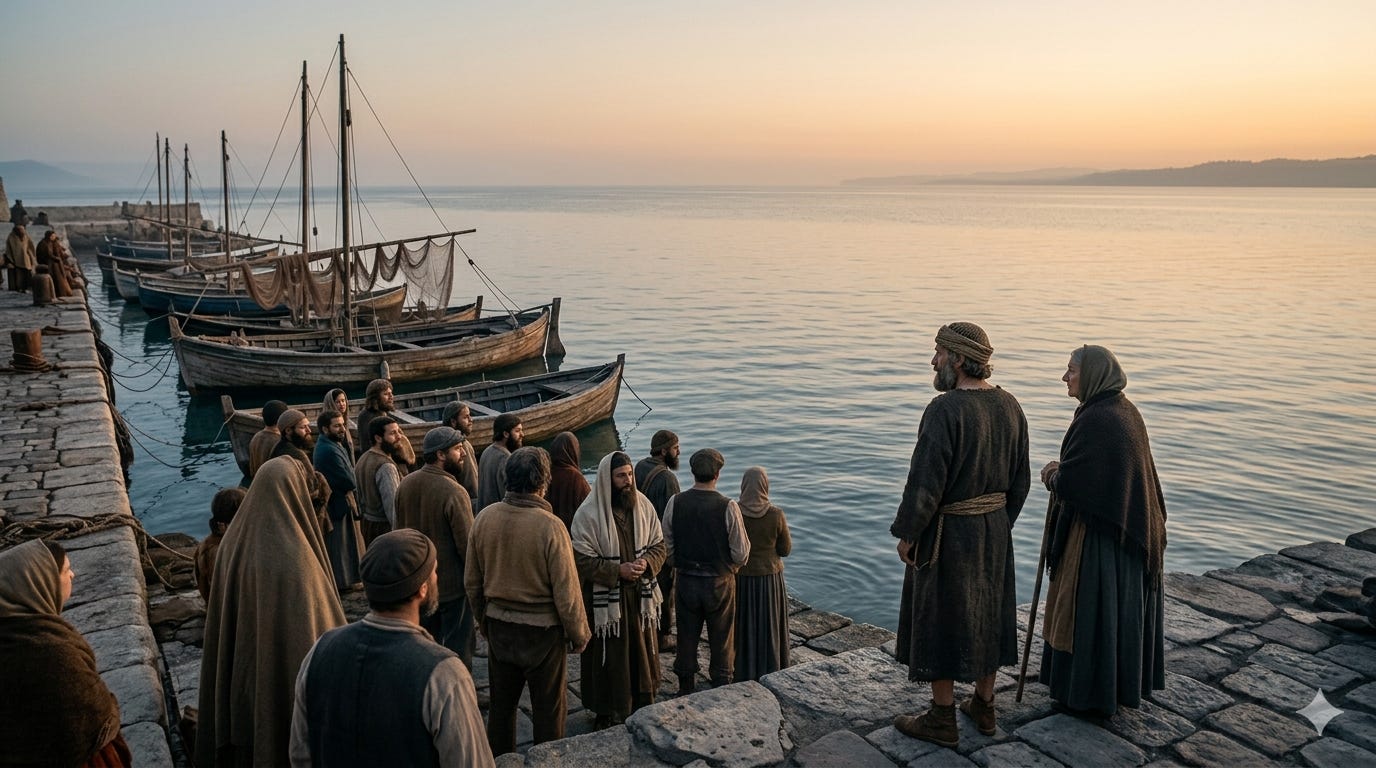
²² The next day, the crowd that remained across the sea saw that there had been only one boat there, and that Jesus had not gone along with his disciples in the boat, but only his disciples had left. ²³ Other boats came from Tiberias near the place where they had eaten the bread when the Lord gave thanks. ²⁴ When the crowd saw that neither Jesus nor his disciples were there, they themselves got into boats and came to Capernaum looking for Jesus. ²⁵ And when they found him across the sea they said to him, "Rabbi, when did you get here?" ²⁶ Jesus answered them and said, "Amen, amen, I say to you, you are looking for me not because you saw signs but because you ate the loaves and were filled. ²⁷ Do not work for food that perishes but for the food that endures for eternal life, which the Son of Man will give you. For on him the Father, God, has set his seal." ²⁸ So they said to him, "What can we do to accomplish the works of God?" ²⁹ Jesus answered and said to them, "This is the work of God, that you believe in the one he sent."
Today’s Focus
They crossed the sea to find him because he had fed them. Jesus did not answer their question about how he got there. He went straight to the motive behind it. They were seeking him for the bread, not for what the bread meant. He told them the work God requires is not a list of obligations. It is belief in the one God sent. One thing, directed entirely toward a person. The crowd was thinking in the framework they knew — religious obligation, human effort, things to be done to obtain what is needed. Jesus collapsed it in a sentence. This is harder than it sounds because believing in the one God sent means coming to him for what only he can give rather than for the provisions he is capable of supplying. Most of us begin where the crowd began. What Jesus is doing in this passage is inviting everyone to come further.
In the Margins
The crowd that Jesus fed the day before wakes up and starts looking for Him. They know He did not get into the boat with the disciples. They cannot account for how He crossed the sea. When they find Him in Capernaum they ask a reasonable question on the surface. They wanted to know how He made it over there. Underneath it is the assumption that drives everything that follows. They have come looking for Jesus because of what He provided, and they want more of it.
Jesus does not answer their question. He goes straight to the motive behind it, pointing out that they were searching for Him not because the signs but because they ate the loaves and were filled. This is one of the more pointed diagnoses Jesus gives anyone in the Gospels. He is not accusing them of something shameful. Hunger is real and being fed is a genuine gift. What He is identifying is the difference between receiving a provision and understanding what it points to. The crowd experienced the miracle from the inside, ate until they were full, and came away thinking primarily about the bread. The sign was pointing somewhere they did not follow.
The distinction Jesus draws next is between food that perishes and food that endures for eternal life. Every meal eventually runs out. The satisfaction it provides is real and temporary. What Jesus offers is something the Son of Man gives, food of a completely different order, provision that does not run out because it belongs to the life of the age to come rather than to the present age. He adds that the Father has set His seal on the Son of Man. A seal in the ancient world was a mark of authentication and authorization, the guarantee that something was genuine and that the one who sent it stood behind it. God has certified Jesus, placed His mark on Him, authorized everything He offers.
The crowd’s response is earnest and telling. They ask what works God requires of them. They are thinking in the framework they know, a framework built on religious obligation and human effort. If there is something to be obtained, there must be something to be done to obtain it. Jesus collapses the entire framework in a single sentence. The work of God is to believe in the one God sent. This is not a list of obligations. It is not a ladder of achievement. One thing, directed entirely toward a person. Belief.
This is harder than it sounds. Believing in the one God sent means accepting that what Jesus offers cannot be earned or produced by human effort. It means coming to Him for what only He can give rather than for the provisions He is capable of supplying. It means belonging to Him fully, living in a manner that connects us to Him. It is not the works that get us there. Those will always fall short. We act a certain way because we truly accept and believe. The acceptance and belief is the internal and true requirement. The external comes because we have the internal. Here, the crowd crossed the sea to find Jesus because He had fed them. That is where most of us begin. What Jesus is doing in this passage is inviting the crowd, and everyone who reads it, to come further, to move from seeking what He provides to seeking Him, to discover that He Himself is the provision the bread was always pointing toward.
Reflection Question
Are you seeking Jesus for what he provides, or have you begun seeking him as the provision itself?
A Small Invitation
If this reflection helped you, consider sharing it with someone who may benefit from hearing this message.