

The Gospel: Matthew 12:38-42
³⁸ Then some of the scribes and Pharisees said to him, "Teacher, we wish to see a sign from you." ³⁹ He said to them in reply, "An evil and unfaithful generation seeks a sign, but no sign will be given it except the sign of Jonah the prophet. ⁴⁰ Just as Jonah was in the belly of the whale three days and three nights, so will the Son of Man be in the heart of the earth three days and three nights. ⁴¹ At the judgment, the men of Nineveh will arise with this generation and condemn it, because they repented at the preaching of Jonah; and there is something greater than Jonah here. ⁴² At the judgment the queen of the south will arise with this generation and condemn it, because she came from the ends of the earth to hear the wisdom of Solomon; and there is something greater than Solomon here."
Today’s Focus
Jesus refuses a sign to the scribes and Pharisees who have just witnessed a healing and spent it arguing about demonic power, names only the sign of Jonah, his death and resurrection, as the evidence this generation will receive, and then turns the table by establishing that pagan Nineveh and the queen of the south will condemn a generation that had something greater and still required more convincing.
In the Margins
The scribes and Pharisees who make this request have just watched Jesus cast out a demon from a man who was both blind and mute. They have spent the verses between that healing and this moment accusing him of working by demonic power, been refuted in that argument, and warned about the unforgivable sin of calling the Spirit’s work evil. And now they ask for a sign.
The request sounds reasonable until you realize what it reveals. These are not people who lack evidence. They are people who have decided in advance that whatever evidence they have seen does not count, and who are proposing terms under which they might consider revising that position. A sign requested from that posture is not a bridge toward faith. It is a condition placed in front of faith to delay it indefinitely, because there will always be a reason the latest sign does not quite satisfy.
Jesus calls the generation making this request evil and unfaithful, not because wanting evidence is wrong but because the sign-seeking has become a substitute for the reckoning they are working hard to avoid. The generation he is describing has access to more concentrated evidence of divine action than almost any people in history, and they have developed increasingly sophisticated reasons why none of it is quite sufficient. The request for a sign is the latest iteration of a pattern that has been running all the way through Matthew’s Gospel.
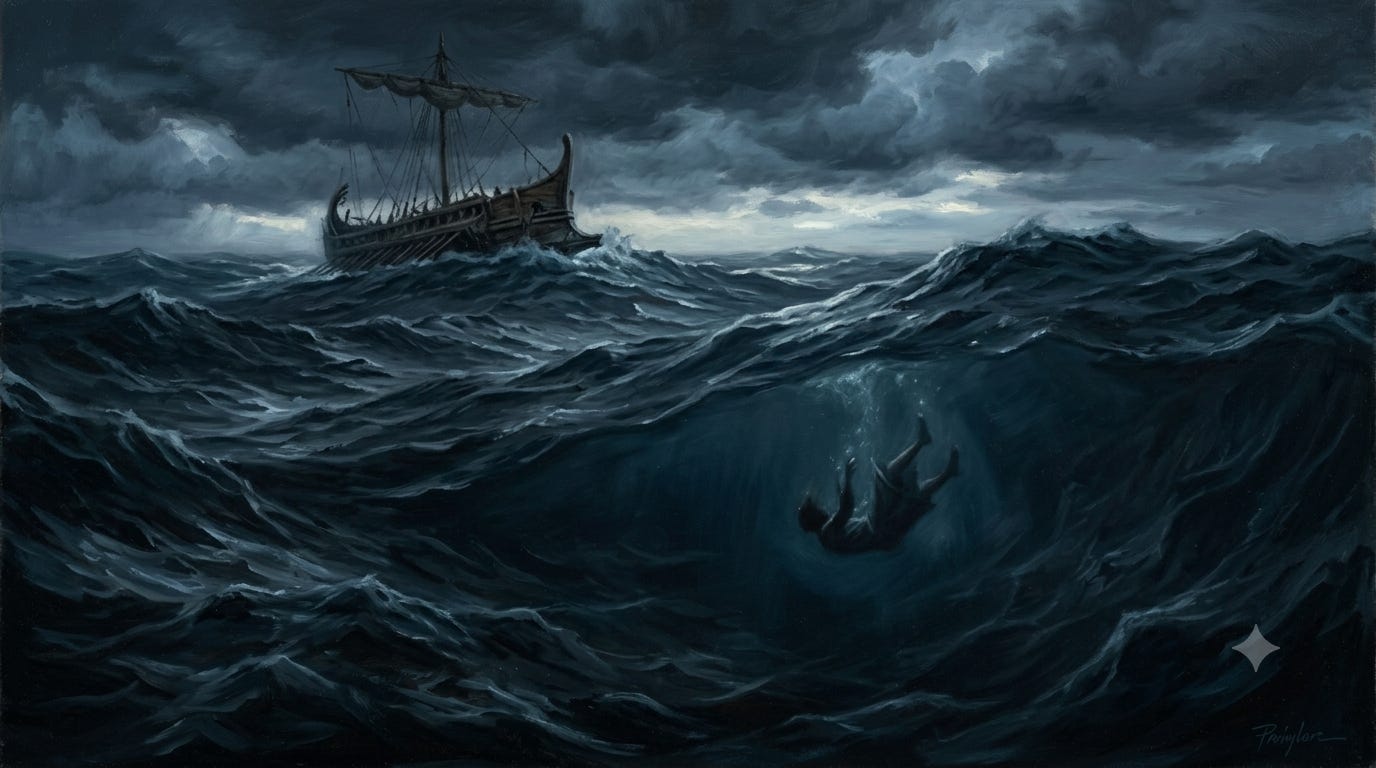
The only sign that will be given, Jesus says, is the sign of Jonah. Jonah spent three days and three nights in the belly of the great fish before being delivered to complete the mission he had been trying to avoid. Jesus will spend three days and three nights in the heart of the earth. This is the single moment in Matthew where Jesus identifies his death and resurrection explicitly as a sign, and it is the only one he says will be offered to this generation. Whatever the resurrection is, it will be unanswerable. The generation demanding signs now will have no claim to ignorance when it comes.
What follows the sign refusal is the comparison that is, if anything, more unsettling than the refusal itself. At the judgment the men of Nineveh will arise and condemn this generation. Nineveh was the Assyrian capital, the ancient enemy of Israel, pagan to its core, so morally repugnant to Jonah that he boarded a ship in the opposite direction rather than preach there. When he finally arrived with his eight-word sermon, the entire city repented, from the king down to the animals. Something greater than Jonah is here, and this generation is unmoved.
The queen of the south, almost certainly the queen of Sheba from 1 Kings 10, traveled from the far end of the known world to hear Solomon’s wisdom. She had no covenant relationship with the God of Israel, no inherited tradition pointing her in this direction, no reason to expect anything in particular, and she made the journey. Something greater than Solomon is here, and the people who have the covenant, the prophecies, the miracles, and the Torah cannot be bothered.
The structure is the same one Jesus built in the condemnation of Chorazin and Bethsaida. Pagans who had every disadvantage responded to far less. The people with every advantage required more, and more, and more, and never got there. At the judgment, the people they looked down on will be the ones doing the condemning.
Reflection Question
What are you waiting to see before you will trust what Jesus has already said and done, and is that waiting genuinely open to being satisfied or is it a way of postponing the response you already know is being asked?