

The Gospel: John 6:30-35
³⁰ So they said to him, "What sign can you do, that we may see and believe in you? What can you do? ³¹ Our ancestors ate manna in the desert, as it is written:
'He gave them bread from heaven to eat.'"
³² So Jesus said to them, "Amen, amen, I say to you, it was not Moses who gave the bread from heaven; my Father gives you the true bread from heaven. ³³ For the bread of God is that which comes down from heaven and gives life to the world."
³⁴ So they said to him, "Sir, give us this bread always." ³⁵ Jesus said to them, "I am the bread of life; whoever comes to me will never hunger, and whoever believes in me will never thirst.
Today’s Focus
The crowd asked for a sign the day after eating multiplied loaves. They reached for Moses as their standard and placed Jesus on a scale weighted by the Exodus, finding him insufficient by comparison. Jesus corrected the premise before answering the challenge. Moses did not give the manna. God did. And what God was doing in the wilderness was not simply feeding hungry people. He was providing a sign that pointed forward. The entire generation that ate the manna still died in the wilderness. The manna was real and from God and it was not enough to resolve the deepest human problem. I am the bread of life. The first of seven I AM declarations in the Gospel with a predicate, each one answering a particular human need with his own person. The Father who rained bread from heaven in the wilderness is the Father who sent the true bread into the world. The crowd knew the text. What they did not see was that the one who provided the manna and the one standing in front of them were the same.
In the Margins
The crowd has just been told that the work of God is to believe in the one He sent. Their immediate response is to ask for a sign. This is the same crowd that ate the multiplied loaves the day before, clearly witnessing a miracle, but doubles down with a request for more signs. They are not asking from a position of genuine openness. They are applying a standard, and the standard they reach for is Moses.
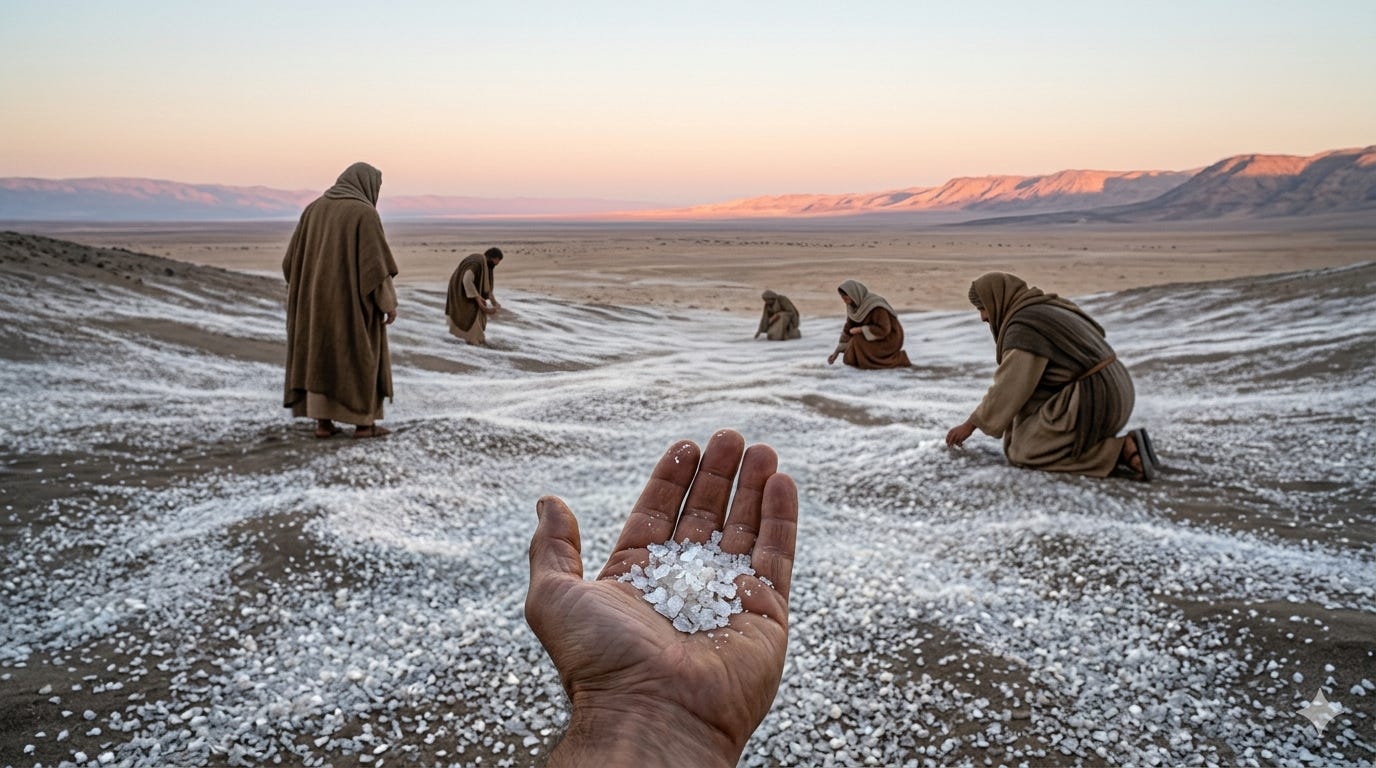
Their argument is grounded in Exodus 16, where God provided manna in the wilderness, bread that appeared on the ground each morning for the forty years Israel wandered after leaving Egypt. The crowd quotes Psalm 78, which recalls that God gave them bread from heaven to eat. The logic they are presenting is clear. Moses gave our ancestors bread from heaven every day for forty years. They are placing Jesus on a scale weighted by the Exodus and finding Him insufficient by comparison.
Jesus corrects the premise before He answers the challenge. It was not Moses who gave the bread from heaven. Moses did not produce the manna, God provided it. The crowd has attributed to the instrument what belongs to the source, a mistake that obscures both what Moses actually was and what God was actually doing in the wilderness. Even in this moment, Jesus is able to teach, refining their understanding of scripture.
Moses was a servant faithful in God’s house, as Hebrews 3 will later put it, but the house belongs to God and the bread came from God. What God was doing through the manna was not simply feeding hungry people in a desert. He was providing a sign that pointed forward, as everything in the Mosaic period pointed forward, to something greater.
Jesus then makes a distinction the crowd has not considered. There is true bread from heaven and there is bread that merely comes from heaven. The manna sustained physical life. It appeared each morning and the people gathered it and ate and were sustained for that day. But they still grew old and they still died in the wilderness. The entire generation that ate the manna, with the exception of Joshua and Caleb, never entered the promised land. The bread was real and it was from God and it was not enough to resolve the deepest human problem. True bread from heaven, Jesus says, is the bread that comes down from heaven and gives life to the world. Not sustains life temporarily. Gives life, as a different order of provision entirely.
The crowd hears the offer and responds the way the Samaritan woman responded in John 4 when Jesus offered living water. Sir, give us this bread always. Like her, they are still thinking in physical terms, as if Jesus has a secret supply of bread that He has chosen to not hand out yet. They want an endless supply of the miraculous provision. Jesus does not give them bread, He tells them what the bread is.
I am the bread of life. This is the first of the seven I AM declarations in John’s Gospel where Jesus completes the divine name with a specific predicate. Each one answers a particular human need with His own person. Whoever comes to Me will never hunger. Whoever believes in Me will never thirst. The hunger and thirst He is addressing are not physical, it is spiritual; it is eternal. Isaiah 55 opens with the invitation to come to the waters and eat without money, to seek the Lord while He may be found, promising that the soul will delight in rich food. The prophet was pointing toward a day when the deepest human longings would be satisfied not by provision but by the presence of God Himself. Jesus is standing in Capernaum announcing that the day Isaiah described has arrived.
The manna in the wilderness was genuine provision from God and it was always a sign pointing beyond itself. The crowd knew the text. They knew the history, but like many, did not see was that the one who provided the manna and the one standing in front of them were the same. The Father who rained bread from heaven in the wilderness is the Father who sent the true bread from heaven into the world. The manna fed a generation, but the bread of life is offered to everyone who comes and believes, and those who receive it will never hunger again.
Reflection Question
Are you still measuring Jesus against lesser provisions, or have you come to him as the thing those provisions were always pointing toward?
A Small Invitation
If this reflection helped you, consider sharing it with someone who may benefit from hearing this message.