

21 Jun 26 | Fear No One
Jesus said do not fear those who can kill the body. Be afraid of the one who holds the soul. That reorders everything.
The Gospel: Matthew 10:26-33
²⁶ "Therefore do not be afraid of them. Nothing is concealed that will not be revealed, nor secret that will not be known. ²⁷ What I say to you in the darkness, speak in the light; what you hear whispered, proclaim on the housetops. ²⁸ And do not be afraid of those who kill the body but cannot kill the soul; rather, be afraid of the one who can destroy both soul and body in Gehenna. ²⁹ Are not two sparrows sold for a small coin? Yet not one of them falls to the ground without your Father's knowledge. ³⁰ Even all the hairs of your head are counted. ³¹ So do not be afraid; you are worth more than many sparrows. ³² Everyone who acknowledges me before others I will acknowledge before my heavenly Father. ³³ But whoever denies me before others, I will deny before my heavenly Father."
Today’s Focus
Jesus redirects the disciples' fear from human opposition that can only harm the body toward the appropriate reverence for God who holds the soul, grounds the alternative to fear in the Father's specific and particular knowledge of each person, and ties public acknowledgment of Jesus to His acknowledgment of them before the Father.
In the Margins
Jesus has just told the Twelve that He is sending them out like sheep among wolves. He has warned them about floggings in synagogues, being dragged before governors, family divisions, and the hatred that will come because of His name. The instructions in this passage are not abstract encouragements toward general courage. They are given to people who have just been told exactly what is coming – and what is coming is not going to be good.
Do not be afraid of them, He tells them. The them refers to those who will oppose, persecute, and betray the disciples. The reason Jesus gives is specific. Nothing concealed will not be revealed, nothing secret will not be known. The hidden truth about who Jesus is, about what the kingdom is, about what is actually happening in the confrontation between the Gospel and the world, will not remain hidden permanently. The opponents who seem to have all the power in the present moment are operating within a temporary concealment that will not last. Speak in the light what I say to you in darkness. Proclaim on the housetops what you hear whispered. The message is not meant to stay quiet.
Then He draws a distinction that reorders the entire threat calculation. Do not be afraid of those who kill the body but cannot kill the soul. Rather, be afraid of the one who can destroy both soul and body in Gehenna. Gehenna is the “Valley of Hinnom,” a place outside Jerusalem that was historically associated with fire and destruction. The one who can destroy this place is God. The Greek word for fear here is the same in both clauses. Jesus is not saying fear nothing. He is redirecting fear toward its appropriate object. Human opposition, however severe, operates only at the level of the body. The soul is beyond its reach. The one who holds the soul is the one whose opinion actually matters in the final accounting. To fear human opposition more than God is to have the calculation exactly backwards.
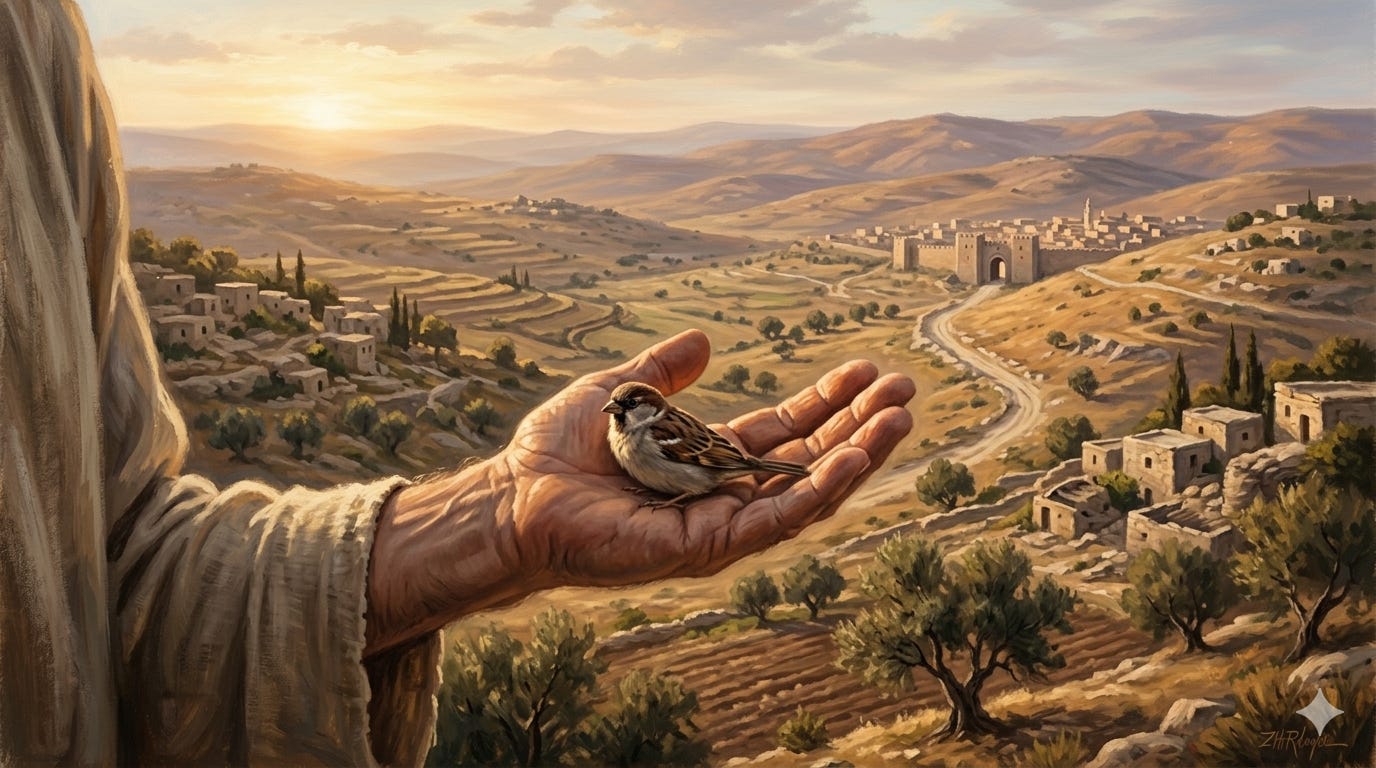
The sparrow saying grounds the alternative to fear in something specific. Are not two sparrows sold for a small coin? In Luke’s version it is five sparrows for two coins, meaning one sparrow comes free, so low was the value assigned to them. Yet not one of them falls to the ground without your Father’s knowledge. The Greek is more literally without your Father, suggesting the Father’s presence with the sparrow in its falling rather than merely His awareness of it. Even the creature of least commercial value is not beyond the Father’s attention.
Even all the hairs of your head are counted. This is not a general statement about divine omniscience. It is a specific statement about the particularity of God’s knowledge of this person, standing here, in this moment of fear. The Father’s knowledge is not broad and vague. It is exact and personal.
Everyone who acknowledges me before others I will acknowledge before my heavenly Father. Whoever denies me before others I will deny before my heavenly Father. The stakes of what the disciples are being sent to do are real. Acknowledgment and denial have weight. But the passage does not end on the threat. It ends on the promise. The one who acknowledges Jesus in front of people who are hostile is the one Jesus will acknowledge before the Father. The courage required is borrowed courage, drawn from the knowledge that the Father counts the hairs and notes the sparrows and will not lose sight of the one who speaks His name in a room full of people who are opposed to it.
Reflection Question
Where in your life are you staying quiet about your faith because you fear human judgment more than you trust the Father who counts the hairs on your head?