

22 Jun 26 | Do Not Judge
Jesus said remove the beam from your own eye first. Then you will actually be able to help.
The Gospel: Matthew 7:1-5
¹ "Stop judging, that you may not be judged. ² For as you judge, so will you be judged, and the measure with which you measure will be measured out to you. ³ Why do you notice the splinter in your brother's eye, but do not perceive the wooden beam in your own eye? ⁴ How can you say to your brother, 'Let me remove that splinter from your eye,' while the wooden beam is in your eye? ⁵ You hypocrite, remove the wooden beam from your eye first; then you will see clearly to remove the splinter from your brother's eye."
Today’s Focus
Jesus prohibits the posture of the final judge who measures others by a standard they exempt themselves from, uses the beam and splinter image to expose the absurdity of judging others while blind to one's own larger failures, and closes with the commission to do the self-examination that makes genuine help possible.
In the Margins
Stop judging, that you may not be judged is one of the most quoted verses in the Gospels and one of the most consistently misread. It is regularly invoked to mean that no one should ever evaluate anyone else’s behavior or beliefs. That is not what Jesus is getting at with the message. What Jesus actually says is more specific and more demanding than that.
The word translated as judge, krinō, carries the sense of rendering a verdict, of pronouncing a final assessment on a person. It is the language of the courtroom. Jesus is not prohibiting discernment or evaluation, we see Him call for this numerous times in the Bible and does it Himself. Rather, He is prohibiting the posture of the judge who pronounces final sentence, who positions themselves above the one being evaluated, who has forgotten that they are standing before the same Judge they are invoking.
For as you judge, so will you be judged, and the measure with which you measure will be measured out to you. The standard you apply to others becomes the standard applied to you. This is not simply a warning about fairness. It is a revelation about the nature of the judgment we call down on ourselves when we judge others. The moment you establish a standard for someone else’s life you have established the standard by which your own life will be measured. Most people who judge others freely would be horrified to have themselves measured by the same precision.
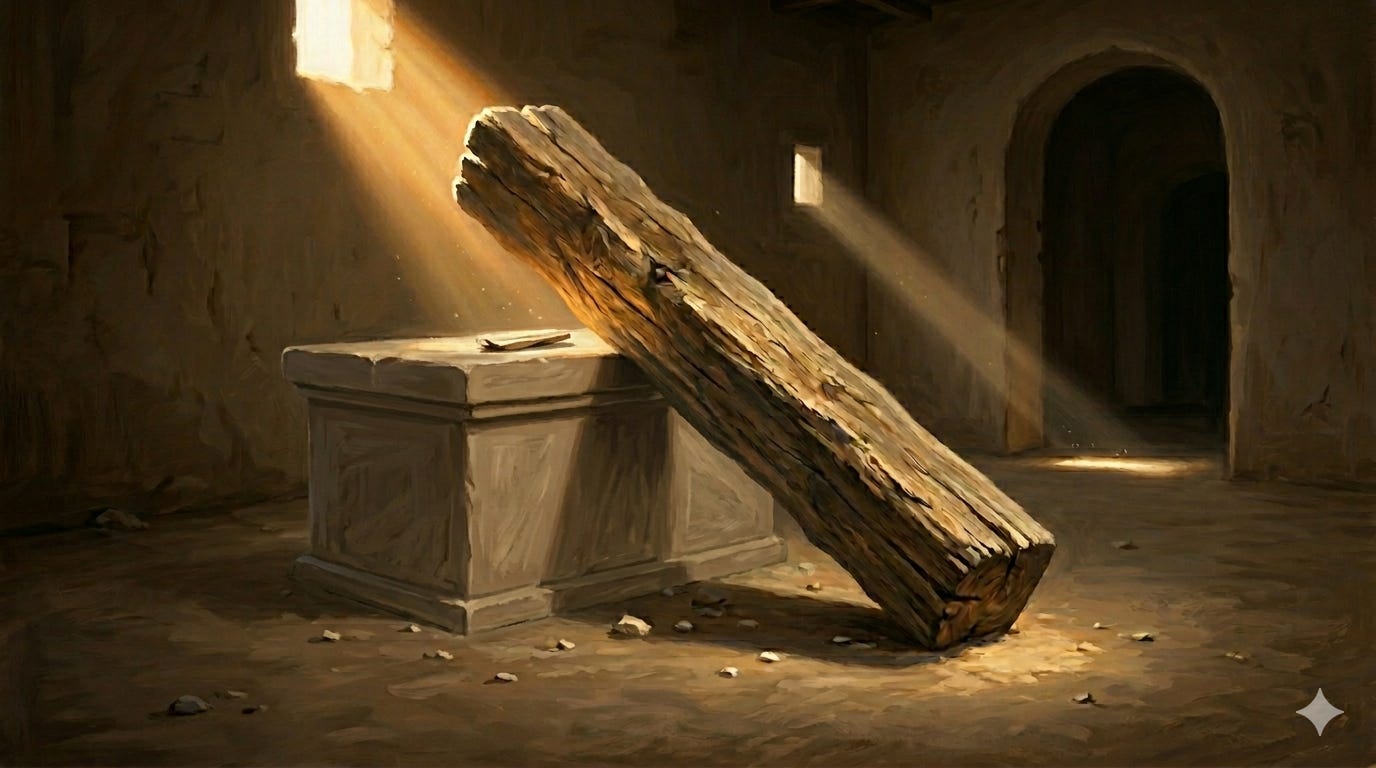
The image Jesus uses makes the disproportion viscerally clear. You notice the splinter in your brother’s eye but do not perceive the wooden beam in your own eye. The splinter, karphos in Greek, was a small speck of sawdust, a tiny sliver barely visible. The wooden beam, dokos, was a structural timber, one of the large beams that held up the roof of a house. The absurdity is the point. The person who cannot see past the enormous obstruction in their own eye is attempting to perform delicate surgery on someone else’s.
Notice what Jesus does not say. He does not say the splinter is not real or does not matter. He says you cannot address it while the beam is in your own eye. The beam does not eliminate the need to eventually help your brother with the splinter. It eliminates your current ability to do so. Remove the beam first, then you will see clearly enough to address the splinter. The passage is not a prohibition on ever addressing a brother’s fault. It is an insistence that the only person qualified to help someone else with their sin is the person who has done the prior work of honest self-examination.
In the first century Jewish context the scribes and Pharisees were the primary example of the judging posture Jesus is addressing. They had developed an elaborate system for evaluating others’ compliance with the law while managing their own failures with creative interpretation. The word hypocrite Jesus uses for the person with the beam was the theatrical term for an actor, someone performing a role rather than being what they appear.
The passage does not end with a prohibition. It ends with a commission. Remove the beam, then help your brother. The goal was never to stop caring about truth or to pretend that sin does not matter. The goal is the transformation that makes genuine help possible rather than disguised superiority.
Reflection Question
Where are you quick to notice a splinter in someone else's eye, and if you turned that same attention honestly toward yourself, what beam might you find?