

The Gospel: Matthew 25:31-46
Jesus said to his disciples:
“When the Son of Man comes in his glory,
and all the angels with him,
he will sit upon his glorious throne,
and all the nations will be assembled before him.
And he will separate them one from another,
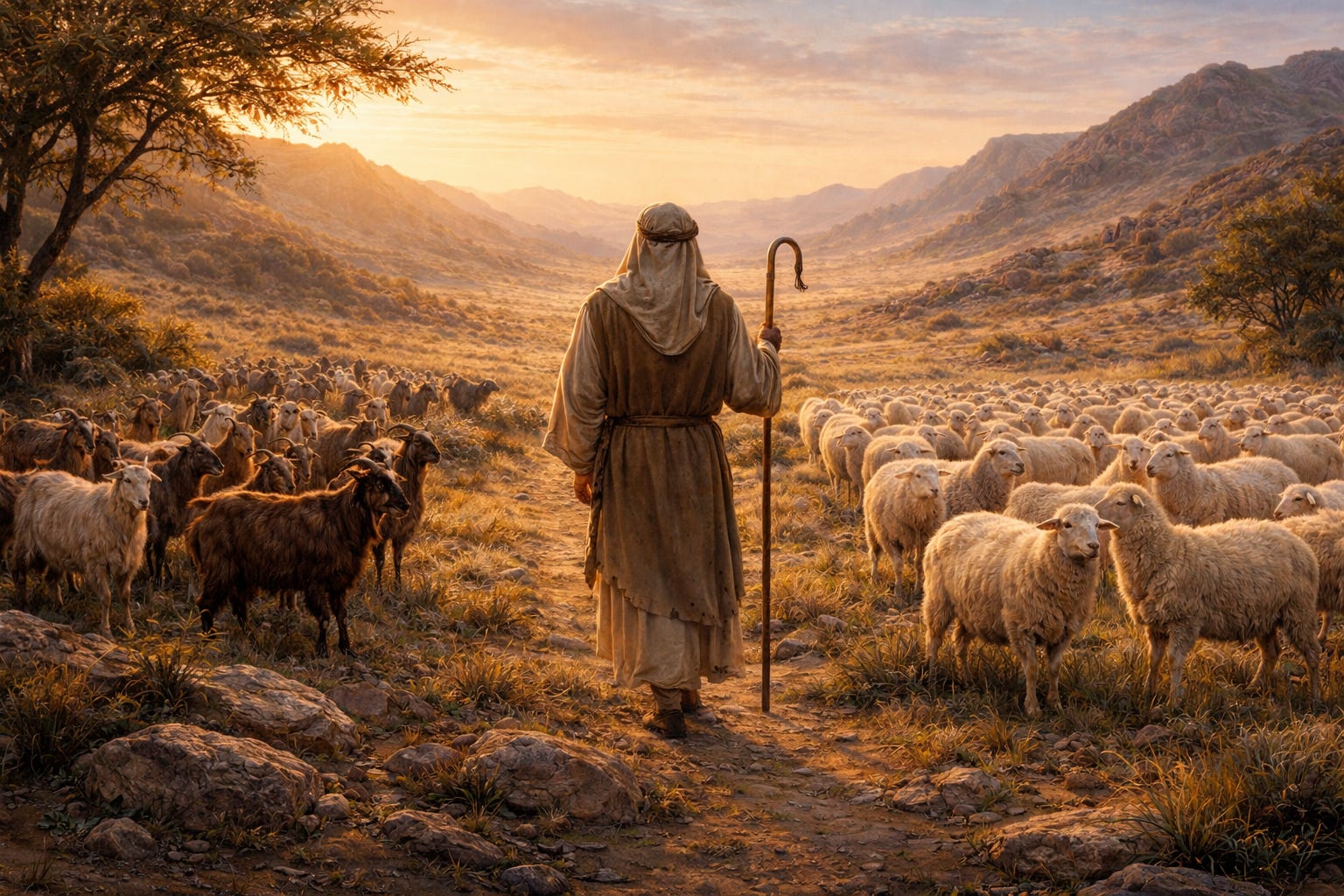
as a shepherd separates the sheep from the goats.
He will place the sheep on his right and the goats on his left.
Then the king will say to those on his right,
‘Come, you who are blessed by my Father.
Inherit the kingdom prepared for you from the foundation of the world.
For I was hungry and you gave me food,
I was thirsty and you gave me drink,
a stranger and you welcomed me,
naked and you clothed me,
ill and you cared for me,
in prison and you visited me.’
Then the righteous will answer him and say,
‘Lord, when did we see you hungry and feed you,
or thirsty and give you drink?
When did we see you a stranger and welcome you,
or naked and clothe you?
When did we see you ill or in prison, and visit you?’
And the king will say to them in reply,
‘Amen, I say to you, whatever you did
for one of these least brothers of mine, you did for me.’
Then he will say to those on his left,
‘Depart from me, you accursed,
into the eternal fire prepared for the Devil and his angels.
For I was hungry and you gave me no food,
I was thirsty and you gave me no drink,
a stranger and you gave me no welcome,
naked and you gave me no clothing,
ill and in prison, and you did not care for me.’
Then they will answer and say,
‘Lord, when did we see you hungry or thirsty
or a stranger or naked or ill or in prison,
and not minister to your needs?’
He will answer them, ‘Amen, I say to you,
what you did not do for one of these least ones,
you did not do for me.’
And these will go off to eternal punishment,
but the righteous to eternal life.”
Today’s Focus
In this climactic judgment scene, Jesus presents Himself as the Danielic Son of Man who exercises final authority over all nations. The separation of sheep and goats reveals that eternal destiny turns not on status or sentiment, but on whether divine mercy was embodied in concrete action. The kingdom prepared from the foundation of the world is inherited by those whose lives reflected covenant fidelity through love of the vulnerable. The decisive issue is not knowledge alone, but whether love—expressed in works of mercy—revealed authentic union with the King.
In the Margins
This passage immediately follows Jesus teaching about watchfulness with the parable of the ten virgins and teaching about stewardship with the parable of the talents. The Son of Man (Greek: ho huios tou anthrōpou; Hebrew/Aramaic: ben adam / bar enash) essentially means “human” but it is used in different contexts throughout history.
During this period, this being used as a title was more strongly aligned with how we see it used in the Book of Daniel. We see this throughout the Gospels as well, where Jesus is using the title connected to authority on earth, the future suffering and rejection, and the glory. These, along with how Jesus opens here, is pulling in Daniel 7, where the Son of Man receives dominion, glory, and kingship. The difference that we see here is that in Daniel – the Son of Man received authority, but here in Matthew – he exercises it. Jesus places Himself at the center of final cosmic judgment, saying “When the Son of Man comes in His glory.”
When Jesus says “all the nations,” He is indicating that it is more than Israel alone. Second Temple Jewish expectation included a final judgment separating righteous from wicked (cf. Daniel 12; 1 Enoch traditions). Jesus affirms this, but centers Himself within this expectation, dividing the sheep to the right and the goats to the left. This imagery ties directly to the shepherd imagery that we are familiar with Jesus using. The historical tie is that in ancient Palestine, sheep and goats often grazed together but were separated at night.
The imagery is agricultural and practical. The right was favor and authority and the left was disfavor. The separation is decisive and irreversible. We also know that the Kingdom those on the right are to inherit is “prepared…from the foundation of the world.” The language of inheritance presumes filial relationship, and “from the foundation of the world” emphasizes divine initiative and eternal intention, clearly showing that it is not reserved for the Jews, but expected for all.
The judgment scene does not reduce righteousness to sentiment but reveals that love is the visible form of fidelity to the King. Some people will say that Jesus only gave one commandment. This is usually pulled from interpretations from the Gospel of John, “a new commandment I give to you, that you love one another as I have loved you.” Here, we have Jesus not commanding per se, but clearly showing that acts of mercy build that relationship with the Lord. He uses examples of feeding, giving drink, welcoming, clothing, visiting, and caring. These will later become known as the corporal works of mercy in later Christian traditions. The key point is that the righteous do not do these things to gain reward. They serve and show mercy in an uncalculated manner, showing transformation from the inside out as opposed to transactional behaviors focused on the outside appearance of good works.
When Jesus talks of the condemned, it is important to note that they are not accused of cruelty, they are accused of neglect, a sin of omission. This reflects prophetic tradition (Isaiah 58; Ezekiel 34), where failure to care for the vulnerable signals covenant failure. Both groups ask: “When did we see you?” and are surprised to find that the dividing line is not knowledge but enacted mercy to those that Jesus connect Himself to, His “brothers.” Jesus identifies Himself with the vulnerable. Service to them becomes service to Him. This is not metaphorical sentiment, it is core theology and teaching. God has united Himself to humanity.
The Gospel ends with “Eternal punishment” and “Eternal life.” The same Greek word (aiōnios) modifies both. It implies parallel duration. There is no suggestion of temporary correction here. This is one of the clearest New Testament affirmations of eternal accountability.
This is a longer passage than usual, but the core takeaway we can apply to our lives is that Christ is final Judge and has always claimed to be. His mercy reveals authenticity in righteousness and our union to Him is achieved through love of our neighbors. This is not doing right because we don’t want to go to hell. It is doing right because we are truly transformed and actively love God. It may seem like a small distinction, but it is significant. We are not called to live in fear, we are called to live in love. Love of God and love for our neighbors, where faith that does not manifest mercy is exposed as hollow.
Reflection Question
If Christ were to measure my life by how I treat the most vulnerable, what would my daily choices reveal about my love for Him?
A Small Invitation
If this reflection helped you, consider sharing it with someone else to help spread the Gospel.