

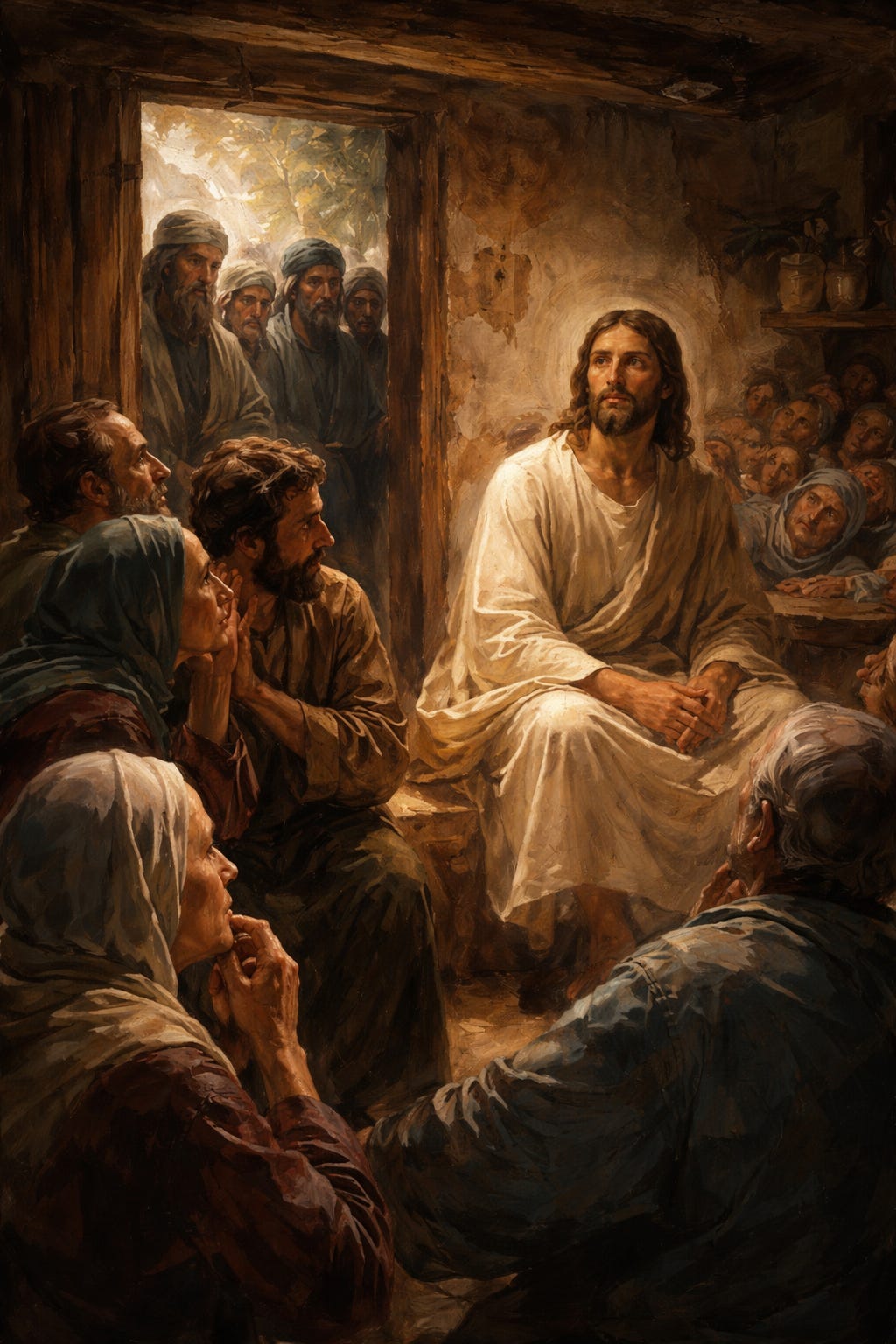
The Gospel: Mark 3:20-22
Jesus came home.
Again the crowd gathered,
making it impossible for them even to eat.
When his relatives heard of this
they set out to seize him,
for they said, “He is out of his mind.”
The scribes who had come from Jerusalem said,
“He is possessed by Beelzebul,”
and “By the prince of demons he drives out demons.”
Today’s Focus
This Gospel shows how Jesus’ mission disrupts ordinary life, beginning not with enemies but within the home. The crowded house signals social disorder, prompting His family to intervene out of concern for honor and safety. At the same time, scribes from Jerusalem arrive, marking a sharp escalation as Jesus’ authority is officially challenged and His works are labeled demonic. Mark reveals that Jesus is misunderstood both by those closest to Him and by those entrusted with religious authority. This passage confronts us with the cost of following Christ when faithfulness appears foolish or threatening by worldly standards.
In the Margins
Houses are big places in the Gospels. When Jesus enters houses, disciples are formed, authority is questioned, and true kinship is reflected. Meals at home were essential in this culture. We see the concern not that He would be hungry, but reflective of a loss of order. This signals a greater social danger, not just that it was going to be busy. “Relatives” refers to Jesus’ kin group, those responsible for family honor.
When it says His relatives set out to seize Him, it draws on Jewish culture. The behavior of one reflected on the entire household. These gatherings were likely to be seen as a disturbance to Romans and would have brought danger on the household. The relatives’ action would have been in line with Jewish custom at the time, but also reflects a lack of understanding about what was truly occurring.
Telling that the scribes were from Jerusalem shows that they were scribes from the centralized religious authority. Them arriving signifies that Jesus has risen to the level for the center of Judaism to dispatch legal scribes to collect and document. He would have been considered a national-level threat at this point. This marks a major escalation in the Book of Mark.
The reference to Beelzebul is the most severe accusation possible. Beelzebul was understood to be the leader of demonic forces, essentially Satan by another name. Accusing Jesus of this would mean that Jesus’ healings were to be reinterpreted as deception.
Mark shows that misreading Jesus happens at every level, home and synagogue. His kin group has said He was mad. The synagogue has said He is doing the works of Satan. It also tells us that even those living with Jesus struggled to understand. We have the benefit of hindsight in our modern times, but we can still fall into these same traps. We do things we know will put a thorn in the heart of Jesus, even though we should not. We are essentially choosing the alternative to showing love to God.
This is not a mention of judgement, but a realization of what true love looks like. Jesus knew these challenges would come. Jesus knew that it was only through this way that others would truly come to know Him. God’s mission is loyalty. Jesus began his path to the cross by being questioned by those that knew Him best. That hindsight allows us the opportunity to not make similar mistakes. We know the true nature of the Lord. We know the cost that was inevitably paid. Jesus’ mission disrupts even the most sacred social structures, are we willing to be “mad” with Him?
Reflection Question
When following God begins to unsettle the expectations of those closest to us, where do we draw our deepest sense of identity and belonging?
A Small Invitation
If this reflection helped you, consider sharing it with someone who may be carrying more than they were meant to.