

The Gospel: John 20:19-23
¹⁹ On the evening of that first day of the week, when the doors were locked, where the disciples were, for fear of the Jews, Jesus came and stood in their midst and said to them, "Peace be with you." ²⁰ When he had said this, he showed them his hands and his side. The disciples rejoiced when they saw the Lord. ²¹ Jesus said to them again, "Peace be with you. As the Father has sent me, so I send you." ²² And when he had said this, he breathed on them and said to them, "Receive the holy Spirit. ²³ Whose sins you forgive are forgiven them, and whose sins you retain are retained."
Today’s Focus
The risen Jesus appears to the frightened disciples on Easter evening, speaks peace, shows His wounds, commissions them as the Father commissioned Him, and breathes the Holy Spirit on them with the authority to forgive sins, constituting the post-resurrection community.
In the Margins
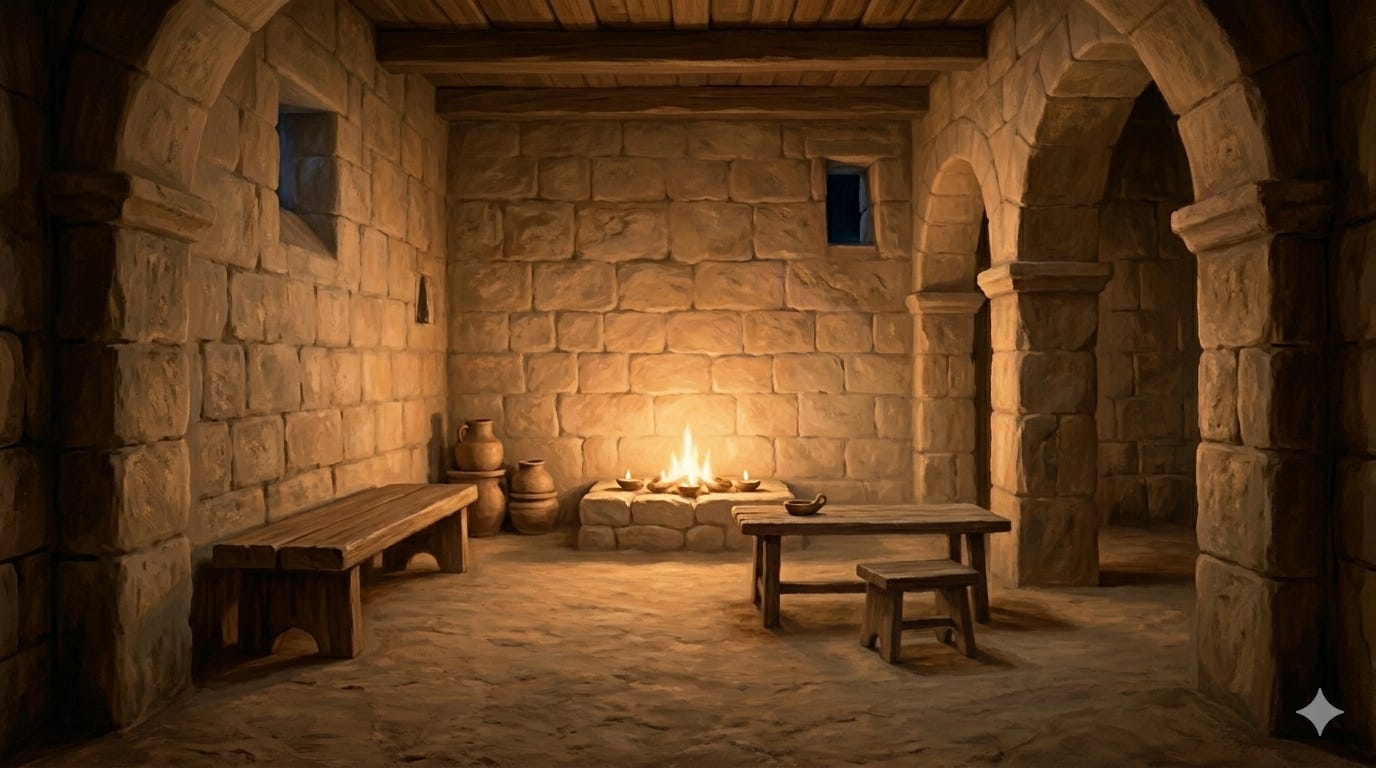
It is Easter Sunday evening and the disciples are behind locked doors. They have received the testimony. Some have seen the empty tomb. The beloved disciple believed at the tomb. And they are still hiding, still afraid. The resurrection has been announced and it has not yet become the ground they stand on.
Jesus appears without the doors being opened. He is simply present. The resurrection body throughout the Gospel appearances occupies physical space, can be touched, eats food, and passes through locked doors. The first word Jesus speaks is peace, eirēnē, and in this moment the word carries more than a greeting. Isaiah 52 announces the messenger who brings good news of peace and declares that God reigns. Isaiah 53 says the punishment that brought peace was upon the servant. The risen Jesus speaking peace into that locked room is the declaration that what the servant died to accomplish has been achieved.
He shows them His hands and His side. The wounds are the identifying marks that connect the risen body to the crucified body. The resurrection does not erase the cross. The glorified body retains the marks of the passion. The disciples rejoice when they see them, fulfilling the specific promise of John 16:22, that He would see them again and their joy would be complete.
The commission He gives is grounded in the deepest structure of the Gospel. As the Father has sent me, so I send you. They go the way the Son was sent, in dependence on the one who sends, carrying the message of the one who sends, with the authority of the one who sends.
He breathes on them. The Greek verb enephysēsen appears nowhere else in the New Testament. Its only other significant use in the Greek Bible is Genesis 2:7 where God breathes the breath of life into the first human. The same verb, the same act. The risen Jesus breathing the Spirit on the disciples is a new creation, Ezekiel 37’s valley of dry bones where the breath of God raises what was dead brought into the present moment of that locked room.
The authority to forgive and retain sins that accompanies this breath is where the early Church consistently reads the institution of the sacrament of Penance. The Catholic tradition understands the authority as judicial and specific, a real delegation to the apostolic community to forgive and retain in a way that effects what it declares, grounded in the breathing of the Spirit as a new creation act constituting the community for this function. The consistent patristic witness from the early centuries onward reads the passage this way. Some Protestant traditions read the authority as proclamatory rather than priestly, the disciples announcing the result of the Gospel rather than effecting forgiveness through a sacramental act. The text has been debated across traditions, but what the early Church received and practiced from the beginning was individual confession and absolution in the pattern this passage establishes.
Regardless of where you land on this otherwise hotly contested passage, it still speaks to us on an individual level. Whatever has locked you in, whatever fear has reduced the room you occupy, this passage describes the risen Jesus moving through every locked door to stand in the middle of it and speak peace before asking anything of you. Whatever the reader’s tradition, this passage describes the risen Jesus moving through every locked door to stand in the middle of it and speak peace before asking anything of you. The one who breathes the Spirit and delegates authority over sin is the same one who walks through locked doors toward frightened people. That has not changed.
Reflection Question
What locked room are you in right now, and what would it mean to let the risen Jesus stand in the middle of it before you try to do anything about the lock?