

The Gospel: Mark 10:17-27
¹⁷ As he was setting out on a journey, a man ran up, knelt down before him, and asked him, "Good teacher, what must I do to inherit eternal life?" ¹⁸ Jesus answered him, "Why do you call me good? No one is good but God alone. ¹⁹ You know the commandments: 'You shall not kill; you shall not commit adultery; you shall not steal; you shall not bear false witness; you shall not defraud; honor your father and your mother.'" ²⁰ He replied and said to him, "Teacher, all of these I have observed from my youth." ²¹ Jesus, looking at him, loved him and said to him, "You are lacking in one thing. Go, sell what you have, and give to the poor and you will have treasure in heaven; then come, follow me." ²² At that statement his face fell, and he went away sad, for he had many possessions.
²³ Jesus looked around and said to his disciples, "How hard it is for those who have wealth to enter the kingdom of God!" ²⁴ The disciples were amazed at his words. So Jesus again said to them in reply, "Children, how hard it is to enter the kingdom of God! ²⁵ It is easier for a camel to pass through the eye of a needle than for one who is rich to enter the kingdom of God." ²⁶ They were exceedingly astonished and said among themselves, "Then who can be saved?" ²⁷ Jesus looked at them and said, "For human beings it is impossible, but not for God. All things are possible for God."
Today’s Focus
A man who has kept the commandments asks about eternal life, Jesus looks at him with love and names the one thing he lacks, and he walks away sad because his possessions occupy the center of his life in the place Jesus is asking for.
In the Margins
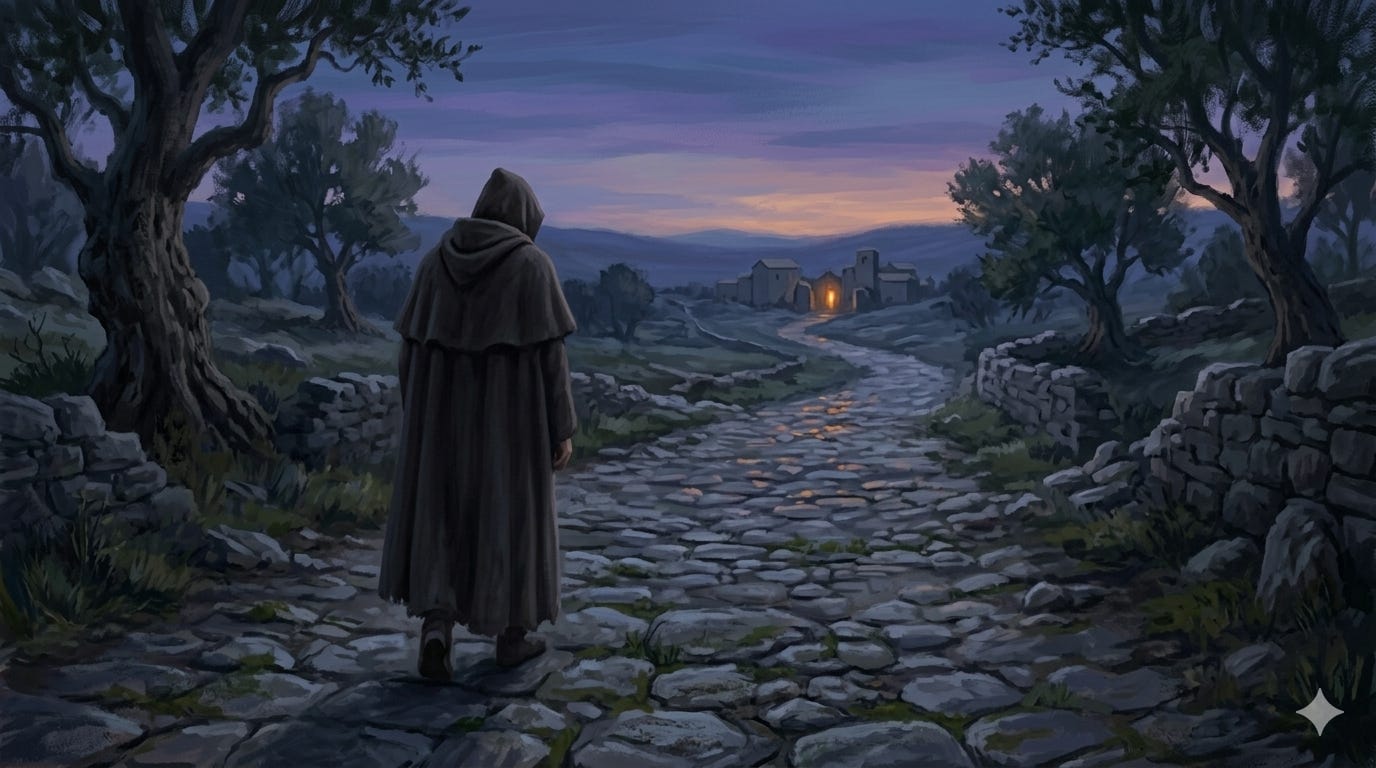
The man runs up and kneels before Jesus on the road. The urgency matters. This is not a casual inquiry. He wants to know what he must do to inherit eternal life and he wants it badly enough to run.
Jesus responds first to the word good. Why do you call me good? No one is good but God alone. This is not a deflection or a denial. It is an invitation to follow the logic of his own words. If goodness belongs to God alone and you are placing that word on me, you are already saying something about who I am. Jesus is pressing the question of His own identity before He answers the question about eternal life. The two are connected in ways the man has not yet seen.
He lists the commandments and the man says he has kept them all from his youth. Mark then includes a detail the other Gospel writers do not. Jesus, looking at him, loved him. What follows is not a trap or a public exposure. It comes from genuine love for a genuine person. You are lacking one thing. Go, sell what you have, give to the poor, and you will have treasure in heaven. Then come, follow me.
The man’s face falls and he walks away sad. He had many possessions.
The Greek word Mark uses here is ktēmata, meaning possessions or property, things owned and held. It is paired with the observation that he had many of them. But the word translated as wealth in verse 23, when Jesus turns to the disciples, is chrēmata, which carries a broader meaning encompassing resources, means, and the things one relies on to navigate life. Together these words describe not simply a large bank balance but an entire structure of security and identity. In the ancient world wealth was not a separate compartment of life. It was the thing that determined your standing in the community, your ability to protect your family, your access to justice, your legacy, and ultimately your sense of who you were in the world. To be wealthy was to have a position in the world that answered the deepest human questions about whether you would be okay. The man’s possessions were not incidental to his life. They were the organizing center of it.
Jesus is not issuing a general command that all disciples must divest themselves of property. He is identifying the specific thing that occupied the place in this man’s life that Jesus Himself was asking to occupy. The command is not go and be poor. The command is come and follow me. Selling the possessions is not the destination. It is the clearing of the obstacle between where this man stood and where Jesus was inviting him. Whatever held that center place had to be released before following could begin. For this man it was wealth. For others it is reputation, control, approval, security, or the relationships whose loss we fear more than anything else.
Jesus watches him go and turns to the disciples. How hard it is for those with wealth to enter the kingdom of God. The camel through the eye of a needle is not a reference to a narrow gate in Jerusalem’s wall, as a later tradition suggested. It is a deliberately absurd image. The largest animal in the region passing through the smallest possible opening. Impossible as a matter of category, not merely of difficulty. The disciples are alarmed because they shared the common assumption that wealth was a sign of God’s favor. If the wealthy cannot enter, who can? Jesus does not soften the answer. For human beings it is impossible. But not for God. All things are possible for God.
The passage puts a question to everyone who reads it. Not are you wealthy, but what is the one thing in your life that occupies the center so completely that releasing it for Jesus feels like losing yourself. That is what this passage is actually about. Most of us know what it is. The distance between hearing Jesus and following Him is exactly the distance of that one thing.
Reflection Question
What is the one thing Jesus might name if He looked at you with love and asked you to release it, and what is stopping you from opening your hands?