

The Gospel: Mark 3:22-30
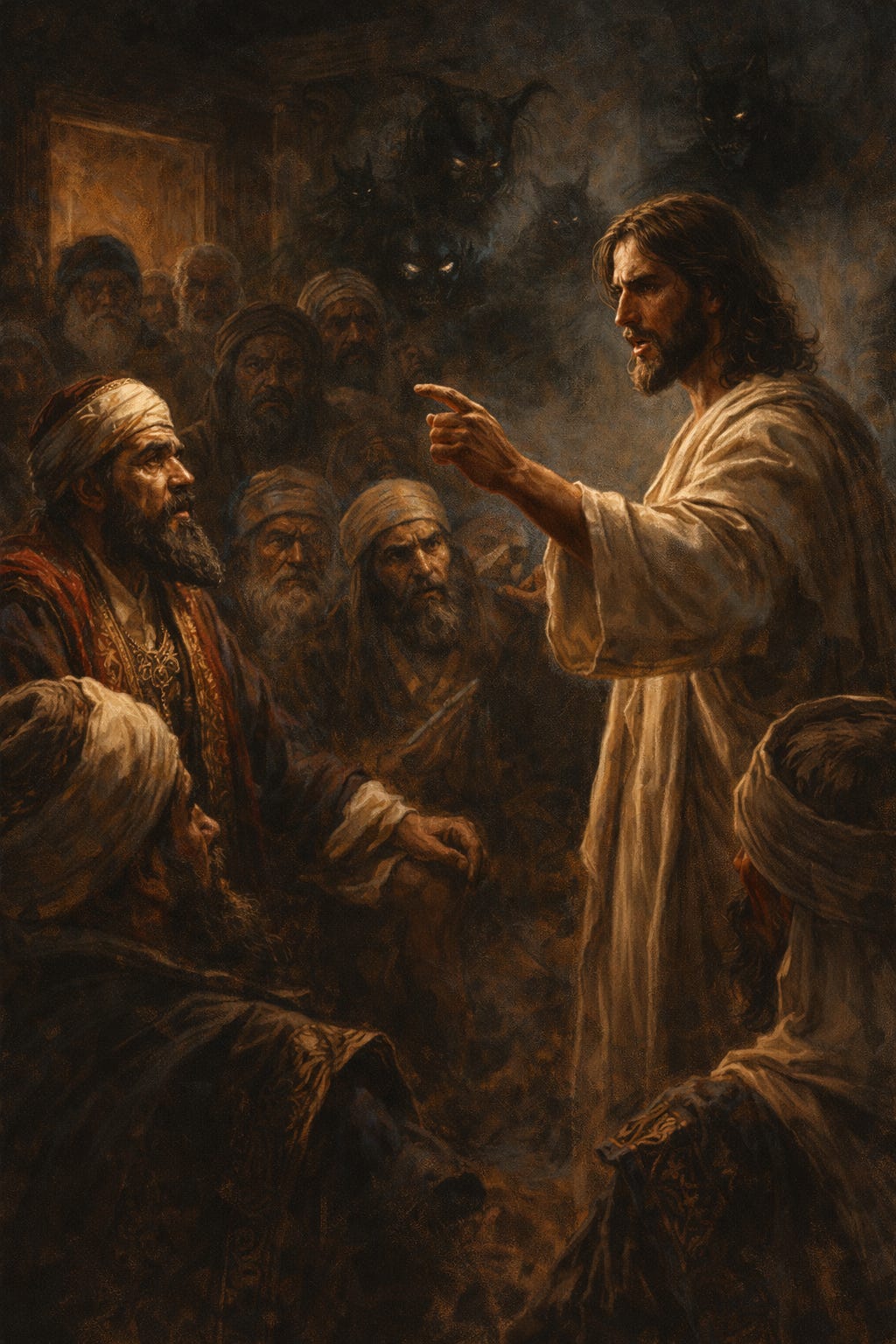
The scribes who had come from Jerusalem said of Jesus,
“He is possessed by Beelzebul,” and
“By the prince of demons he drives out demons.”
Summoning them, he began to speak to them in parables,
“How can Satan drive out Satan?
If a kingdom is divided against itself, that kingdom cannot stand.
And if a house is divided against itself,
that house will not be able to stand.
And if Satan has risen up against himself and is divided,
he cannot stand;
that is the end of him.
But no one can enter a strong man’s house to plunder his property
unless he first ties up the strong man.
Then he can plunder his house.
Amen, I say to you, all sins and all blasphemies
that people utter will be forgiven them.
But whoever blasphemes against the Holy Spirit
will never have forgiveness,
but is guilty of an everlasting sin.”
For they had said, “He has an unclean spirit.”
Today’s Focus
In this Gospel, Jesus is formally accused by religious authorities of acting by demonic power, turning mercy itself into a point of condemnation. Rather than defending Himself, Jesus exposes the illogic of their claim and reveals His true authority by speaking prophetically in parables. He then makes one of the strongest declarations of mercy in Scripture: all sins and blasphemies can be forgiven. The only danger, He warns, is willfully refusing to recognize God’s work as good and closing oneself off from repentance. This passage reminds us that God’s mercy is limitless, but it must be received with an open heart.
In the Margins
This Gospel was intentionally overlapped with a previous post. It helped to understand what was happening with Jesus being questioned by the scribes and His relatives. Here we open with that same scene, but go deeper into how this was handled. This is taking place in a home that is so crowded, relatives of Jesus have come to try and quell some of the excitement. These scribes are legal experts of sorts, sent from the center of religious authority at the time. They have just called Jesus Satan, saying that the works He does are only through the devil. This would have been seen as an official judgment of Him, not just an opinion.
Jesus does not back down when He hears this, likely understanding the implications, and instead shows how the position makes no sense. In doing such, He positions Himself as the judge of interpretation, not a defendant. Jesus uses basic logic, but the way He does it is also significant. He is said to be speaking in parables as He teaches.
Speaking in parables is messianic. In Psalms 78:2, it says “I will open my mouth in parables, I will utter what has been hidden since the foundation of the world.” In this very instance we have legal scribes saying something that would have been accepted with some level of authority if unchallenged, but was quickly torn down by Jesus, using parables!
What comes in this last section is a rare time when we see in the New Testament what sins can and will be forgiven, as well as the one that will not. Jesus making the claim establishes His authority. He is saying that ALL sins, moral failures, grave sins, repeated sins – all of them, will be forgiven. He then says the same for blasphemies, even speech that dishonors God, spoken in ignorance, fear, or weakness. There is no sin that God is unwilling to forgive if a person turns back to Him.
What comes next could be misinterpreted and is very important. The one sin, in the entire Bible, that is not to be forgiven, is blasphemy against the Holy Spirit. For forgiveness to happen the person must (a) be aware they have sinned, (b) have an openness to grace, and (c) desire to be reconciled. Blasphemy against the Holy Spirit destroys the openness to grace. God is not refusing forgiveness, the person is refusing repentance. This is a key point to remember.
The scribes see the undeniable works of healing and liberation. They know that this aligns with God’s promises. They choose to call this demonic instead of divine. When given more proof, they harden their hearts and turn away, still calling it demonic. They are knowingly and persistently turning away from God.
The general rule of thumb for anyone that is wondering if they have committed this sin is this. If you worried you may have committed this sin, then you have not committed it. The concern itself is evidence of openness to grace. You are good to go, but it does bring up an interesting point. In order to help save people, it is imperative we help others understand the word and share the good news. Most Christian denominations call for spreading the Gospel. It can be awkward, trust me, I know! It can also be extremely rewarding. When the world gets crazy and it is hard to navigate, the Gospel is a lighthouse – a beacon to show us the way of the Lord!
Reflection Question
When God’s work challenges my assumptions, do I allow the Holy Spirit to soften my heart or do I resist His grace by reinterpreting truth to protect myself?
A Small Invitation
If this reflection helped you, consider sharing it with someone who may be carrying more than they were meant to.