

The Gospel: Matthew 8:23-27
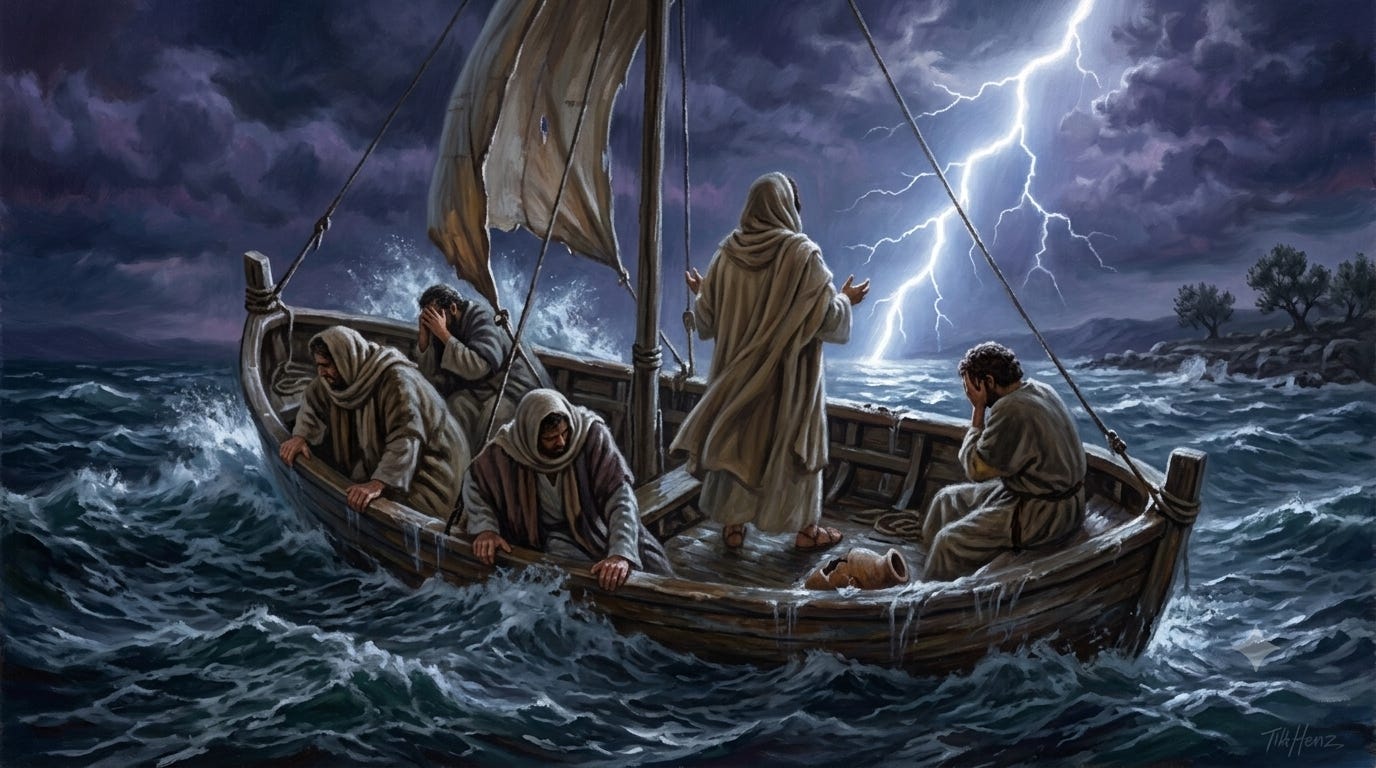
²³ He got into a boat and his disciples followed him. ²⁴ Suddenly a violent storm came up on the sea, so that the boat was being swamped by waves; but he was asleep. ²⁵ They came and woke him, saying, "Lord, save us! We are perishing!" ²⁶ He said to them, "Why are you terrified, O you of little faith?" Then he got up, rebuked the winds and the sea, and there was great calm. ²⁷ The men were amazed and said, "What sort of man is this, whom even the winds and the sea obey?"
Today’s Focus
Jesus sleeps peacefully through a violent storm that terrifies even experienced fishermen, rebukes the disciples' fear before rebuking the storm itself, and calms the wind and sea with the same authoritative command He uses against demonic forces, enacting a mastery over chaos that the Hebrew Scriptures reserved as a divine prerogative.
In the Margins
He got into a boat and His disciples followed Him. The simplicity of this opening conceals what is about to happen. The Sea of Galilee, despite its modest size, was known in antiquity for violent and sudden storms, caused by cold air rushing down through the surrounding hills and colliding with the warm air over the lake’s surface. Several of the Twelve were experienced fishermen who had spent their working lives navigating these waters. This was not a group of inexperienced travelers panicking at the first sign of rough weather.
Suddenly a violent storm came up on the sea, so that the boat was being swamped by waves. The Greek word used here, seismos, is the same word used elsewhere in the New Testament for earthquakes, suggesting the violence and disorienting power of what is happening on the water. The boat is being overwhelmed. Experienced fishermen are facing a situation severe enough to genuinely terrify them.
But He was asleep. The detail is almost shocking in its plainness. In the middle of a storm capable of swamping a boat handled by experienced sailors, Jesus is asleep. This is not a minor detail. It demonstrates a complete absence of anxiety, a settledness that has nothing to do with ignorance of the danger and everything to do with confidence the disciples do not yet share.
They came and woke Him, saying, Lord, save us, we are perishing. The cry combines two registers, the title Lord and the desperate plea for rescue. This is the language of someone who recognizes, even in panic, that they are addressing someone with the authority to actually change the outcome, even while doubting whether He will or whether it is already too late.
Jesus’ response addresses the disciples before He addresses the storm. Why are you terrified, O you of little faith? The rebuke comes first, and it is aimed at the fear itself rather than at the storm. This ordering matters. Jesus is not minimizing the real danger of the storm. He is naming the disciples’ fear as evidence of insufficient faith in who is in the boat with them. The storm is real. The fear is the deeper problem, because it reveals what the disciples actually believe about Jesus’ capacity and presence in the midst of danger.
Then He got up, rebuked the winds and the sea, and there was great calm. The Greek word for rebuked, epetimesen, is the same word Jesus uses elsewhere for commanding demons to be silent and depart. He addresses the storm with the same authoritative speech He uses against the forces of spiritual chaos and opposition throughout the Gospels. The wind and the sea obey Him the same way the unclean spirits do.
In the Hebrew Scriptures, mastery over the sea was understood as a distinctly divine prerogative. Psalm 89:9 declares that God rules the raging sea, stilling its waves. Psalm 107:28-29 describes God hushing the storm to a whisper for those who cry out to Him in their distress, language that maps almost exactly onto the disciples’ own cry and Jesus’ own response. Job 38:8-11 has God asking Job rhetorically who shut in the sea with doors, establishing limits it cannot cross. The sea in ancient Near Eastern and Hebrew thought was frequently associated with chaos, with the forces of disorder that only God could restrain. For Jesus to command the wind and sea and be obeyed instantly is not simply an impressive miracle. It is a direct enactment of a divine prerogative the Hebrew Scriptures reserved for God alone.
The men were amazed and said, what sort of man is this, whom even the winds and the sea obey? The question is the real point of the entire episode. Matthew does not record the disciples concluding immediately that Jesus is divine. He records their astonishment, their open question, the category they do not yet have words for. The reader, who has access to the Hebrew Scriptures the disciples knew well, can answer the question even while the disciples are still working through it themselves.
This passage offers something for anyone in the middle of a storm that feels capable of swamping the boat. The presence of Jesus in the boat does not guarantee the absence of the storm. The disciples experienced the full violence of it before they experienced the calm. What His presence guarantees is that the one who is asleep through the worst of it is not unaware, not powerless, and not far away. The calm comes from Him, on His timing, but it comes.
Reflection Question
In the middle of your own storm right now, are you more focused on the violence of the waves or on who is actually in the boat with you?