

The Gospel: Matthew 5:13-16
Jesus said to his disciples:
"You are the salt of the earth.
But if salt loses its taste, with what can it be seasoned?
It is no longer good for anything
but to be thrown out and trampled underfoot.
You are the light of the world.
A city set on a mountain cannot be hidden.
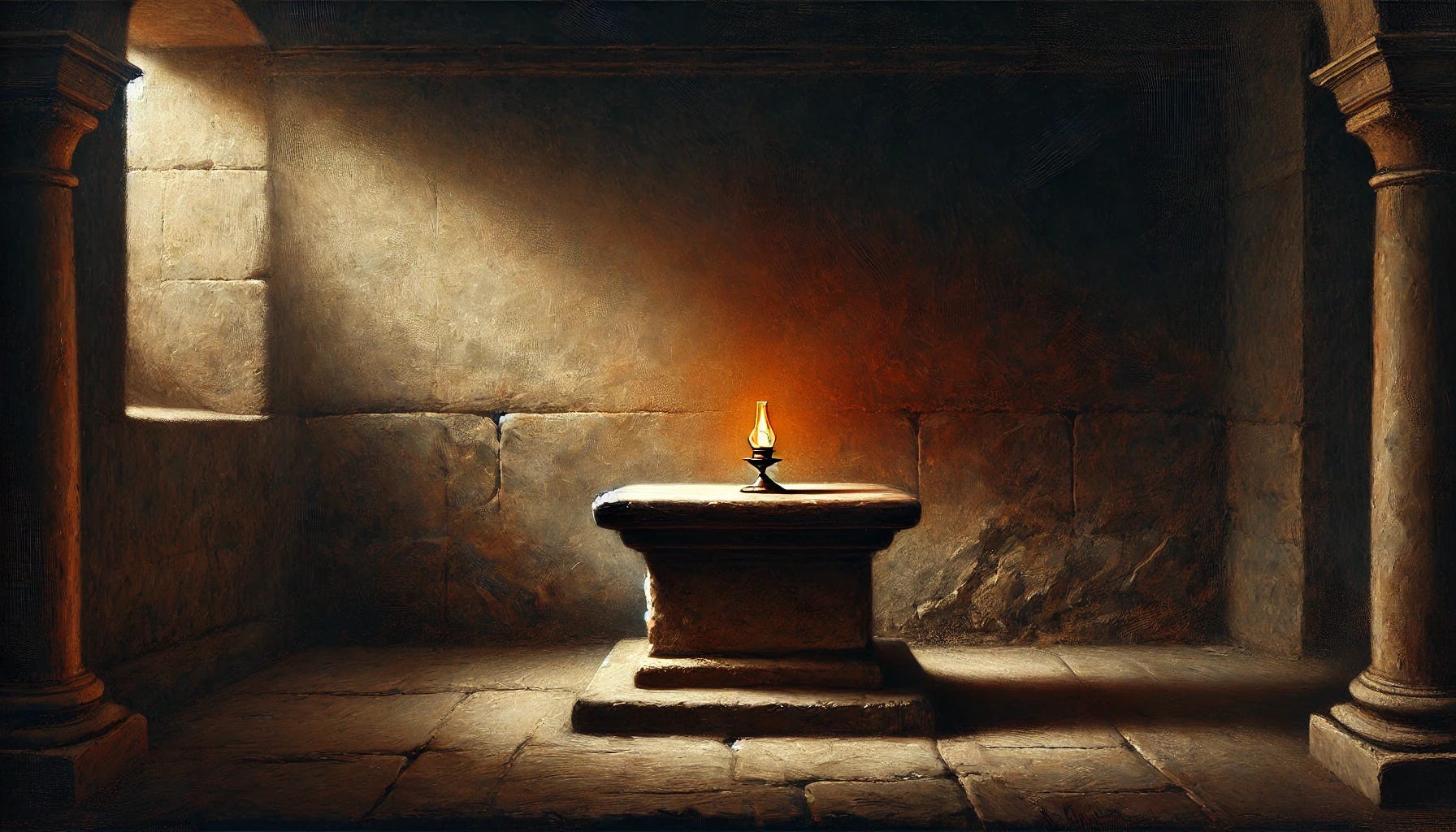
Nor do they light a lamp and then put it under a bushel basket;
it is set on a lampstand,
where it gives light to all in the house.
Just so, your light must shine before others,
that they may see your good deeds
and glorify your heavenly Father."
Today’s Focus
Jesus defines discipleship as covenant presence that preserves the world and makes God visible. To be salt and light is not about personal distinction or private belief, but about faithfully fulfilling a public purpose. This Gospel confronts the temptation to withdraw faith into safety or invisibility, warning that discipleship loses its meaning when it no longer preserves what is good or reveals the glory of God.
In the Margins
In this Gospel, we are immediately presented with the line “salt of the earth.” By modern standards, this might not make a lot of sense. During this period, salt was primarily used for preservation, protection from decay, and signified permanence – not a taste enhancer. Salt is also Old Testament covenant language. It appears in Numbers 18:19, where it is used to show permanence, in Chronicles 13:5, showing divine commitment, and finally, Leviticus 2:13, where the salt is showing preservation from corruption.
The next line is about salt losing its use for seasoning, but this is not literal taste. Salt doesn’t lose it “saltness.” Rather, in Palestine, impure salt could become diluted or contaminated until it no longer preserved anything. The point that Jesus is making is that the Disciples are the preservative of the earth, but if they stop doing that, they would cease to fulfill the role disciples are meant to serve.
Jesus then refers to the disciples as light of the earth. Their light is derivative, coming from their participation in Christ. Here He is using an analogy, where if a lamp is under a basket it loses its usefulness. It is still a lamp, but it stops serving its purpose as a lamp. If a disciple stops being a light of the world, the person may still bear the name of disciple, but no longer fulfills the purpose of discipleship.
Jesus then wraps up with the instruction that they should do their deeds publicly to glorify God. This instruction could be construed to any disciple of His. Arguably, this applies to all of us today. We are called to be disciples of God. We are called to be a light that shines the Glory of God into the darkness, filled by Him. There is a modern instinct to be wary of what others may think, to practice private belief, but we are called to live our faith out loud.
Reflection Question
Which beatitude currently feels most “costly” for you to live, and what would it look like to choose it anyway as an act of trust in Jesus’ promise?
A Small Invitation
If this reflection helped you, consider sharing it with someone who may be carrying more than they were meant to.